

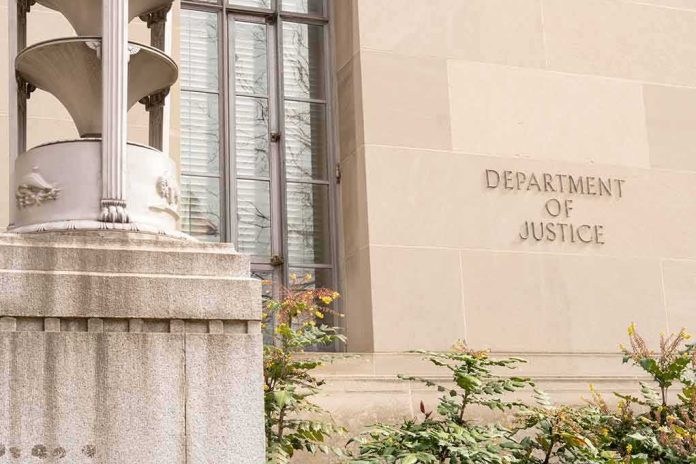
New records show federal prosecutors quietly read the private text messages of 44 members of Congress during the Trump probe, reigniting fears that powerful insiders play by their own rules.
Story Snapshot
- Justice Department records show Jack Smith’s team accessed text messages between Trump White House officials and 44 lawmakers.
- Assistant Attorney General Patrick Davis says the team bypassed a required “filter” process meant to protect privileged communications.
- Republican senators accuse Smith of abusing power, violating the Constitution, and lying to Congress about what he collected.
- The clash highlights wider anger on both left and right over secret surveillance and unaccountable federal power.
What Jack Smith’s Team Actually Did
Justice Department records released to Senator Chuck Grassley reveal that former special counsel Jack Smith’s team obtained and read text messages that 44 members of Congress sent to senior Trump White House officials in late 2020 and early 2021. The messages came from phone records stored at the National Archives after a broad subpoena for Trump White House communications covering October 2020 through January 2021. Internal emails show Smith’s office received 54 files of texts from White House phones and placed them on a shared drive for review.
Assistant Attorney General Patrick Davis, in a letter to Grassley, confirmed that Smith’s investigative team did not follow the usual “filter team” process before reviewing the lawmakers’ texts. A filter team is supposed to screen sensitive material, like possible attorney–client or legislative communications, before trial prosecutors see it. Instead, Davis wrote that Smith’s team “bypassed the Filter Team and directly accessed these text messages,” and the Federal Bureau of Investigation then identified the lawmakers based on phone numbers in the records.
Why Senators Call It Abuse of Power
Senator Grassley and Senator Ron Johnson say these records prove that Smith secretly spied on members of Congress and trampled constitutional protections. They argue that grabbing and reading lawmakers’ private texts with the White House, without filter safeguards, may violate the Speech or Debate Clause, which shields legislative work from outside interference. Grassley’s own messages were among those reviewed, along with texts from Republicans and Democrats, including top party leaders and committee chairs, underscoring how wide the sweep was.
Republicans now claim Smith misled Congress when he previously testified that he obtained only “toll records,” meaning data like numbers and timestamps, not the content of messages. They point to the new Justice Department records and Davis’s letter as evidence that content was accessed and read, contradicting that testimony. Some House Republicans are openly talking about criminal referrals, saying Smith’s actions “ran roughshod over the Constitution” and show the Justice Department was more focused on targeting political enemies than respecting limits on its power.
How This Fits a Larger Pattern of Distrust
This fight over the 44 lawmakers’ texts lands in a country already deeply suspicious of the federal government. Many conservatives see it as another example of a “deep state” that uses legal tools to go after Trump and his allies, while ignoring its own rules when it suits them. Many liberals, even those who disliked Trump, worry about secret surveillance and a justice system that seems to bend most for the well-connected and powerful, not everyday citizens.
Jim Jordan says House weighing criminal referral of Jack Smith for allegedly lying to Congress | Taylor Penley, Fox News
Former special counsel Jack Smith is being considered for a criminal referral to the Justice Department, House Judiciary Committee Chairman Jim Jordan,… pic.twitter.com/8viGGoaOW3
— Owen Gregorian (@OwenGregorian) July 17, 2026
Legal history shows similar clashes have happened before when special counsels or prosecutors were accused of overreach. Past disputes over surveillance and document handling in cases like the Clinton-era investigations and the Internal Revenue Service media controversies were often treated as internal ethics matters unless clear crimes were proven, and rarely led to charges against investigators themselves. That record fuels frustration on both sides that elites investigate elites, and almost no one at the top is ever held criminally responsible.
Questions Still Open — And What Comes Next
Key questions remain about exactly which laws, if any, Smith’s team may have broken. Davis’s letter admits the filter system was bypassed but does not itself declare the conduct illegal or announce any discipline. The Justice Department has historically been cautious about calling its own prosecutors criminals unless there is a plain statute violation. That means any prosecution of Smith would likely require Congress to build a detailed case that goes beyond procedure errors into clear, provable abuse of authority.
For many Americans, the deeper issue is not just Jack Smith. It is the sense that powerful officials can secretly read lawmakers’ private messages, mishandle classified documents, or bend rules, and later call it “process” rather than wrongdoing. Whether you lean right or left, the idea that unelected lawyers in Washington can peer into the phones of elected representatives, and then answer only to themselves, clashes with the promise of a government that serves the people instead of ruling over them.
Sources:
thegatewaypundit.com, youtube.com, grassley.senate.gov, rev.com, nytimes.com