

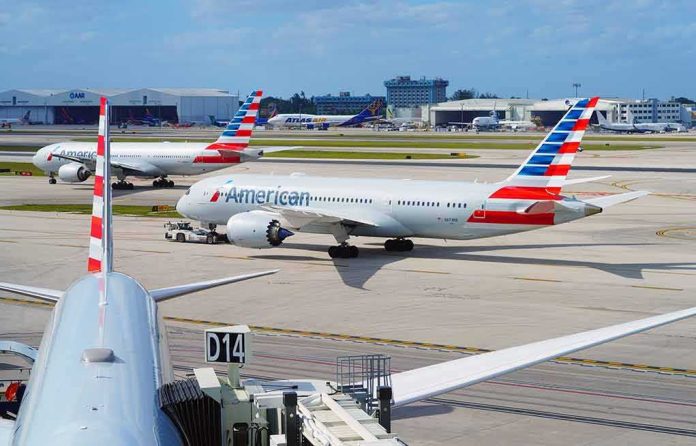
A packed American Airlines jet diverted to Baltimore after a passenger hurled slurs and was duct-taped into his seat, raising fresh questions about safety and accountability in the skies.
Story Snapshot
- American Airlines Flight 618 diverted to Baltimore after a reported passenger disturbance.
- Airline says police met the plane and removed the disruptive customer before the flight continued.
- Video shared with media shows crew and passengers restraining the man in his seat.
- Unruly passenger incidents remain a concern even after post-2021 declines.
What Happened On Flight 618
The Federal Aviation Administration (FAA) said American Airlines Flight 618 landed safely at Baltimore/Washington International Thurgood Marshall Airport around 10:15 p.m. on Sept. 3 after the crew reported a passenger disturbance. American Airlines stated that law enforcement met the aircraft on arrival and helped deplane the customer before the flight continued to its destination. Media reported that passengers and crew restrained the man with duct tape and zip ties during the episode.
An American Airlines passenger was restrained with duct tape and zip ties after an alleged outburst about two hours into a flight from Dallas-Fort Worth to Newark.
Witnesses said the chaos erupted when a man began yelling at a male passenger next to him.#goviral #mage #breakin pic.twitter.com/7pzIYUK01D
— Mark R. Levin Official 🇱🇷 (@MarkLevinRoupk) September 5, 2026
ABC News identified the passenger as Arthur Lundeen, 67, of Arizona, and cited a witness who said the man became belligerent and used racial slurs and vulgar language toward staff and travelers. TMZ reported that video shows the man appearing to fight restraint as he was secured in his seat. Authorities have not released a fuller charging document in the public record cited here. An FAA investigation is expected under standard procedure after such diversions.
Safety, Rights, And The Line For Restraint
Flight crews face a tight balance in fast-moving crises. Crews must protect passengers and the plane, and they must do it in minutes, not hours. The industry trains crews to de-escalate first and restrain only if needed. Airlines and regulators frame these cases as safety and compliance issues to justify diversion and police response, which also limits legal exposure later. That structure can feel impersonal, but it exists to keep everyone alive and get the plane down safely.
For most travelers, the sight of duct tape on a person is shocking. It invites doubts about process and dignity. Yet crews work with limited tools at altitude. Soft restraints and tape can prevent strikes while the plane descends. The FAA’s “zero tolerance” era changed expectations, and more cases now go to law enforcement. That approach has reduced some bad behavior since 2021, but serious incidents still happen and still rattle public trust.
Why This Resonates Beyond One Flight
This episode touches nerves on both sides of our politics. People want safe flights and basic respect in public spaces. They also want clear rules and fair treatment, without theater or cover-ups. Many see large institutions acting to protect themselves first and customers second. When an airline gives only brief statements, and regulators post small summaries, it feels like a black box. That gap fuels anger that elites make the rules while regular people absorb the costs.
A man was restrained with duct tape and zip ties after an alleged outburst about two hours into an American Airlines flight from Dallas-Fort Worth to Newark.
Witnesses said the situation started when a man began yelling at a male passenger next to him, “Jesus and going to hell.”… pic.twitter.com/BqU1sXOvn7
— Chuckyfamous! (@Nem_Famous) September 5, 2026
Here, core facts are solid: a diversion, a safe landing, a removal by police, and video of restraint. Allegations of slurs and assault come from witness accounts and media reports, not a public charging affidavit in these sources. The FAA will review what happened and why. The public will judge whether crew action was necessary and measured. Clearer, faster disclosures would help rebuild trust and show that safety decisions face real accountability, not silence.
Sources:
thegatewaypundit.com, abcnews.com, tmz.com, retailwire.com