

Germany’s interior minister said a wanted 48-year-old “climate extremist” is suspected in multiple power-grid sabotage attacks, raising fresh alarms about fragile infrastructure and political violence.
Story Snapshot
- The interior minister linked a 48-year-old suspect to several sabotage hits on the grid.
- Police reported deliberate attacks in Brandenburg and near Cologne this week.
- Investigators earlier weighed foreign-state action and left-wing extremism.
- Germany has faced prior far-left claims in major grid attacks this year.
What Officials Say About the Suspect and the Attacks
Germany’s Interior Minister Alexander Dobrindt said authorities are hunting a 48-year-old suspect tied to several power-grid sabotage cases this week. He said, “We must assume that this is a case of climate extremism,” after police searched the suspect’s home and reported finding a confession letter and suspected explosive materials, according to an Agence France-Presse summary. Officials said the incidents formed a pattern, not a single event, which pushed investigators to treat them as coordinated criminal attacks.
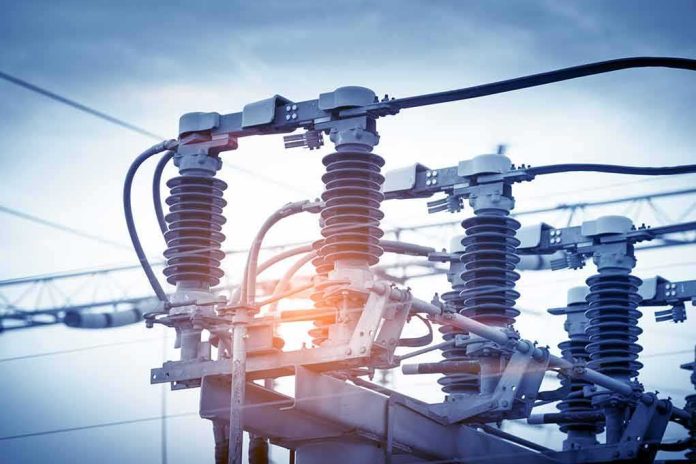
Police and state leaders reported two key incidents under active probe. In Brandenburg, rockets carrying conductive material were fired into extra-high-voltage lines, causing short circuits, state officials said. Investigators also examined a suspected sabotage strike at a substation near Cologne, where power was disrupted on some cables. Authorities described both as deliberate acts, not technical failures, and opened criminal and possible terrorism lines of inquiry.
How Investigators Framed Possible Motives and Actors
Early this week, investigators publicly considered two main possibilities: a foreign government directing sabotage or left-wing extremism. Officials in North Rhine-Westphalia and federal spokespeople said they could not rule out either path at that stage. That uncertainty fits a common pattern in infrastructure cases. Police must speak to calm the public, yet full forensic proof often comes later. Today’s “climate extremism” focus reflects new evidence, but the legal process still must test it.
Germany has wrestled with ideologically driven attacks on energy systems before. In January, officials and federal prosecutors probed a far-left arson attack in Berlin that left tens of thousands without power for days. A militant group claimed responsibility, and prosecutors pursued terrorism charges tied to attacks on high-voltage cables. Those actions highlighted how a few people can hit many homes, hospitals, and schools by striking key nodes of the grid.
Why This Matters for Everyday People and Trust in Government
Repeated strikes on power lines and substations create real risks for families, seniors, and small businesses. Lights go out. Heat and medical gear fail. Food spoils. When ministers shift from “no suspects” to naming an ideology within days, many citizens see a broader failure: a system that cannot protect basics but is quick to manage headlines. That anger now spans left and right. People want safe streets, reliable power, and honest answers about who is responsible and how it will stop.
BREAKING – Germany power grid sabotage suspect a climate activist: minister
— The Crusader – 100% English Colonizer (@CrusadeAgain) September 4, 2026
The deeper story is capacity and accountability. Power networks were built for efficiency, not for constant attacks. Operators and police must harden sites, add cameras, and improve rapid repair teams. Lawmakers must back that with funds and clear laws. If the “climate extremism” case holds, courts should move fast and fair. If evidence points to foreign direction, the public deserves proof and a plan. Either way, trust grows when leaders show work, not spin, and keep the lights on.
Sources:
insiderpaper.com, reuters.com, abcnews.com, washingtonpost.com, euronews.com