
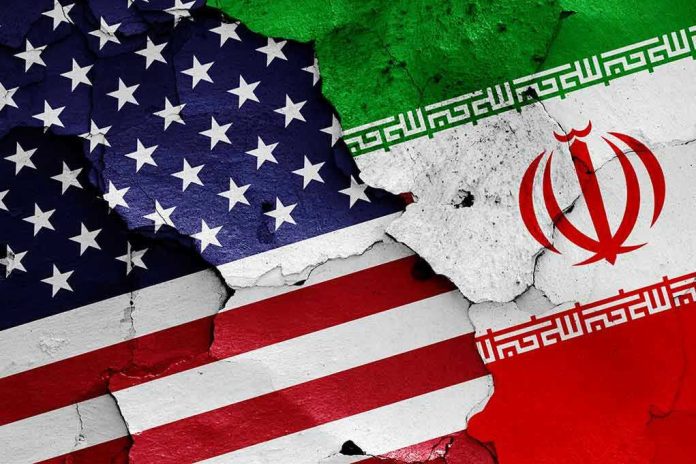
A peace deal that took months to build collapsed in a single day — after Iran allegedly attacked three tankers in one of the world’s most critical shipping lanes.
Story Snapshot
- President Trump declared the Islamabad Memorandum of Understanding (MoU) “over” on July 8, 2026, after Iran allegedly attacked three commercial ships in the Strait of Hormuz.
- U.S. Central Command confirmed strikes on more than 80 Iranian targets, including air defense systems and radar sites, the night before Trump’s announcement.
- The 14-point MoU, signed June 17, 2026, required Iran to guarantee safe passage for commercial ships for 60 days — a key clause the U.S. says Iran violated.
- Neither side has released independent, third-party proof of its core claims, leaving the full picture murky as both countries trade escalating strikes.
How the Peace Deal Came Together — and Fell Apart
The U.S. and Iran signed the Islamabad Memorandum of Understanding on June 17, 2026, brokered by Pakistan. The 14-point deal extended an earlier ceasefire by 60 days and set the stage for a permanent agreement. Key terms included Iran guaranteeing safe passage for commercial ships in the Persian Gulf at no charge, a freeze on Iran’s nuclear program, and a U.S. commitment to hold off on new sanctions during negotiations.
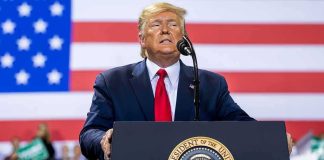
The deal collapsed less than a month later. On July 8, Trump declared the MoU “over,” saying Iran had acted in a “vicious, violent” manner and calling it “a waste of time” to keep negotiating. The U.S. said Iran attacked three commercial tankers — including vessels from Qatar and Saudi Arabia — in the Strait of Hormuz, directly violating the safe-passage requirement. U.S. Central Command had already launched strikes on more than 80 Iranian targets the night before, hitting air defense systems and radar installations.
🚨 CEASEFIRE COLLAPSE:
Trump officially declares the Iran peace MoU is "OVER" after 3 tankers hit in Hormuz.
US launches retaliatory strikes on 60+ IRGC assets; Iran responds with missile strikes on Bahrain & Kuwait. $BTC flushes to $62K.
1️⃣ Truce Fractured: Full… https://t.co/9ngO8Jpv2A
— Average Joe Crypto 📊 (11K+ on YT) (@AvrgJoeCrypto) July 8, 2026
Both Sides Point Fingers — But Proof Is Hard to Find
Iran pushed back hard. Iranian officials said it was the U.S. that violated the agreement first, pointing to American attacks on Iran’s Hormozgan province and Mahshahr port as breaches of Article 1 of the MoU. Iran also claimed it struck 85 U.S. military installations in response. Neither claim — Iran’s attack on the tankers nor Iran’s claim of hitting 85 U.S. sites — has been confirmed by independent sources. No third-party footage, maritime authority reports, or international investigation findings have been released publicly.
Iran had made real commitments under the deal. It agreed to resume inspections by the International Atomic Energy Agency (IAEA) and reaffirmed it would never seek to build nuclear weapons. Those steps were seen as meaningful progress. Yet the collapse of the MoU shows how quickly trust broke down when a flashpoint like the Strait of Hormuz came under pressure again.
A Pattern of Fragile Ceasefires in a Dangerous Strait
This breakdown fits a broader pattern. Since the original two-week ceasefire took effect on April 8, 2026, both sides have violated it multiple times. The Strait of Hormuz — through which roughly 20% of the world’s oil flows — has been the main trigger point throughout. Each time one side claims the other broke the rules, the other fires back with its own accusation. No independent body has been in place to referee those disputes.
The MoU itself called for a United Nations Security Council resolution to ratify any final agreement. Trump’s decision to declare it dead unilaterally sidesteps that process. Whether that matters legally or diplomatically is an open question — but it hands Iran and its allies a ready-made argument that the U.S. broke the rules first. For Americans watching energy prices, global markets, and the risk of a wider war, the stakes here go well beyond a diplomatic dispute. The collapse of this deal means the path to a permanent peace just got a lot harder to find.
Sources:
aljazeera.com, en.wikipedia.org, npr.org, instagram.com, tasnimnews.ir