

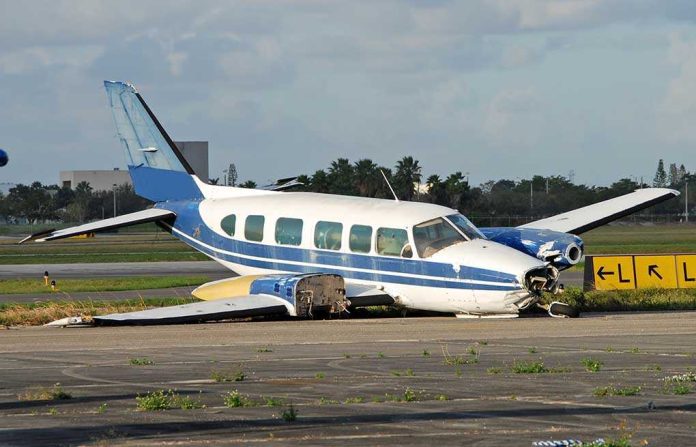
An armed separatist group in Indonesia says it killed an American pilot and burned his plane, and now the Indonesian state and Washington are struggling to explain how it happened and what they will do about it.
Story Snapshot
- Papua separatist fighters claim they shot dead American pilot Nicholas F. Goselin and torched his civilian aircraft in a remote Highland Papua airstrip.
- Indonesia has recovered the pilot’s body and confirmed the plane was found burned, but officials still hedge on exactly how and why the attack happened.
- The rebels say the plane was helping move soldiers into a “conflict zone” and call the killing a direct “message” to both the Indonesian and U.S. governments.
- The incident exposes long‑running failures by multiple governments to resolve the Papua conflict, and feeds public fears that elites treat human lives as expendable in hidden wars.
Separatists claim a deliberate strike on an American pilot
On Thursday in Indonesia’s eastern Papua region, fighters from the West Papua National Liberation Army, also called the West Papua Liberation Army, said they shot and killed American pilot Nicholas F. Goselin after his small plane landed in the Yahukimo area of Highland Papua. The group’s spokesman, Sebby Sambom, said their troops then set fire to the aircraft, which was operated by Indonesian carrier PT AMA and had flown into Balinggama village with one pilot and seven passengers on board.
Sambom said separatist leaders had issued an ultimatum banning civilian flights from entering parts of Papua they view as rebel “operational zones,” and he claimed the plane had “frequently” carried Indonesian military personnel and supplies into the remote interior. He argued the pilot was killed because the aircraft kept flying despite these warnings, framing the attack as punishment for ignoring rebel control and as a way to force outside powers to pay attention to a 64‑year‑old conflict.
Indonesia confirms the body and burned plane but stalls on details
Indonesia’s Directorate General of Civil Aviation said the plane, with one pilot and seven passengers, had taken off from Wamena city bound for Yahukimo; after the pilot reported a safe landing, contact with the airstrip suddenly stopped. A joint police‑military team later found the aircraft burned at a local airport in Yahukimo, and authorities confirmed all seven passengers, who were indigenous Papuans including three women, survived the incident.
Indonesia’s military denied the separatist claim that the aircraft had been transporting soldiers, insisting those on board were civilians and saying they were not harmed. A security spokesman acknowledged that the plane was discovered burned and that an American pilot was involved, but said officials could not immediately verify whether rebels attacked the aircraft or how exactly the pilot died. This careful wording, even after the body was recovered, adds to the sense that authorities are managing the narrative just as much as they are managing the investigation.
A “message to America” and a sign of deeper conflict failures
Rebel leaders describe the attack as a “message” to both the Indonesian and United States governments, accusing them, along with the Dutch government and the United Nations, of failing for decades to address the roots of the Papua conflict. Sambom linked the killing directly to these larger grievances, saying the shooting of the American pilot was the result of 64 years of unresolved struggle between Papuans and the Indonesian state in the resource‑rich, heavily militarized region.
Papua separatist rebels shot and killed American pilot Nicholas F Gosselin and set his civilian plane on fire in the region.
Sebby Sambom, a spokesperson for the West Papua National Liberation Army (TPNPB), said separatist fighters had set his plane on fire after it landed… pic.twitter.com/c9VSbvkWs5
— Nigerian Trump🇮🇱🇳🇬🇱🇷🇿🇦🇬🇧 (@Amblojiggy) July 3, 2026
Images and video from the area, including footage of a charred plane wreck on a lonely mountain airstrip, show how far this fight feels from the comforts of Jakarta or Washington. For many Americans, the story may barely make the news cycle, yet it involves a U.S. citizen flying in a place where rebel groups, government forces, foreign mining interests, and ordinary villagers are caught in a long and often hidden war. That gap between risk on the ground and attention at home feeds the broader belief that powerful governments treat some lives—and some regions—as disposable.
Why this distant conflict taps into US frustration with elites
The Papua conflict has simmered for decades, with reports of discrimination against Papuans, crackdowns by Indonesian security forces, and periodic rebel attacks on road crews, pilots, and other workers. Researchers note that separatist movements there have been shaped by international actors and that both sides have strong reasons to spin events, especially when foreign nationals are involved. Claims like this one are often hard to fully verify because the region is remote, dangerous, and tightly controlled, leaving citizens worldwide to rely on official statements they already distrust.
For many Americans, the picture looks familiar even if the map does not. An overseas conflict, unclear missions, civilians and contractors in harm’s way, and governments that seem slower to explain the truth than to protect their own image. Older conservatives who already resent globalist adventures and expensive foreign entanglements see another example of U.S. citizens exposed in someone else’s war. Older liberals angry about growing inequality and minority abuses see another case where distant people—Papuans and a working pilot alike—pay the price while elites trade resources and power.
Raising hard questions about accountability and the “deep state”
The separatists’ demand that the pilot’s body be recovered without military or police involvement, and their warning against sweeping raids that would hit local villages, highlights fears that regular people will suffer most in the response. Indonesians in Papua have already faced mass displacement in recent years, with more than 122,000 people forced from their homes by fighting since 2022, according to reporting from the region. If authorities answer a single burned plane with broad crackdowns, the cycle of anger and resistance will only deepen.
For American readers who feel the federal government is run by unaccountable elites, this story is a reminder that real lives are at stake when distant agencies and militaries make decisions in the dark. A pilot from Connecticut flies routes that most voters have never heard of, in a place shaped by decades of quiet deals and ignored promises. When he dies and the answers come slowly, it reinforces a shared worry on both left and right: that ordinary citizens, at home and abroad, are the first to bleed and the last to be told the truth.
Sources:
insiderpaper.com, wboc.com, timesofindia.indiatimes.com, wtop.com, youtube.com, en.wikipedia.org, indoleft.org, facebook.com, usnews.com, audacy.com