
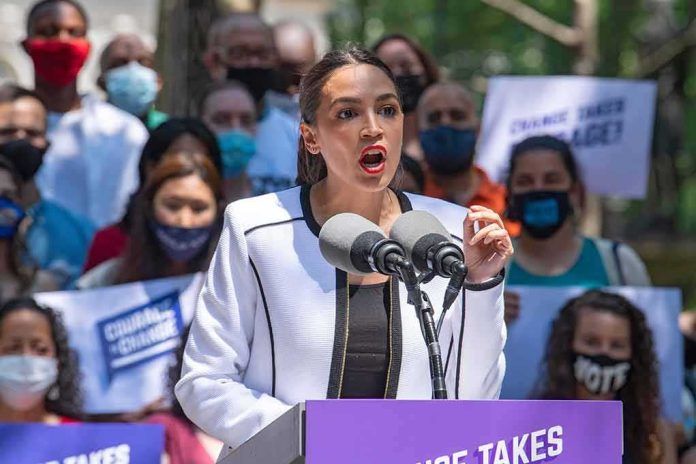
A viral clip of Rep. Alexandria Ocasio-Cortez speaking at a Memphis rally set off a fresh fight over politicians “changing” their speech to fit the room.
Story Snapshot
- A Memphis rally video of Ocasio-Cortez drew claims she used a new accent before a largely Black audience.
- Critics say she used terms like “sister Presley” and Black vernacular as performative mimicry.
- Supporters frame shifts in tone as code-switching, a common communication practice.
- Debate shows broader distrust of political authenticity across both left and right.
What Sparked The Controversy
Video from a get-out-the-vote rally in Memphis shows Rep. Alexandria Ocasio-Cortez addressing supporters for local figure Justin J. Pearson. The clip spread fast on social platforms, where users said her voice and word choice sounded different than usual. Commentators highlighted a moment they described as “sister Presley,” arguing it was not language she uses in formal settings and calling the delivery a put-on for the crowd.
One conservative host called the speech “mocking” and “racist,” arguing Ocasio-Cortez adopted Black English on purpose to talk down to listeners. Other coverage described a “fake accent” and compared the moment to past attacks that Democrats shift styles in Southern or Black spaces. The claims hinge on perception more than hard proof; no transcript, linguistic study, or admission by Ocasio-Cortez has surfaced to verify intent or authenticity.
How This Fits A Larger Pattern
Accusations about “fake accents” have hit several Democrats, including Kamala Harris, with Republicans saying she alters speech in front of different audiences. Libertarian and center-left writers often answer that what people hear is common code-switching, not a staged act, and that most public speakers adjust tone, pace, and phrasing by setting. The back-and-forth returns with each viral clip, reflecting deeper frustration over political messaging and trust.
Media pieces sympathetic to Ocasio-Cortez say code-switching is normal for many Americans, especially in diverse cities, and that critics weaponize short clips to stoke outrage. Skeptics reply that the clip looks targeted and theatrical, with phrasing and cadence they claim are not part of her standard public voice. Both sides are reacting to the same short video, which limits context and invites quick judgments.
Why Voters Across The Spectrum Care
Many Americans suspect leaders stage-manage every detail, from talking points to tone. They see shifts in accent as another sign that style beats substance in modern politics. When people feel prices, safety, and community needs go unmet, a change in speech sounds like theater. That fuels the belief that elites play a part rather than level with citizens on hard tradeoffs and results.
Rep. Alexandria Ocasio-Cortez is going viral again, this time over what critics are calling a new "accent" she appeared to adopt while speaking at an event in Tennessee.
The controversy is resurfacing similar moments by AOC and others Democrats, most notably Kamala Harris and… pic.twitter.com/oEPDaJjOjN
— Fox News (@FoxNews) July 20, 2026
The reaction also taps long-running tensions over race and respect. Some hear slang or a different cadence as outreach. Others hear condescension. Without fuller records, like full-event transcripts or verified comparisons across speeches, the fight tends to harden along prior beliefs. That leaves voters with vibes, not facts, and it lets outrage crowd out policy.
What Evidence Exists — And What’s Missing
The public record includes a rally video and commentary that interprets the performance as inauthentic. News write-ups and explainers refer to the broader “fake accent” debate and note the counterview that code-switching is common. What is missing is independent linguistic analysis that reviews audio features across multiple Ocasio-Cortez appearances, or a complete transcript that shows how often she uses similar phrasing in other settings.
How To Read Claims Like This
When a 30-second clip drives a week of posts, pause and look for stronger proof. Ask if there is a full video, a side-by-side of other speeches, or expert review. Seek quotes tied to time and place, not broad claims. Politicians in both parties change tone by room. The key question is whether policies match the words. That test matters more than a contested accent in a viral moment.
Sources:
facebook.com, academia.edu, constitutionaldiscourse.com, ia600209.us.archive.org, timesnownews.com, youtube.com