
Mexican special forces captured an accused cartel boss on the FBI’s Ten Most Wanted list, and Mexico says U.S. intelligence helped find him.
Story Highlights
- Mexican troops arrested Fausto Isidro Meza Flores, nicknamed “El Chapo Isidro,” in Guasave, Sinaloa, on the night of Friday, November 20.
- Mexico’s Defense Secretariat said the raid followed coordination with U.S. intelligence agencies.
- The FBI says he moved heroin, meth, cocaine, fentanyl and marijuana into the United States, and the U.S. offered up to $5 million for him.
- He and two alleged top aides were flown to Mexico City and handed to prosecutors, officials said.
- The Mexican government credited intelligence from the Trump administration for the capture.
Who Was Captured and Why It Matters to Americans
Mexican soldiers and National Guard special forces arrested Fausto Isidro Meza Flores on the night of Friday, November 20, in Guasave, a city in the northwestern state of Sinaloa. He was wanted in the United States on drug trafficking and gun charges. The FBI accuses him of leading a network that ships large amounts of heroin, methamphetamine, cocaine, fentanyl and marijuana into the United States. He is 44 and has been charged, not convicted.
🚨🇲🇽 MEXICAN SPECIAL FORCES CAPTURE “EL CHAPO ISIDRO” IN MAJOR SINALOA OPERATION
Mexican authorities confirmed the arrest of Fausto Isidro Meza Flores, alias “El Chapo Isidro,” alongside two alleged associates, during a military operation in Guasave, Sinaloa, on November 20. The…
— Nova Intel (@intel_nova) November 21, 2026
Mexico’s Defense Secretariat, which runs the army, said the arrest came out of coordination between its intelligence agencies and U.S. agencies under what it called a “framework of bilateral cooperation.” The Mexican government credited intelligence from the Trump administration. It has not said what the United States provided or whether any American personnel took part. The FBI placed Meza Flores on its Ten Most Wanted list on February 4, 2025, and the State Department offered up to $5 million for information leading to his arrest.
How the Operation Unfolded in Sinaloa
Mexican officials said troops used “stealth and surprise” to surround the building where he was hiding. Gunmen, likely cartel members, attacked the forces with guns and explosives before troops entered a home and arrested him, officials said. Video released by authorities shows armed men in camouflage leading a man who appeared to be Meza Flores through a dark house and into a truck. Troops also detained a man named only as “Germán N,” alias “Serafín,” described as his second-in-command, and “José N,” described as his money man.
The three were flown to Mexico City on a Mexican Air Force plane and turned over to federal prosecutors, officials said. Fighting spread across Guasave after the raid. Fans fled gunfire at a pro baseball game, cars and trucks were set on fire, and roads were blocked, according to reports. Authorities had not released a count of dead or wounded as of Saturday, November 21. Omar García Harfuch, Mexico’s top security official, called the arrests “an important step in pacifying Sinaloa” and said federal forces will stay in the state.
What the Charges Say About the Threat
A federal grand jury in Washington, D.C., first indicted Meza Flores on May 2, 2012, according to the State Department. The charges include conspiracy to distribute cocaine and methamphetamine and a firearms count. On November 26, 2019, a grand jury returned a superseding indictment, a revised set of charges, accusing him of drug trafficking and gun possession, the FBI says. Those are accusations he has not answered in a U.S. court.
U.S. officials call him the leader of the Meza-Flores organization, tied to the Beltrán Leyva gang, a drug group allied with one faction of the Sinaloa Cartel. When the FBI added him to its most-wanted list in 2025, the bureau’s then-acting director accused him of spending “the last 20 years flooding the U.S. with fentanyl,” a powerful man-made opioid. A Ten Most Wanted listing puts a fugitive’s face and reward in front of the public to draw tips.
What Comes Next: Security, Extradition, and the Border
Meza Flores faces charges in both Mexico and the United States, according to reports. Mexican officials have not announced whether or when he will be sent to the United States. Reports say he is expected to face Mexican court proceedings first. Extradition, the legal handover of a suspect from one country to another, has not been announced.
Research on Mexico’s “kingpin strategy,” the policy of capturing or killing cartel bosses, gives a warning. Studies find that removing a leader often splits a gang into smaller groups that fight over territory. That means the arrest is a start, not the finish. Pressure on the network’s money, labs and smuggling routes decides whether the capture makes the border safer.
What This Means for Conservative Priorities
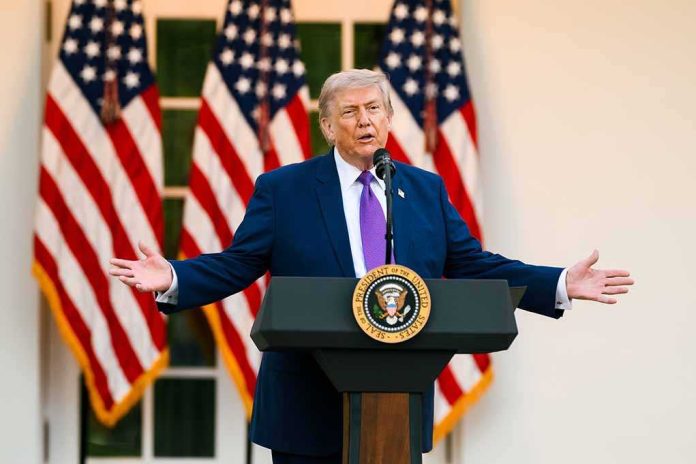
The arrest comes as President Trump presses Mexican President Claudia Sheinbaum to crack down on cartels. On Friday, November 20, Trump said the United States is working with Mexico on cartels and that “the cartels are running Mexico.” Mexico credits U.S. intelligence for helping land one of the FBI’s most wanted men. For Americans who have lost family to fentanyl, the goal is simple: keep the pressure on until the networks that move these drugs north are broken.
Sources:
cnn.com, nytimes.com, newsweek.com, state.gov, fbi.gov, mediaite.com