

In remote terrain and marginal daylight, a small lapse in altitude awareness or weather judgment can turn unforgiving ground into the final arbiter; that is why the facts we do have about the Grand Canyon Comanche crash matter now, while the causes will take months to establish.
At a Glance
- Authorities recovered a Piper PA-24 Comanche and confirmed three fatalities near the North Rim of Grand Canyon National Park; no survivors were found.
- Searchers located the wreckage and debris field in the park’s Basin area late Monday morning after the aircraft was reported missing the prior evening.
- The NTSB is leading the investigation; a preliminary factual report typically arrives in about a month, with probable cause often taking far longer.
- The event fits known general-aviation risk patterns in mountainous terrain and low-light conditions, even as overall GA fatal accident rates have improved in recent years.
What Happened: A clear factual spine, cause still pending
Authorities reported that a Piper PA-24 Comanche crashed near the North Rim of Grand Canyon National Park with three people on board; all three were killed. Crews found the aircraft and a debris field around 10:15 a.m. Monday in the Basin area, a rugged section of the park that complicates both search and recovery. The National Park Service confirmed there were no survivors and indicated victims’ names would be withheld initially out of respect for families. Multiple outlets attributed the discovery details to the Park Service. The National Transportation Safety Board (NTSB) is leading the investigation into the cause, with assistance from the Federal Aviation Administration where appropriate.
Early timelines reported by aviation and regional outlets align: the aircraft was reported missing Sunday night, an aerial and ground search followed, and wreckage was located the next morning in remote, mountainous terrain on the North Rim. The consistently sourced core is unambiguous—an accident, a known aircraft type, a defined location, and three fatalities—while the “why” remains open pending NTSB work. That sequence reflects the standard cadence of general-aviation accident response in the United States: confirmation first, explanation later.
How the investigation will actually work
General-aviation crash investigations follow a disciplined, well-worn path. The NTSB secures the site, documents wreckage, and gathers perishable evidence—witness statements, weather records, maintenance logs, radar and ADS-B data if available, and any onboard avionics or portable electronics that can yield track or engine parameters. A preliminary report, usually issued in about 30 days, compiles factual findings without analysis or probable cause; that interpretive step comes only after lab work, systems examinations, and structured synthesis. In many small-aircraft cases—especially in remote terrain—probable cause can take a year or more to publish, and complex cases can run longer.
For readers used to commercial airline event timelines, this can feel slow. The physics and stakes are the same, but the data trail in a decades-old, non-pressurized piston single is not. There is no cockpit voice recorder and no flight data recorder; investigators reconstruct from fragments—engine teardown signatures, blade bend and chordwise scuffing, control continuity, impact geometry, and any surviving track data from avionics or portable devices. The process is thorough by design, and the absence of a quick causal narrative is normal, not evasive.
The flying environment: canyon topography, nightfall, and margins
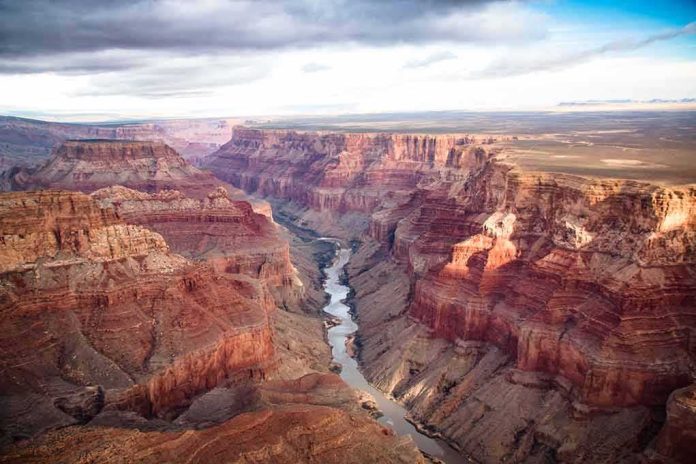
The North Rim is among the most visually arresting and operationally unforgiving geographies a light-aircraft pilot can enter. Elevations above 8,000 feet MSL, spurs and ridgelines that rise abruptly, and sparse ground lighting collude to narrow margins at dusk and after dark. Even in clear weather, the combination of high density altitude (which saps engine and propeller efficiency and degrades climb performance), terrain-induced winds, and limited visual references can set the stage for controlled flight into terrain (CFIT)—impacting the ground without loss of control. CFIT and loss of control in flight (LOC-I) are persistent killers in GA, particularly in mountainous areas and during reduced illumination; they remain focal points of FAA and industry safety campaigns.
None of that assigns causal blame in this accident—only the NTSB will do that—but the geography and timing narrow the plausible risk set. A PA-24 Comanche is a capable, high-performance single for its era, yet it is still bound by the aerodynamics of weight, altitude, and power. At canyon elevations, takeoff and climb performance degrade notably compared with sea level; if a route threads between plateaus and escarpments near nightfall, the room for misjudgment tightens. These are known, teachable hazards, and they are why mountain-flying instruction emphasizes preflight weather discipline, terrain clearance planning with generous buffers, and conservative go/no-go decisions at day’s end.
How this fits the broader safety record in general aviation
General aviation has gotten safer over the long arc. FAA data show that the GA fatal-accident rate in 2024 was the lowest since the agency began tracking it in 2009, continuing a decade-plus effort to drive rates downward through targeted training, technology adoption (angle-of-attack indicators, terrain awareness, ADS-B), and safety management practices migrating from the airline world. Some tallies for 2024 and 2025 differ slightly by methodology and cutoff dates, but the downward trend is corroborated across official and industry reporting.
Within that improvement, the accident categories stubbornly recur. Loss of control in flight remains a leading causal bucket, with a significant share of fatal outcomes. Weather encounters—especially inadvertent visual flight into instrument meteorological conditions—continue to claim aircraft and pilots who press on into deteriorating ceilings or visibility. CFIT persists where terrain rises faster than a pilot’s mental model or the airplane’s climb, particularly at night or in marginal light. The industry’s response focuses on scenario-based training, envelope awareness tools, and decision aids designed to slow the chain of small errors that add up to catastrophe.
What will matter as facts accumulate
When the NTSB issues its preliminary report, expect a carefully scoped document: departure point and time, intended destination if known, track data to the extent available, weather observations, terrain elevations, and basic wreckage signatures. The report will not opine on why the accident happened. Over time, investigators will probe three broad domains: pilot factors (experience, recent instrument time, fatigue, aeronautical decision-making), machine factors (engine and propeller condition, fuel system integrity, control-system continuity), and environment (winds aloft, ceilings and visibility trends around civil twilight, terrain clearance along the route). The eventual probable cause will emerge from how those strands intersected in the final minutes.
For pilots reading this, the discipline is familiar: brief the escape route before you need it, pad terrain clearances not by hundreds of feet but by thousands in canyon country, and treat nightfall over rising ground as a separate risk class—one that often argues for an earlier departure, a different route, or a divert. For non-pilot readers, the essential point is simpler. Even as general aviation becomes safer, the environment imposes absolute constraints. Mountains and night do not negotiate.
The human stakes behind the procedural cadence
It is easy, amid the mechanics of an investigation, to reduce an accident to timelines and categories. The Park Service’s early choice to withhold names underscores a more important truth: behind every docket number are families who need answers delivered carefully, not conjecture delivered quickly. The system is built for that posture—facts first, analysis when it is ready, and pronouncements only when supported by the entire evidentiary record. In the Grand Canyon Comanche crash, the facts we have are sober and sufficient: a defined place, a known aircraft, three lives lost, and investigators at work. The rest comes in due course, the right way to do it.
Sources:
nypost.com, avweb.com, x.com, faa.gov, generalaviationnews.com, aopa.org, assets.performance.gov, ntsb.gov