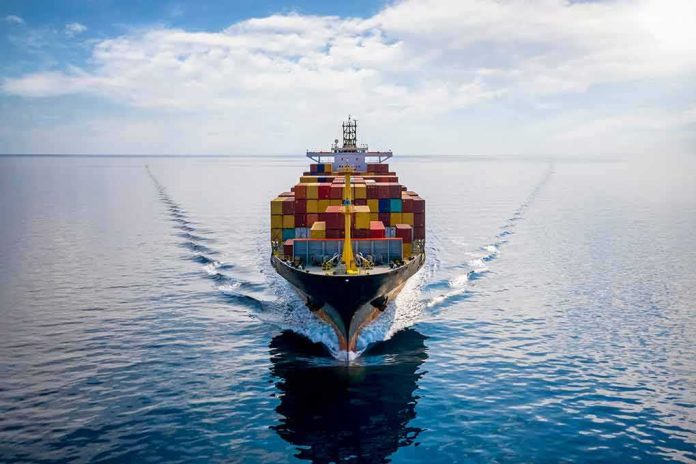
A cargo ship in the Red Sea was hit by an unknown projectile off Yemen’s coast, and casualties are now being reported.
Quick Take
- The UK Maritime Trade Operations agency says a cargo vessel was struck by a projectile near Al Mokha, Yemen, close to the Bab al-Mandab strait.
- Casualties have been reported, but no group has publicly claimed responsibility for the strike.
- The attack fits a pattern of Houthi-linked assaults on shipping in the same corridor, though this specific incident remains officially unattributed.
- India’s government confirmed a separate but related sinking this year in which all 14 crew members were rescued after a projectile attack near Yemeni waters.
Ship Struck Near Yemen’s Coast
The United Kingdom Maritime Trade Operations agency reported that a cargo vessel was hit by an unknown projectile in the southern Red Sea, off the port of Al Mokha, Yemen. The strike happened just north of the Bab al-Mandab strait, a narrow waterway that carries a large share of the world’s shipping traffic. Casualties were reported, though full details on the number of dead or hurt have not yet been confirmed.
Earlier maritime alerts described the vessel as “under attack by unknown armed assailants,” with reports of the ship catching fire and damage control underway. Some accounts mention an airborne projectile, while others describe strikes from rebel-controlled Yemen. No group had claimed responsibility at the time these reports were published, leaving the exact cause of the attack unconfirmed.
A Familiar Pattern in a Dangerous Waterway
This is not the first time a ship has come under fire near Hodeidah, an area controlled by Yemen’s Houthi movement. Reuters and other outlets have documented dozens of strikes on commercial vessels in the same stretch of water since late 2023, many of them claimed by the Houthis using missiles, drones, or small explosive boats. The location and style of this new attack match that pattern, but matching a pattern is not the same as proving who did it.
Earlier this year, a similar strike ended in tragedy for a different ship. India’s shipping minister, Sarbananda Sonowal, said all 14 seafarers aboard an Indian-flagged vessel were rescued after their ship sank following a projectile attack near Yemeni waters. That earlier incident, along with this one, shows how often Red Sea shipping now runs through a war zone rather than open sea.
Why Attribution Still Matters
Even though the Houthi movement has claimed responsibility for many past Red Sea attacks, nobody has publicly claimed this one yet. Maritime authorities have called it a “suspected” rebel attack, not a confirmed one. That gap between suspicion and proof matters, especially in a region where multiple armed groups and foreign navies operate close together and mistakes or misreporting are common.
The bigger story here goes beyond one ship. Global shipping companies have spent more than two years rerouting vessels around Africa to avoid the Red Sea, driving up costs that eventually reach consumers. Every new strike, confirmed or not, adds pressure on insurers and shipping firms already treating the corridor as a war-risk zone. That cost gets passed down the supply chain, often landing on ordinary people who never asked to pay a war tax on their groceries or gas.
For Americans watching from afar, this attack is a reminder that global instability does not stay contained. Disruptions in a narrow strip of water off Yemen ripple through energy markets, shipping costs, and geopolitics tied to Iran-backed groups. Whether or not this specific strike gets formally pinned on the Houthis, the pattern of unclaimed attacks on civilian ships raises real questions about who is actually held accountable when commercial sailors get caught in someone else’s fight.
Sources:
english.aawsat.com, reuters.com, ap.org