

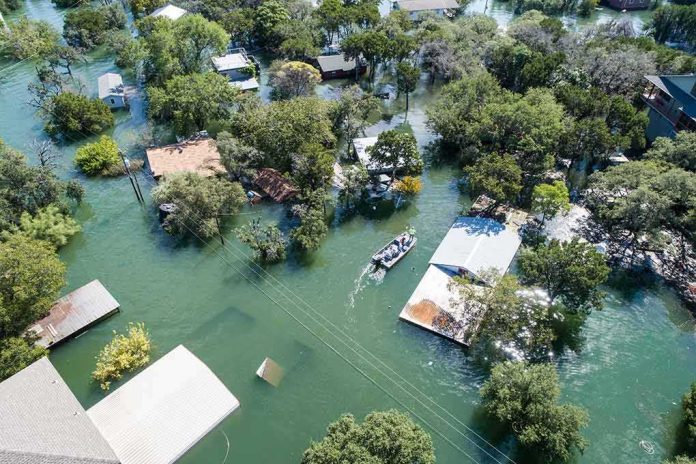
Record-breaking rain drowned parts of Japan’s Chiba Prefecture and left eight people dead, showing how one night of extreme weather can upend a modern region.
Story Snapshot
- Local officials reported eight deaths across multiple cities in Chiba Prefecture
- Japan’s weather agency issued its highest Level 5 heavy rain emergency warning
- Chiba saw record-setting rainfall totals within hours, flooding roads, homes, and rail lines
- Casualty counts shifted through the day as authorities confirmed reports from the field
What Happened in Chiba and Why It Turned Deadly
Chiba Prefecture, just east of Tokyo, faced torrential rain through early Friday. Local officials said eight people died in the cities of Chiba, Kashiwa, Ichikawa, Sakura, and Yachiyo. Water overwhelmed streets, underpasses, and some homes. Rescuers and local police worked through the night to reach stranded residents. Power cuts and blocked roads slowed help. The surge hit during a busy holiday week, when many people were traveling, which added to the chaos and risk.
Forecasters recorded intense rainfall rates that broke local records across parts of the prefecture. Media reported 24-hour totals above 360 millimeters in some areas as bands of rain stalled. The speed and volume of the downpour led to flash floods and landslide dangers. Trains paused. Some highways closed. Airports struggled with stranded travelers and limited ground access. The event showed how quickly a dense metro area can flood when several storm bands stack up over the same place.
Why Japan Issued Its Highest-Level Warning
The Japan Meteorological Agency issued a Level 5 heavy rain emergency warning, which is the top alert in its system. This step signals a serious threat to life and property and tells people to take the safest action at once. Officials said the warning covered large parts of Chiba as the heaviest rain bands moved through. The alert also prompted evacuation orders and shelter openings as floodwaters rose and slopes in hilly zones grew unstable.
Authorities later downgraded emergency warnings as the worst rain eased, but they urged caution. Flooded roads can hide sinkholes. Landslides can occur after skies clear. Crews inspected damaged areas and restored power in stages. Local governments tracked missing-person reports and checked hospitals to confirm injuries and deaths. That process improved the picture of what happened and where help was still needed.
Why Death Counts Shift During Fast Disasters
News outlets first reported four deaths, then five or six, before local authorities confirmed eight. This pattern happens often in fast, severe events. First numbers come from scattered calls, field reports, and early rescues. Later, officials confirm identities, times, and causes, and they merge duplicate tips. The result is a clearer, higher count once agencies compare notes from rescue teams, police stations, and hospitals across the affected cities.
For families, these swings are painful and confusing. For responders, speed and safety come first, while accuracy builds over hours. That is why officials warn people not to drive through floodwaters, not to walk in moving water, and to move to higher ground early. Even well-built cities can flood when storms stall and pour extreme rain. The Chiba event shows how a single night can test warning systems, roads, power grids, and emergency shelters at the same time.
What This Signals for Urban Risk and Preparedness
Urban regions near coasts face special flood risks. Paved surfaces shed water fast. Rivers and drains back up. Transit hubs draw crowds who can be stranded when roads and rails fail. The top-level warning and the pace of evacuations in Chiba show that planning can save lives, but limits are real when storms outrun design rules. Officials and residents will review what worked, from alerts to shelter access, and where gaps remain as rebuild and repair begin.
Emergency Report: Record-Breaking Floods Strike Chiba, JapanAn unprecedented and violent downpour has slammed Chiba Prefecture, located just east of Tokyo, triggering catastrophic flooding, widespread disruptions, and high-level emergency alerts. Current Situation and Impact… https://t.co/nno1qILUTf pic.twitter.com/vOUNQOxqr6
— The World Correspondent (@TheWorldCorresp) August 14, 2026
People on the left and right in the United States often say basic systems should protect ordinary families first. Events like this support that view. Early warnings, clear routes, and strong power grids matter more than politics when water rises. The lesson is simple and shared: invest in the parts of daily life that keep people safe, and test them under stress. One night of rain should not decide who makes it home alive.
Sources:
insiderpaper.com, english.news.cn, channelnewsasia.com, caliber.az