A nationwide manhunt ended in Las Vegas when United States Marshals arrested the masked suspect accused of threatening people near Philadelphia City Hall.
Story Snapshot
- Philadelphia police named 22-year-old Zymire Hughes as the suspect and obtained a warrant.
- United States Marshals arrested Hughes in Las Vegas after a cross-country search.
- Prosecutors said Hughes is expected to face charges, including terroristic threats and aggravated assault.
- Pennsylvania law allows terroristic-threats charges even when no weapon is recovered if threats of violence are communicated.
How The Search Began In Philadelphia
Philadelphia police said a masked man chased and threatened several people near City Hall in the early morning hours last week. Police identified the suspect as 22-year-old Zymire Hughes and announced that an arrest warrant had been issued. Witnesses told reporters the man asked a woman if she was “ready to die,” and others said he pursued passersby while wearing a horror-style mask. Police urged the public to share tips and warned that the suspect might have left Pennsylvania.
The Philadelphia District Attorney’s Office said Hughes is expected to face felony and misdemeanor counts, including aggravated assault, possession of an instrument of crime, and terroristic threats. Officials said the conduct involved direct threats and fear in a dense public area steps from City Hall. Prosecutors often file terroristic-threats charges when a person communicates a threat of violence with the intent to terrorize, even if no weapon is found and the harm comes from fear and panic rather than physical injury.
Capture In Las Vegas And What Comes Next
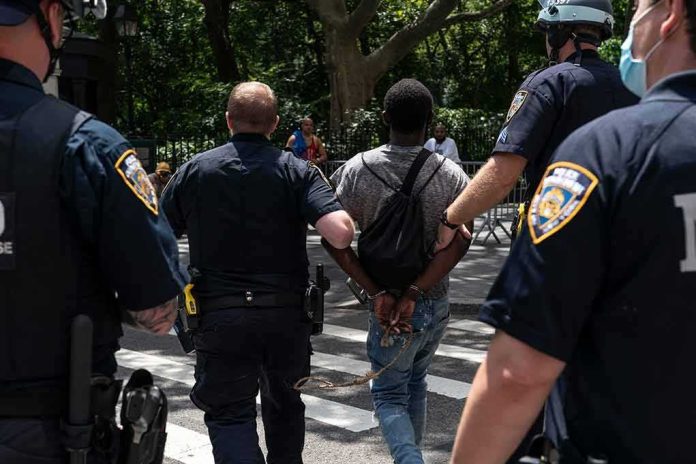
The United States Marshals Service said its Nevada Violent Offender Task Force arrested Hughes in Las Vegas on Tuesday evening. Marshals worked with counterparts from Philadelphia to track the suspect across state lines and take him into custody without further incident. Local reports said the arrest followed widespread coverage of the case and a multi-state search. Authorities will now coordinate transport and court appearances to return Hughes to face charges in Philadelphia.
News outlets reported that investigators believed Hughes had ties to Las Vegas, which helped guide the search west. The Marshals’ use of a regional fugitive task force fits a common model for fast arrests when suspects cross state lines. That structure allows quick sharing of tips and surveillance across local, state, and federal partners. Officials did not announce injuries tied to the City Hall encounters, but they cited the direct threats and public fear as the basis for serious counts.
Why The Charges Fit Pennsylvania Law
Pennsylvania’s terroristic-threats statute defines the crime as communicating a threat to commit a violent crime with the intent to terrorize another person or cause serious public inconvenience. Courts have long held the offense can apply when a person threatens violence, even without a weapon, if the words and actions aim to cause fear. Legal guides also stress that speech loses First Amendment protection when it includes targeted threats of imminent harm to specific people. These standards explain why threats in a busy downtown square can trigger felony-level scrutiny.
Police and prosecutors often rely on witness statements, video, and patterns of conduct to show intent. The area around Philadelphia City Hall is a high-traffic hub for commuters and tourists. Officials argue that chasing people there while making violent threats can create panic, disrupt public life, and risk injury as people try to flee. That is why the law covers not only injury but also fear and disruption in public spaces. The statute’s focus on communicated threats makes the words used by the suspect a key part of the case.
Public Safety, Civil Liberty, And Why This Story Resonates
City dwellers want to feel safe walking to work or riding transit. Many also worry that officials react only after a crisis. This case shows the system moving fast once the suspect was named, yet it also exposes the uneasy gap before arrest, when bystanders feel they are on their own. That tension fuels anger on the right and left toward leaders who seem slow to protect basic order in public spaces.
Americans across the spectrum agree on one core point: clear rules should be enforced fairly, and threats in shared spaces must carry real consequences. Police say this arrest delivers that message. The courts will test the evidence against the legal standards, which is how the system should work. For many, the takeaway is simple: safety in public squares is not a partisan goal. It is a promise government must keep, every day, for everyone.
Sources:
youtube.com, cbsnews.com, 6abc.com, newsnationnow.com, facebook.com, washingtontimes.com