

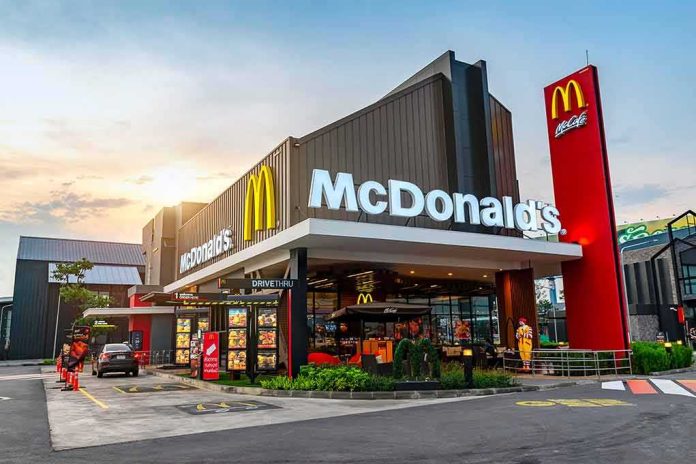
A Brooklyn McDonald’s is checking IDs and turning away most minors after repeated teen-related fights and safety scares at the store.
Story Snapshot
- A Flatbush McDonald’s now requires ID and a parent for anyone under 20 after repeated incidents.
- Police arrested teens in several separate brawls tied to McDonald’s locations in Brooklyn and Queens.
- Reports highlight serious violence near some stores, but evidence points to location-specific problems, not citywide policy.
- The move raises wider worries about public order, fairness, and how businesses cope when government systems fall short.
Owner-Imposed Restrictions At A Single Brooklyn Store
ABC7 New York reported that a McDonald’s in Flatbush requires customers under 20 to show ID and be with a parent. The owner tied the rule to repeated disorder and safety issues at that specific site. Coverage by Yahoo repeated the same location and rule, underscoring that this is a store-level step, not a citywide McDonald’s policy. The restriction aims to calm after-school surges. The change shows how a single franchise can shift access when routine security measures do not work.
Fox 5 New York reported that the Flatbush store began carding after ongoing disruptions and a recent incident with masked youths at the door. The report cited a manager who described near-daily issues after school. While these accounts are secondhand, they match the owner’s stated goal of restoring order. The consistency across reports strengthens the tie between the local pattern and the new screening rule. Still, the evidence remains limited to this one franchise.
Documented Violence And Police Action Around Select Sites
NBC New York reported a 16-year-old was arrested after a brutal brawl inside a Brooklyn McDonald’s, following a video that sparked public concern. CBS New York reported multiple arrests after another violent beating at a Flatbush location. These arrests show that some incidents were not mere rowdiness. They drew police, charges, and court attention. The cases add weight to claims that certain stores faced real risks, not just noise or loitering.
Additional reports describe even more severe violence near other locations. The New York Post covered a fatal stabbing involving teens at a Queens McDonald’s and a separate shooting injuring a teen girl in a Brooklyn McDonald’s parking lot. These accounts show that danger can spill beyond the counter and into nearby public space. They also explain why a franchise owner might choose broader gatekeeping during peak hours. However, these events remain tied to a few sites, not an entire network.
Why This Matters Beyond One Storefront
The Flatbush rule asks a hard question: who keeps order when basic norms break down in public places? Parents want safe spaces for their kids. Workers want to finish a shift without fear. Neighbors want stores that do not feel like danger zones. When government systems cannot keep pace, businesses improvise with ID checks and guards. Those choices set rules for everyone, including well-behaved teens who did nothing wrong.
The record also cautions against sweeping claims. Reports tie the strict rule to one Brooklyn franchise. They do not show a citywide McDonald’s crackdown on teens. The most charged language comes from headlines and short clips, which can exaggerate how common the worst behavior is. The strongest facts are the arrests and the stated policy at the Flatbush store. The rest points to a local disorder problem that went viral, not proof of a broader teen crisis.
Shared Concerns: Safety, Fairness, And Accountability
New Yorkers across politics see the same problem from different angles. Families ask why basic safety feels like a luxury. Workers ask why they must act as bouncers. Teens ask why they are treated as suspects. Owners ask why they must pay for guards and carding. Many feel the system talks tough but delivers little. When that gap grows, private rules fill the void, and the public square shrinks a bit more for everyone.
Reasonable steps can still be measured steps. Clear hours, clear reasons, and clear off-ramps matter. The city can release call-for-service data, track outcomes, and share what works. The store can post transparent criteria and review the rule after a set time. Police can focus on hot spots at dismissal. Small fixes rarely solve root causes, but they can stop the bleeding. That balance—safety without blanket blame—is the test here.
Sources:
ndtv.com, ibtimes.co.uk, fox5ny.com, abc7ny.com, yahoo.com, nypost.com, reddit.com