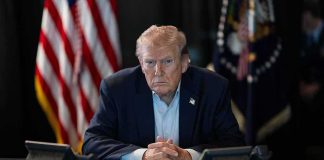
Trump’s first White House Correspondents’ Dinner as president isn’t really about jokes—it’s a stress test of who controls access to the presidency.
Story Snapshot
- Trump is expected to attend the White House Correspondents’ Dinner for the first time as president after skipping it throughout his first term.
- The dinner lands in the middle of a fight over press access, with the White House asserting new control over the rotating press pool.
- Hundreds of journalists signed an open letter urging attendees to confront Trump over restrictions on coverage.
- The WHCA swapped the usual comedian for mentalist Oz Pearlman, a choice that signals caution about turning the night into open warfare.
A dinner built on tradition meets a president who never cared for it
Trump attended the correspondents’ dinner once as a private citizen in 2011, then broke modern precedent by skipping the event entirely while in office from 2017 through 2021. His expected appearance now matters because the dinner functions like a civic ritual: a symbolic handshake between a free press and the elected executive it covers. When that handshake disappears, suspicion fills the gap—and both sides start counting leverage.
Age and experience teach a blunt truth: ceremonies don’t survive because they’re cute, they survive because they manage tension. The correspondents’ dinner has long been Washington’s pressure valve, mixing awards, proximity, and a few well-timed jabs to remind everyone they share a constitutional ecosystem. Trump’s history of labeling coverage “fake news” didn’t just insult reporters; it questioned the institution that vets information for voters.
Press-pool control is the real plot, not the celebrity ballroom
The fiercest dispute swirling around this dinner isn’t about seating charts or punchlines—it’s about access. The report describes a shift in who selects press pool reporters, with the White House asserting new control rather than relying on the traditional rotation. That sounds procedural until you remember why the pool exists: no outlet can be everywhere, so a shared group witnesses events and files reports for everyone. Control the pool, and you control the first draft of reality.
Hundreds of journalists signing an open letter urging confrontation tells you the press corps sees the dinner as more than a party. They’re treating it like a rare moment of face-to-face accountability, a place where officials can’t hide behind press releases or selective briefings. From an American conservative, common-sense perspective, transparency shouldn’t scare anyone in power. A White House confident in its record benefits from broad access, not handpicked visibility.
Why the WHCA chose a mentalist instead of a comedian
The WHCA’s decision to feature mentalist Oz Pearlman instead of a traditional comedian is a tell. Comedians thrive on tension, and the correspondents’ dinner usually runs on satire aimed at presidents, the press, and the entire Washington machine. A mentalist changes the temperature. He can keep the room entertained without forcing a public roast that might detonate the night. That choice reads like preemptive de-escalation in a moment built for sparks.
The move also reveals the organizers’ fear of becoming the story for the wrong reasons. A comedian’s monologue can turn into a political Rorschach test by Monday morning: one side says it was cowardly, the other says it was cruel, and the actual issue—press access—gets buried under outrage clips. A mentalist offers spectacle without a direct editorial. That may protect the event, but it also risks muting the accountability journalists say they want.
Trump’s incentive: optics, control, and the chance to redefine “hostile media”
Trump’s decision to show up, after years of treating the dinner as beneath him, suggests he sees value in the stage. The audience includes reporters, editors, and the broader political class that shapes narratives. Attendance lets him look presidential to supporters who want him to dominate elite spaces, while also signaling to critics that he can walk into a room full of skeptics and own it. The danger is obvious: one misstep becomes the headline.
Trump also knows a camera loves contrast. A president sitting among journalists he routinely criticizes creates instant drama without a single word spoken. If he plays it cool, he can project confidence and discipline. If the room turns combative, he can argue the press proved his point about hostility. Either way, he gets a platform. The press gets a live case study in whether proximity produces clarity or simply new theater.
What comes next: a thaw, a deeper freeze, or a quiet rewrite of the rules
The near-term outcome hinges on whether attendees treat the night as a détente or a showdown. A public confrontation over pool control could energize reporters who feel boxed out, but it could also harden lines and encourage even tighter gatekeeping. A polite evening with no hard questions might reduce surface tension but anger journalists who believe the institution must defend access in public, not just in closed-door negotiations.
The long-term stakes sit with precedent. Once an administration normalizes controlling the pool, future administrations of either party will feel tempted to keep the tool. Conservatives who care about limiting government power should recognize that information control is power control, even when “our team” holds the lever. The healthiest outcome is boring: clear, consistent rules that protect access and reduce the incentive for performative warfare.
Trump expected to appear at White House press gala for first time as president pic.twitter.com/2rY6uj2B4I
— GiggleVibesDaily (@GiggleVibes247) April 25, 2026
The correspondents’ dinner will look like a social event on the surface, but its real meaning is institutional. Trump’s presence doesn’t automatically heal a strained relationship, and the WHCA’s softer entertainment choice doesn’t automatically signal surrender. The open question is whether the night reinforces a working arrangement between press and presidency—or masks a quieter shift where access becomes a favor granted, not a standard enforced.
Sources:
Awkward debut for Trump at correspondents’ dinner