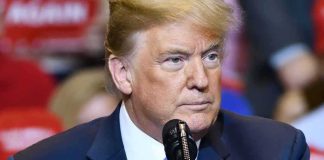
After a fourth reported attempt on President Trump’s life, Rep. John James blasted legacy media for fueling a climate of hatred—reviving a hard question: does relentless “Hitler” talk push unstable actors toward violence or is the shooter solely to blame?
Story Snapshot
- Rep. John James condemned media rhetoric as a factor in escalating hostility toward President Trump [1].
- Polling shows Americans see heated rhetoric as a contributor, while still placing primary responsibility on the attacker [5].
- Federal investigators concluded the 2024 Butler shooter acted alone, complicating broad blame of the press [6].
- Public backlash followed celebratory or reckless reactions to the attack, highlighting a cultural problem with political dehumanization [4][13].
John James’ Charge: Media Rhetoric Crossed a Dangerous Line
Michigan Rep. John James targeted national outlets after the latest attempt on President Trump, arguing years of demonizing narratives normalized hostility against conservatives. The critique echoed immediate post-shooting scenes where journalists were confronted and Trump allies accused the press of incitement, including Donald Trump Jr.’s claim that portraying his father as “literally Hitler” had consequences [1]. James’ argument fits a broader conservative concern: when influential platforms dehumanize opponents, unstable actors can internalize that message and act violently.
Parallel criticism intensified as Republicans cited examples of overheated commentary and memes that made light of attempted murder. Incidents on campuses and social media where faculty or users appeared to excuse or celebrate the violence provoked disciplinary actions and firings, reinforcing the view that elite culture has tolerated contempt for Trump and his voters [4][13]. James’ message resonated because it did not invent the problem; it pointed to visible, documented reactions that many readers have witnessed firsthand in their news feeds and communities.
What the Public Thinks: Rhetoric Matters, but the Shooter Bears Responsibility
National polling after the 2024 attack captured a complex public view: majorities said heated political rhetoric contributed to the attempt, yet even larger majorities said the would-be assassin was chiefly responsible [5]. That combination squares with common sense. Words can set a combustible mood, but accountability for pulling a trigger rests on the individual. Conservatives can affirm both truths at once, urging higher standards in public speech without letting any perpetrator hide behind a talk-show monologue or cable-news chyron.
The backdrop is not new. Analysts note that every modern president has faced assassination plots, underscoring that political violence predates today’s media ecosystem [12]. What is new is the speed and reach of social platforms, where extreme labels travel fast and “jokes” about harming political opponents can rack up millions of views before platforms respond. That amplification is why voters repeatedly tell pollsters that rhetoric raises the temperature, even while they insist criminals must face the full force of the law [5][12].
Law Enforcement Findings: Lone Actor Conclusions Challenge Broad Blame
Federal investigators reported the 2024 Butler shooter acted alone and tied the ballistic evidence to his rifle, findings that undercut claims of direct orchestration by media or political figures [6]. Those official conclusions matter. Conservatives who demand due process and equal justice should also demand specific evidence before assigning operational culpability beyond the attacker. The distinction does not excuse reckless speech; it simply separates moral responsibility for climate from legal responsibility for a crime scene.
Reconciling these points suggests a practical path. Leaders should condemn political dehumanization across the board, and media outlets should retire rhetoric that paints tens of millions of Americans as existential enemies. At the same time, security protocols must keep evolving to protect the president and public at events, and prosecutors must pursue would-be assassins with maximum penalties. That is how a constitutional republic lowers the temperature while upholding the rule of law [5][6][12].
Why James’ Warning Resonates With Conservatives
Conservatives see a pattern: lenient attitudes toward left-wing excess, double standards in coverage, and casual slurs against traditional Americans. After the attack, some public voices faced backlash or termination for celebratory reactions, confirming that a line had been crossed for many employers and communities [4][13]. James’ rebuke taps into that fatigue. The message is not to silence debate; it is to restore boundaries that keep disagreement from drifting into permission structures for violence.
Going forward, the Trump administration’s responsibility is twofold: protect civil liberties while insisting that public institutions, educators, and media executives reinforce norms of civility and accuracy. Voters should reward outlets that report tough facts without slander and reject those that reduce opponents to caricatures. That cultural course correction does not require censorship—only courage, fairness, and a renewed commitment to the dignity of every American citizen [5][12].
Sources:
[1] Web – ANALYSIS: Trump supporters blame media for shooting
[4] Web – Does academic freedom excuse posts on assassination attempt?
[5] Web – What Americans believe about the attempted assassination on …
[6] Web – Attempted assassination of Donald Trump in Pennsylvania – Wikipedia
[12] Web – Every president faces assassination plots. Donald Trump is not unique
[13] Web – Employees let go following reaction to Saturday’s assassination …