
A Montana nurse survived being skewered by his own trekking pole on the state’s highest peak — then chose to hike 10 miles down the mountain rather than call in a costly rescue helicopter.
Story Snapshot
- A 32-year-old nurse was impaled through the torso by his own trekking pole near the summit of Granite Peak in Montana.
- He and two friends hiked about 10 miles over more than six hours to reach a trailhead, with the steel pole still lodged in his body.
- They called search and rescue and were monitored during the descent but chose self-rescue partly because of fear of huge helicopter bills.
- The dramatic survival story shows both the power of medical know-how and the growing fear of medical and rescue costs in America.
A freak accident on Montana’s highest mountain
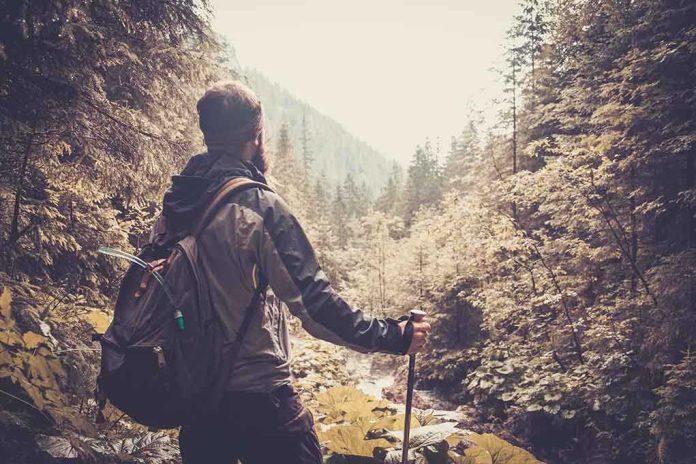
David Cifaldi, a 32-year-old nurse from Billings, Montana, was climbing Granite Peak with two friends on July 20 when the accident happened. The group had already spent hours hiking toward the 12,800-foot summit when Cifaldi slipped on rocks near the top. One trekking pole landed on the ground; the other drove into his body as he fell. The steel-tipped pole entered under his left arm, passed through soft tissue in his side and back, and protruded out behind him.
Cifaldi later said he quickly realized “this thing is sticking out of me” and went straight into nurse mode. He checked his breathing, looked for heavy bleeding, and judged whether the pole had hit his lungs or chest. He felt little pain, could breathe deeply, and saw no major blood loss. From those signs, he decided the pole had missed vital organs and that he was unlikely to die on the mountain that day.
Choosing to hike out instead of calling the helicopter
After the fall, the friends faced a hard choice: wait for a helicopter rescue or try to hike out on their own. They contacted Stillwater County Search and Rescue using a satellite device, so officials knew what happened and could watch their progress. But Cifaldi worried a helicopter evacuation from Granite Peak could cost tens of thousands of dollars, money he did not have or want to risk. Based on his medical training, he believed he could survive the walk down.
The group decided to leave the pole in place, since pulling it out on the mountain could cause severe bleeding. They turned around and started back across the rocky Froze-to-Death Plateau, with one friend leading and the other following behind to watch for problems. Over more than six hours, they traveled roughly 10 miles, descending about 5,000 feet to the Mystic Lake trailhead with the pole still jutting from Cifaldi’s torso.
Rescue, surgery, and a wider warning about costs and risk
At the trailhead, Cifaldi was driven to a nearby hospital and then transferred to Intermountain Health in Billings. Surgeons carefully removed the trekking pole after confirming it had passed through muscle and soft tissue but missed key organs. Doctors placed a drain in his side to manage fluid and later removed it; after several days of pain, he was well enough to return to caring for patients. News outlets across the world picked up the story as a rare example of calm self-rescue under extreme stress.
Montana hiker impaled by trekking pole hikes 10 miles to safety https://t.co/C9J7aYBxVE
— Raw Sewage (@_rawsewage) July 30, 2026
The details also reveal deeper worries many Americans share. Cifaldi’s decision was not just about courage; it was about money. He openly said fear of a huge helicopter bill pushed him to walk out, even with a steel pole through his body. That fear fits a broader pattern where people delay or avoid emergency help because they do not trust the health system to treat them fairly or affordably. His case highlights how rising medical and rescue costs can change how people respond in life-or-death moments.
Risk, responsibility, and a system people do not trust
This survival tale might look like a quirky “Monty Python” moment — the nurse himself joked it was “but a flesh wound.” But under the jokes sits a serious message about risk and responsibility in modern America. Many citizens on both the left and right feel that basic systems, including health care and emergency services, serve insurers, hospitals, and bureaucrats more than regular people. Stories like Cifaldi’s can confirm that feeling: a man with a pole through his body thinks first about the bill, not the rescue.
For hikers, the event is a reminder to carry first-aid knowledge, honest risk awareness, and a way to reach rescuers without delay. For the broader public, it raises hard questions. Why should an ordinary nurse on a weekend climb have to weigh possible bankruptcy against a safer helicopter ride? Why are search-and-rescue teams free in some places, yet medical transport can ruin a family’s finances? Until those questions get real answers, many Americans will keep seeing these dramatic survival stories as proof that the system is stacked against them.
Sources:
youtube.com, nytimes.com, ca.news.yahoo.com, local12.com, facebook.com