
President Trump’s nominee Kevin Warsh cleared a razor-thin Senate vote to seize control of the Federal Reserve, thrusting a Wall Street veteran with over $100 million in shadowy investments into the heart of America’s monetary future—what hidden agendas lurk behind his crisis-tested facade?
Story Snapshot
- Senate confirmed Warsh 51-45 as Federal Reserve Board governor on May 12, 2026, paving way for chair vote later this week.[1][2]
- Warsh returns after 2006-2011 stint handling 2008 crisis events like Bear Stearns sale, Lehman bankruptcy, and AIG bailout.[5]
- Party-line vote saw one Democrat, Sen. John Fetterman, cross over; Jerome Powell’s chair term ends Friday amid dropped criminal probe.[1][4]
- Warsh pledges Fed independence, denies Trump rate pressure, eyes reforms for $7 trillion balance sheet and inflation control.[8]
- Critics blast undisclosed $100M+ holdings in tech, crypto, and potential conflict ties during April 21 confirmation hearing.
Senate’s Narrow Confirmation of Warsh as Fed Governor
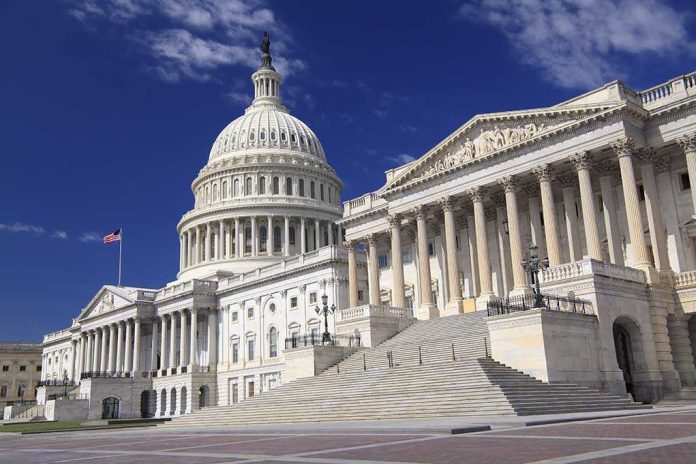
The United States Senate voted 51-45 on May 12, 2026, to confirm Kevin Warsh to a 14-year term on the Federal Reserve Board of Governors, filling the seat vacated by Stephen Miran.[1][2] Republicans drove the tally, with Pennsylvania Democrat Sen. John Fetterman as the lone crossover. This procedural win advances President Trump’s March 2026 dual nomination for Warsh as both governor—from February 1, 2026—and chair for four years.[7] Jerome Powell’s chair tenure expires Friday, shadowed by a now-dropped criminal probe.
Warsh’s Proven Crisis Experience from 2008 Turmoil
Kevin Warsh served as Federal Reserve governor from 2006 to 2011 after unanimous Senate confirmation under President George W. Bush.[5] He acted as key aide to Chairman Ben Bernanke, orchestrating the Bear Stearns sale to JPMorgan Chase, navigating Lehman Brothers’ bankruptcy, and managing the American International Group bailout. Supporters like Sen. Dave McCormack hailed Warsh as “battle-tested” for inheriting a Fed with a $7 trillion balance sheet and spotty inflation record.[8] Warsh advocates “regime change” in policy, admitting past Fed errors fueled 25-35% inflation spikes in 2021-2022.
🚨 BREAKING:
The Senate has approved Kevin Warsh, a known crypto-friendly voice, for a seat on the Federal Reserve Board of Governors.
A confirmation vote for the Fed Chair position is expected later this week.
This leaves President Trump just one vote away from a major… pic.twitter.com/lNg6md9iBx
— Tapbit (@Tapbitglobal) May 12, 2026
Warsh’s Firm Stance on Fed Independence Amid Trump Ties
During his April 21, 2026, Senate Banking Committee hearing, Warsh testified that President Trump never pressured him on interest rates, stating, “The president never once asked me to commit to any particular interest rate decision.” He vowed to remain an “independent actor,” upholding the Fed’s dual mandate of price stability and maximum employment while staying “in its lane.”[8] Common sense aligns with this: central bank autonomy shields against political meddling, a conservative principle safeguarding long-term economic health over short-term electioneering.
Partisan Battles and Procedural Hurdles Overcome
Senate Republicans advanced Warsh’s nomination via 49-44 cloture on May 11, with Democrats Sens. Fetterman and Chris Coons initially supporting before Coons skipped the final vote.[4] Sen. Thom Tillis dropped his hold after the Department of Justice abandoned the Powell probe, enabling committee clearance without Democratic Banking Committee votes.[1] This reflects post-2010 trends where 70% of Fed nominations split along party lines, demanding cloture in 40% of cases amid “independence” clashes.
Financial Disclosure Clouds and Wealth Concerns
Warsh, with net worth exceeding $100 million from Hoover Institution fellowship, advising billionaire Stanley Druckenmiller, and marriage to Estée Lauder heiress Jane Lauder, faced grilling over undisclosed investments.[1] He agreed to divest per Office of Government Ethics rules but refused specifics on ties to Juggernaut Fund, tech firms, crypto like Polymarket, or potential Trump-linked entities during hearings. Sen. Elizabeth Warren accused him of 2008 crisis favoritism toward Wall Street via credit default swaps, unsubstantiated by primary records but fueling transparency doubts.
Implications for Fed Policy and Economic Stability
Warsh envisions narrowing the Fed’s mandate, revamping inflation frameworks, and curbing unconventional tools—a hawkish pivot conservatives applaud for disciplining profligate spending. Yet threats persist: thin Senate margins, media fixation on his Silicon Valley links, and politicization narratives could hobble his tenure. Full Office of Government Ethics Form 278e disclosures post-confirmation will test conflict claims. If Warsh delivers on reforms, he restores Fed credibility eroded by Powell-era inflation; failure invites deeper distrust in institutions.[8]
Sources:
[1] Web – Senate confirms Kevin Warsh as Fed governor, clearing path to replace …
[2] Web – Senate clears the way for Kevin Warsh to become Federal Reserve chair …
[4] Web – Senate advances Kevin Warsh’s Fed confirmation – Live Updates
[5] Web – Kevin Warsh – Wikipedia
[7] Web – Nominations Sent to the Senate – The White House
[8] YouTube – Watch: Kevin Warsh’s Full Fed Chair Confirmation Hearing | WSJ