

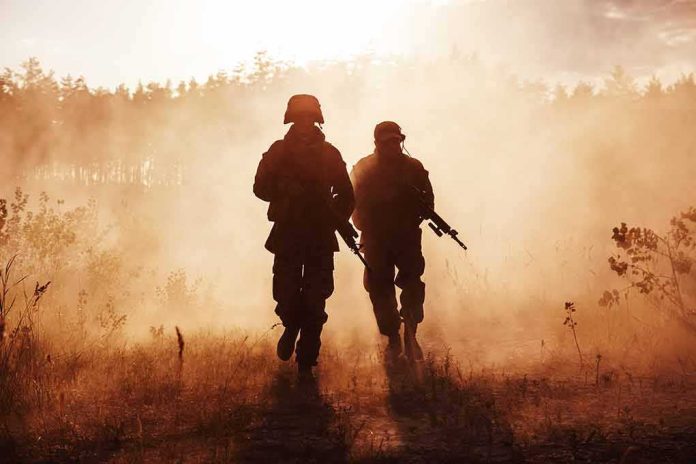
The last U.S. troops have left their final base in Iraq, formally ending the 12-year American-led mission against the Islamic State group, known as ISIS. U.S. Central Command, or CENTCOM, which oversees American forces in the Middle East, says the reason is simple: ISIS “no longer poses a systemic threat” to Iraq’s national security, and Iraqi forces can now handle the threat on their own.
What America leaves behind is an Iraq that now leads its own security and still has to face Iran-aligned militias. Pentagon spokesman Sean Parnell warned that those militias “undermine Iraqi sovereignty and regional stability.”
Story Snapshot
- On Wednesday, September 30, the last U.S. forces completed an “orderly departure” from Erbil Air Base in northern Iraq, CENTCOM said.
- That formally ends Operation Inherent Resolve in Iraq, the U.S.-led fight against ISIS that began in June 2014.
- The U.S. and Iraq now shift to a normal two-country defense partnership, not a wartime coalition.
- The task force headquarters has moved to Jordan to keep working against ISIS in Syria.
Pentagon Confirms Mission End And Final Base Departure
Operation Inherent Resolve is the name the military gave to the U.S.-led campaign to defeat ISIS in Iraq and Syria. It began in June 2014, after ISIS fighters seized large parts of both countries. Since then, CENTCOM says, American and allied forces freed “110,000 square kilometers and over 7 million people” from ISIS control. That is about 42,000 square miles. The Erbil exit follows a plan Washington and Baghdad agreed to in September 2024, which set September 30, 2026, as the end date for the coalition’s military presence.
CENTCOM’s commander, Adm. Brad Cooper, said Iraqi forces “now possess the capacity, leadership, and operational independence to unilaterally manage threats to their homeland.” The command calls the change “a planned transition to a U.S.-Iraq bilateral defense relationship.” Bilateral means a deal between two countries, in this case America and Iraq working directly with each other instead of through a multinational coalition. Training, advice, and information sharing can continue under that kind of deal, while Iraqi forces lead their own security at home.
Iraq’s Leadership Claims A Sovereignty Milestone
Iraqi leaders presented the change as a win for national control. Qasim al-Araji, the Iraqi prime minister’s security adviser, called it an “important milestone.” He said the end of the coalition mission “does not mean the end of the partnership,” and that Iraq will now build security ties with partner nations one on one. For many Iraqis, the day marked the end of the foreign military presence tied to the fight against ISIS.
The Pentagon also pointed to work left for Baghdad. Pentagon spokesman Sean Parnell said Iraq must deal with “Iran-aligned militias that undermine Iraqi sovereignty and regional stability.” Supporters of the exit say Iraqi units, trained through years of joint work, can handle the ISIS cells that remain. Critics worry those militias could see the exit as an opening to squeeze the Iraqi state or threaten its neighbors if Baghdad cannot keep them in check.
What Changes For U.S. Policy And The Region
The end of the Iraq mission follows a familiar U.S. pattern: scale down a large force, keep a smaller footprint, and stay connected through training and advice. The task force headquarters has already moved to Jordan, where it keeps running counter-ISIS work in Syria “alongside Coalition partners and the Syrian government,” CENTCOM said. The United States says this approach limits risk to troops, cuts costs, and respects Iraq’s control of its own land, while keeping the option to respond if ISIS grows again.
For Americans, the step closes a chapter that spans most of the past two decades. For families who served in Iraq, it marks the end of a long mission. Unlike the 2021 exit from Kabul, this withdrawal was planned two years ahead, set on a date agreed with Baghdad, and carried out on schedule. Leaders of both parties have promised an end to open-ended missions before. This one ended on the date both governments set.
Shared Concerns On Costs, Security, And Accountability
Taxpayers on the right and left have long asked how long the United States should police the Middle East. They want clear goals, measured costs, and a real end point. This transition answers that by handing the security lead back to Iraq and giving the United States a leaner role. The region is still tense. Militia violence, cross-border strikes, and economic stress can all shake the gains. Lasting stability will depend on Iraqi institutions, not foreign troops.
People tired of Washington’s “do everything” habit may welcome a smaller mission. People worried about terrorism want to know the threat stays down. The test now is whether a normal defense partnership, clear lines of support, and strong Iraqi leadership can hold the line. If that works, America lowers its costs and its risk. If ISIS regroups, the task force in Jordan is still in place to help.
Sources:
aa.com.tr, amp.dw.com, townhall.com, english.news.cn