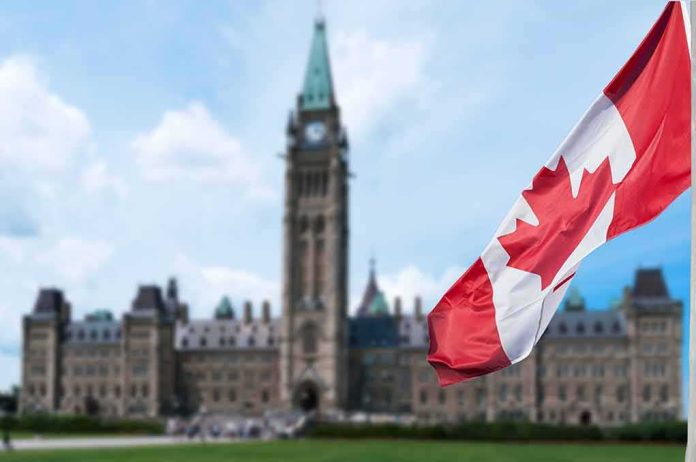
President Trump warned Europe on September 16, 2026, that making Canada an EU “associate member” could be treated as a “hostile act,” and that a hostile act would trigger heavy U.S. tariffs or even a halt to some trade.
Story Snapshot
- Trump tied possible tariffs to whether the EU-Canada plan is a “hostile act.”
- European Union leaders floated Canada as the bloc’s first associate member.
- Canada’s Mark Carney says Ottawa wants a “unique alliance,” not full EU membership.
- Reporters quoted Trump calling the EU plan “laughable” while warning of “very heavy tariffs.”
Trump Links EU-Canada Plan To Possible U.S. Tariffs
President Trump said the United States may hit the European Union with very serious tariffs if Brussels moves ahead with a plan to make Canada its first associate member. He said he would judge the move’s intent and act if he views it as a hostile act against American interests. He also warned he could stop trade in some areas if needed. Multiple outlets captured the same language about “heavy tariffs” and a possible trade halt.
The President tied his warning directly to the associate-membership idea, not to a general dispute. He made clear that if the plan signals a pivot that harms the United States, Europe should expect a strong response. He used simple terms to send a clear message: do not sideline America. He also mocked the plan as “laughable,” underscoring that he sees it as posturing. The message aimed to deter Brussels before any deal hardens into policy.
What Europe And Canada Are Actually Proposing
European Commission President Ursula von der Leyen said she wants to open the door for Canada to become the European Union’s first associate member. She framed it as building links among allies in a tough world. Canada’s Mark Carney said Ottawa seeks a “unique alliance,” not full membership in the bloc. Reuters noted there is no such status in current European Union treaties, which means many details remain undefined and subject to talks.
Canada’s push is about getting closer on trade and cooperation, but not joining European Union institutions. Carney described the idea as positive and said Canada would keep full sovereignty and any final package would face a vote in Ottawa. That suggests a long road to any binding deal. The open questions include what new rules, market access, or standards alignment would come with “associate” status, and how those rules might affect American workers and companies.
Why The U.S. Response Matters For American Workers
The United States relies on fair terms with Europe and Canada to protect jobs, farms, energy, and industry. If Brussels builds a tight club with Ottawa that disadvantages American goods or sets rules without us, U.S. producers could lose sales and leverage. Trump’s warning aims to keep the United States at the table and to stop backroom deals that shift supply chains away from our workers. Tariff leverage pressures allies to consult and keep trade balanced.
The plan is still only an idea, but early signals shape outcomes. If Europe writes the first draft, it will reflect Europe’s aims. If America speaks up now, it can block rules that box out our energy, tech, and farmers. Trump’s stance puts costs on any move that harms U.S. interests. That approach has forced talks before, and it can again. The goal is simple: no special lane for Canada and Europe that leaves the United States stuck at a red light.
Open Questions And Next Steps
Key details remain unclear. The European Union has floated the label, but the legal form does not exist in its treaties. Canada says it is not seeking membership and wants a unique alliance instead. No public text shows specific measures that would directly hurt American exporters. Until Europe publishes terms, the impact is uncertain. The White House can seek clarity while keeping tariff tools ready to stop any deal that sidelines U.S. jobs and supply chains.
Sources:
thegatewaypundit.com, cnbc.com, cnn.com, reuters.com