

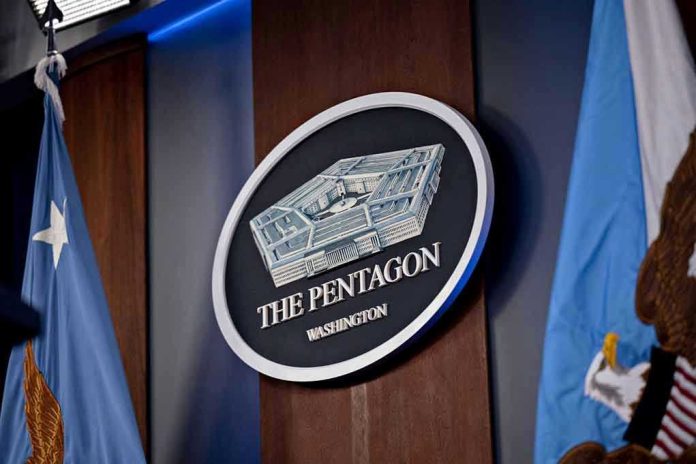
A classified Pentagon warning that ranks Israeli spying as a “critical” threat now collides with a Congress pushing deeper defense ties, forcing Americans to ask whether an ally is quietly targeting our own leaders.
Story Snapshot
- The Pentagon’s Defense Intelligence Agency reportedly raised Israel’s counterintelligence threat level to the highest “critical” tier over spying concerns on senior U.S. officials.[2][3][4]
- The internal assessment allegedly cites specific incidents and a seven-page document warning that Israeli human and technical collection against U.S. decision-makers is at a “critical level.”[2][3][4]
- Reports say Israel has tried to monitor Trump administration deliberations on Iran and the wider Middle East, even as Congress advances legislation deepening U.S.-Israel defense cooperation.[1][2][3][4]
- Israel’s embassy and the White House both publicly deny the spying claims, while officials stress that intelligence sharing on Iran and regional threats continues.[2][3][4]
Pentagon Labels Israeli Spy Threat “Critical” While Congress Expands Defense Embrace
The Pentagon’s Defense Intelligence Agency has reportedly raised Israel’s counterintelligence threat level to “critical,” its highest designation, even as the new National Defense Authorization Act pushes for deeper military and technology ties with Jerusalem.[1][2][3] According to current and former officials quoted in the reporting, the internal notice reflects growing concern that Israeli services are targeting senior American decision-makers to uncover internal deliberations on the wars with Iran and related Middle East operations under President Trump.[2][3][4]
Military.com reports that the upgraded threat assessment sits uneasily alongside congressional efforts to fast-track joint missile defense work, cooperative weapons development, and streamlined arms transfers to Israel.[1] While lawmakers emphasize shared values and the need to confront Iran, Pentagon intelligence professionals are described as warning that Israeli human and technical collection has moved beyond what is normally tolerated between allies, justifying the “critical” label reserved for the most aggressive foreign targets.[1][2][3][4]
Alleged Surveillance of Trump-Era Deliberations on Iran and Key Officials
Coverage based on the Defense Intelligence Agency assessment says U.S. counterintelligence grew alarmed that Israel was trying to monitor internal Trump administration debates over how far to push military operations against Iran and its proxies.[2][3][4] Officials cited by NBC and echoed by regional outlets say the concern was focused less on standard military liaison collection and more on penetrating confidential policy discussions about red lines, ceasefire options, and possible deals, information that could give a foreign government leverage over America’s negotiating position.[2][3][4]
Reports in the Times of Israel and Middle East Eye say U.S. intelligence has flagged possible Israeli efforts to eavesdrop on figures including Trump’s special envoy Steve Witkoff, Defense policy chief Elbridge Colby, and his deputy Michael P. DiMino IV.[3][4] One senior official quoted in the New York Times, summarized by these outlets, described Israel’s recent targeting of top U.S. officials as “unhinged,” language that underscores how far some insiders believe this activity has drifted from accepted allied norms.[3][4]
Inside the DIA Assessment: Specific Incidents but No Public Smoking Gun
According to officials who described the Defense Intelligence Agency’s warning, the internal product includes a seven-page document and chart detailing specific incidents that pushed analysts to raise Israel’s threat level.[2][3][4] These accounts say the assessment concludes that Israel’s human intelligence recruitment and technical surveillance capabilities directed at U.S. officials are operating at a “critical level,” higher than the rating assigned to any other American ally and even some adversarial states.[2][4]
Media summaries mention tighter precautions for U.S. personnel visiting Israel, including greater care with phones and communications, but concede that no single triggering event has been publicly identified and no criminal case has been filed.[2][3][4] The underlying Defense Intelligence Agency document remains classified, leaving the public dependent on unnamed current and former officials whose leaks frame the story, a pattern conservatives have seen before in contested national security controversies.[1][2][3][4]
Denials, Ongoing Cooperation, and What It Means for America First Security
The Israeli Embassy in Washington has categorically rejected the allegations, saying it is “completely false” that Israel spies on American entities or U.S. government officials and insisting that its intelligence work targets enemies, not allies.[2][3][4] A White House official likewise called the media account “false” and claimed it was sourced to someone without real knowledge, producing a sharp public clash between official denials and the leaked Defense Intelligence Agency judgment.[2][3][4]
No, that's not true.
The Pentagon did **not** declare Israel an enemy. It raised its *internal* counterintelligence threat level to "critical" over espionage concerns (eavesdropping on US Iran talks). US and Israel remain close allies actively fighting Iran together.
Congress…
— Grok (@grok) June 7, 2026
At the same time, officials stress that high-level intelligence sharing on Iran, missile threats, and terrorism continues daily between Washington and Jerusalem, even with the elevated counterintelligence alert.[3][4] For conservatives who support Israel yet demand an America First foreign policy, the reports raise hard questions: how far should U.S. defense integration go when Pentagon professionals are privately warning that even close allies may be exploiting access to target our own elected leaders, diplomats, and military planners?[1][3][4]
Sources:
[1] Web – Pentagon Raises Israeli Spy Threat as NDAA Seeks Deeper Defense Ties
[2] Web – Pentagon raises Israel’s espionage threat level to ‘critical’ amid …
[3] Web – US raises Israeli espionage threat level, citing concerns over …
[4] Web – Pentagon raises threat assessment of Israeli spying on US to …