

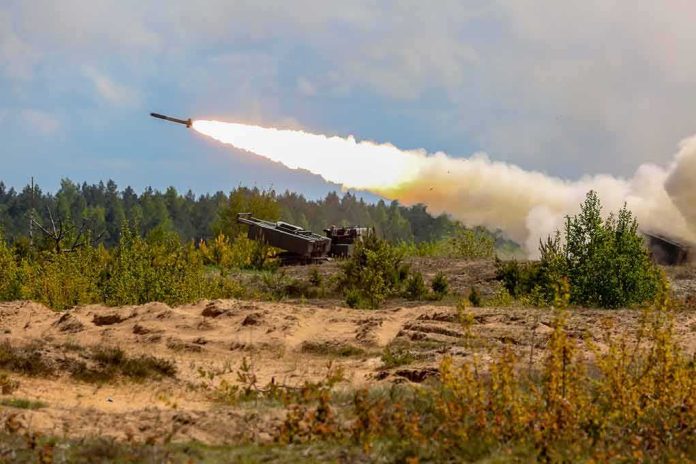
An Iranian cruise missile slammed into a vessel carrying U.S. Marines in the Strait of Hormuz, and eight of them were hurt. They breathed in smoke, showed signs of concussions, and all were soon back on duty. The strike came Monday, September 14, but Americans did not hear about it until Sunday, September 27, when three U.S. officials described it to reporters.
Story Snapshot
- Eight Marines, seven enlisted and one officer, were hurt when an Iranian anti-ship cruise missile hit their vessel.
- Their injuries were smoke inhalation and concussion symptoms such as headaches; none were listed as seriously hurt.
- The vessel was not a U.S. Navy ship, and officials have not named it.
- The Pentagon did not announce the attack; the injuries were logged in a casualty database about 10 days later.
What happened on September 14 in the Strait of Hormuz
The Marines were part of a battalion landing team, a Marine infantry unit that deploys by sea. They were aboard a vessel moving through the Strait of Hormuz during the war with Iran when the missile hit. The Pentagon has not said why it did not announce the strike. A U.S. official told reporters that troop injuries are often listed late because symptoms are not always reported right away.
Officials said the eight suffered smoke inhalation and possible traumatic brain injuries, based on concussion symptoms like headaches. None were listed as seriously hurt, and all returned to duty soon after the strike. Officials described the ship only as a maritime vessel. They said it was not a U.S. Navy ship and did not give its name.
8 US Marines injured after the ship they were operating on was struck by an Iranian cruise missile in the strait of Hormuz two weeks ago.
Why did CENTCOM hide it from the people?
I believe more US soldiers have been killed or injured than they reported.
— Mandrake (@Mandrakealive) September 28, 2026
Why this chokepoint stays dangerous
The Strait of Hormuz is a narrow waterway that carries a large share of the world’s oil and gas shipments. Iran and its rivals have fought over it for decades. During the 1980s “Tanker War,” Iran and Iraq used anti-ship cruise missiles in more than half of all attacks on shipping. A cruise missile lets a country strike hard at sea without a formal declaration of war. That is why every ship in the strait carries real risk.
The September 14 strike came during a long war between the United States and Iran. Days later, Iran offered to reopen the strait and restart nuclear talks, and the administration turned the offer down. The missile that hit the Marines was not part of the public record while that offer was on the table.
How the Pentagon handles quick-return injuries
The military’s casualty system does not update in real time. The eight Marines were added to it nearly 10 days after the attack, with no announcement. The Pentagon referred inquiries about the strike to Central Command. Central Command posted videos and photos on September 14 and 15 but did not mention the missile. The Defense Department did not disclose any September 14 attack on U.S. forces in the region.
That silence fits a wider fight over casualty counts. A recent report found that at least four service members killed since the war began were left out of official totals. The Pentagon rejects claims that it plays down how badly troops are hurt. Families, voters and allies all rely on a clear record of when Americans take fire.
What officials have confirmed so far
Three U.S. officials confirmed the attack, the date, the missile type and the eight injuries. They confirmed the Marines’ ranks and that all eight are back on duty. Officials have not released the vessel’s name, its owner, its cargo or its route. The Pentagon has not released a statement explaining why the strike was not announced.
The United States is the world’s top naval protector of trade lanes, and Marines go where that job sends them. Eight of them took a missile hit for it. Americans deserve to hear about attacks like this when they happen, not nearly two weeks later. A timely record of combat injuries, even minor ones, is a basic duty, not an extra.
Sources:
jpost.com, nbcnews.com, presstv.co.uk, mediaite.com, en.royanews.tv