

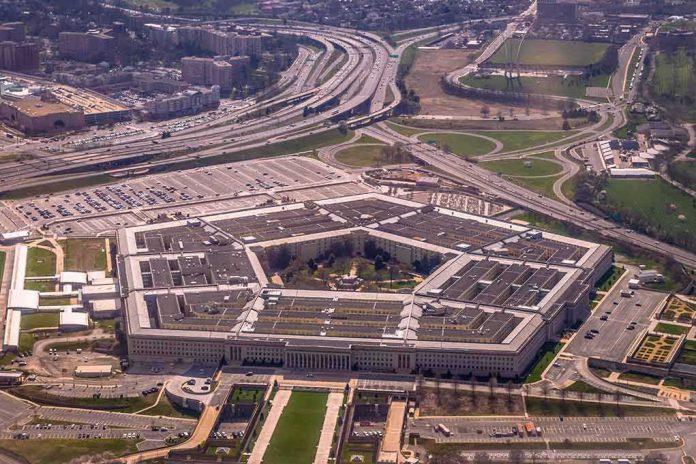
Defense Secretary Pete Hegseth plans to cut one in five positions held by generals and admirals, a move he says will leave the military “unencumbered by unnecessary bureaucratic layers” at the top. It is the second round of cuts to the top brass in less than two years.
Story Snapshot
- Hegseth is set to announce a 20% cut to general and admiral positions on Wednesday, September 30, at Marine Corps Base Quantico in Virginia.
- A Pentagon official confirmed the plan on Tuesday, September 29, according to reports.
- The new cut doubles the 10% cut he ordered in May 2025.
- About 170 positions would go, leaving around 680, and the services have until January 1, 2027.
What Is Changing in the Senior Ranks
Hegseth is set to announce the 20% reduction during his “State of the Force” address, a speech on the condition of the military, at Quantico, a major Marine Corps base south of Washington. The cut covers positions, called billets, for one-star through four-star officers in the Army, Navy, Air Force, Marine Corps, and joint commands. The plan targets the seats, not a mass firing of people. Some jobs will be cut outright. Others will be downgraded so a colonel or a Navy captain can fill them.
A Pentagon source said the reductions apply to billets rather than removing serving officers wholesale. By one count, the cut would remove about 170 positions and leave around 680. As of July 31, 851 of the 857 general and admiral slots allowed by federal law were filled. The services have been told to finish the job by January 1, 2027. That makes this a real change in size, even if much of it comes through retirements and downgrades.
The Rationale and the 2025 Foundation
This step builds on a May 2025 order in which Hegseth called for at least a 10% cut across general and flag officer ranks, plus a 20% cut in four-star jobs and a 20% cut in National Guard generals. Flag officer is the military term for admirals. He said then that the goal was to “drive innovation and operational excellence.” He has also spoken of “removing redundant force structure to optimize and streamline leadership.” Supporters say too many layers slow decisions and drive up costs, and that cutting top jobs pushes authority down to the people doing the work.
The new move doubles that push. Hegseth has called the Pentagon “too top-heavy and focused on regulating troops rather than enabling them.” Critics see it differently. Democratic Sen. Mark Kelly said Hegseth is “in the process of purging the upper echelon of the military from its best leaders.” Analysts who advise Congress describe a real debate: some say extra officers slow decisions, while others say senior leaders are needed to manage allies and new technology. The effect will depend on which billets each service picks.
Why This Matters Beyond the Pentagon
Taxpayers watching debt and inflation want leaner government. Many also dislike a permanent class of insiders who grow while the ranks strain. A clear cut to top billets touches both concerns. It targets what both conservatives and liberals have called a bloated system that rewards rank over results. Done well, it could speed decisions and save money. Done poorly, it could shift boxes on charts without helping troops in the field.
How the plan is carried out will decide what citizens feel. The services have until January 1, 2027, and have not released branch-by-branch lists. Some positions will be eliminated, others downgraded, and some left unfilled after retirements. The plan’s strength will rest on which billets go, where their duties move, and whether troops in the field get faster support. The 20% figure sets the goal, and the final lists will show the impact.
Sources:
cbsnews.com, washingtonpost.com, washingtonexaminer.com, thehill.com, ntd.com, yahoo.com, federalnewsnetwork.com