

President Trump rejected Iran’s seven-day offer to reopen the Strait of Hormuz, telling reporters the deal “would not be acceptable” as he left the White House for a college football game on Saturday, September 26. Iran had asked him to lift the U.S. naval blockade of its ports, waive sanctions on its oil sales and accept a ceasefire that includes Lebanon.
Story Highlights
- Iran’s foreign minister, Abbas Araghchi, said Iran would reopen Hormuz and resume nuclear talks within seven days if the U.S. met three demands.
- The demands: lift the U.S. naval blockade of Iranian ports, waive sanctions on Iranian oil sales and observe a ceasefire that includes Lebanon.
- Trump said, “I’d like to make a deal, too. But that deal would not be acceptable.”
- Trump said Iran wanted a deal because it was “losing so badly.”
What Iran Offered, and Why It Matters for Energy and Security
Araghchi laid out the plan to journalists on Friday night. Under the offer, Iran would reopen the Strait of Hormuz and resume talks on its nuclear program in seven days. In return, the United States would lift its naval blockade of Iranian ports, waive sanctions on Iranian oil sales and observe a ceasefire that would include Lebanon.
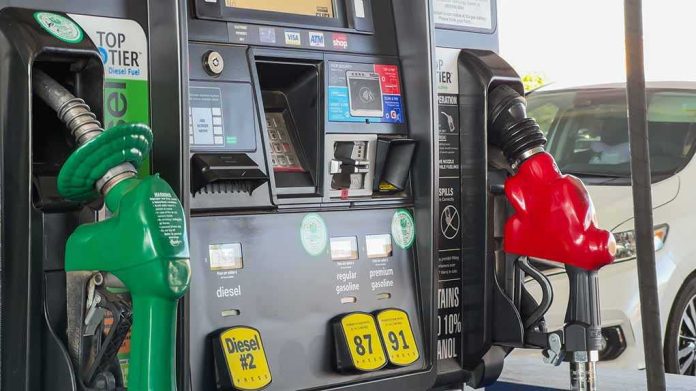
Iran has kept the strait all but closed since U.S. and Israeli strikes in late February. Ship traffic through the waterway dropped sharply after Iranian threats and attacks on vessels. Hormuz carries a large share of the world’s seaborne oil, so any squeeze there hits American families through higher fuel and shipping costs. Iran’s offer asked Washington to give up its pressure first and talk later.
US President Donald Trump said oil prices would fall sharply once the war with Iran ends, adding that he expects the conflict to be over soon. His comments came as indirect US-Iran talks continued, with Iran proposing conditions for reopening the Strait of Hormuz and Pakistan… pic.twitter.com/P0g8wdtxne
— WE News English (@WENewsEnglish) September 27, 2026
Trump’s Response: No Deal on Iran’s Terms
Trump answered on camera. “They want to make a deal and I think that’s fine,” he told reporters outside the White House. “I’d like to make a deal, too. But that deal would not be acceptable.” He said Iran wanted a deal because it was “losing so badly.”
The U.S. naval blockade of Iranian ports is one of Washington’s strongest tools in the war. So are the sanctions on Iran’s oil sales. Lifting both before Iran reopens the strait would hand Tehran relief up front. Trump’s answer keeps that pressure in place. Earlier, he had posted an image on Truth Social that labeled the waterway “Trump Strait.”
What Is Confirmed
Two points are firm. First, Araghchi offered to reopen Hormuz and restart nuclear talks within seven days in exchange for ending the U.S. naval blockade of Iranian ports, waiving oil sanctions and a ceasefire that includes Lebanon. Second, Trump rejected that offer in his own words on Saturday, outside the White House.
Those facts set the picture for now. The blockade stays. The oil sanctions stay. Iran does not get to trade access to a global shipping lane for cash and relief.
Why Conservatives See a Line in the Sand
American strength keeps sea lanes open. Paying off Tehran to stop squeezing a vital waterway would invite more coercion later. Sanctions exist to punish bad acts and curb funding for proxy attacks. Lifting them first, on a promise to talk later, reverses that logic. Trump’s rejection keeps the burden on Iran to reopen Hormuz without a payout and to prove it is ready for real talks, not a quick cash grab dressed up as diplomacy.
The bottom line for readers at home is simple. Protecting freedom of navigation protects your wallet and our allies. Standing firm against an access-for-relief swap tells every hostile regime that America will not buy back rights it already holds under international law. If Iran wants a path forward, it can reopen the strait, stop proxy fire and come to the table. Then, and only then, should relief be on the table—earned, verified and reversible.
Sources:
pbs.org, dw.com, apnews.com, euronews.com, semissourian.com