

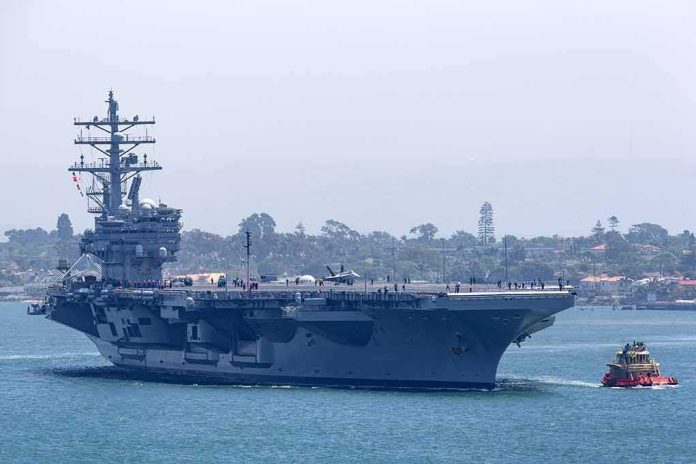
America’s 11 nuclear aircraft carriers all depend on one U.S. shipyard to build and refuel them, creating a single point of failure for wartime readiness.
Story Snapshot
- Newport News Shipbuilding is the only U.S. yard that designs, builds, and refuels nuclear carriers.
- Government auditors found 75% of carrier and submarine maintenance finished late in 2015–2019.
- Aging shipyards and worker shortages drive delays that cut the number of ready carriers.
- Public yards that repair carriers also face major backlogs and poor facility conditions.
One Yard Builds and Refuels Every U.S. Nuclear Carrier
Newport News Shipbuilding in Virginia, a division of HII, is the nation’s only designer, builder, and refueler of nuclear-powered aircraft carriers, including the Nimitz and Ford classes. Company and public records consistently state that no other U.S. yard can perform those core carrier tasks. This monopoly streamlines design control but concentrates risk. Any slowdown, strike, accident, or supply shock at this single site can ripple across carrier construction, midlife refueling, and complex overhauls.
The U.S. Navy operates 11 nuclear carriers, but only a fraction are deployable at once due to maintenance cycles. That reality makes throughput at this one shipyard vital. When a carrier enters refueling and complex overhaul at midlife, it stays pierside for years. If that work slips, the fleet loses an air wing at sea for longer than planned. This dynamic ties daily global presence to a handful of specialized dry docks and trades at one private yard.
Maintenance Delays Cut Readiness Across the Fleet
The Government Accountability Office reported that Navy shipyards finished 75 percent of planned maintenance late for carriers and submarines from fiscal years 2015 through 2019, with long average delays. Auditors linked the overruns to limited capacity, old facilities, and thin skilled labor pipelines. These delays reduce the number of ready ships on any given day. Each late availability pushes back training, deployment windows, and follow-on repairs, creating a cascading readiness gap.
Independent reporting has charted how years of heavy use, crisis surges, and deferred work left “no margin” in carrier schedules. On each coast, only one public naval shipyard can handle carrier repair availabilities, and both also support ballistic missile submarine work that crowds the calendar. When these public yards run late, even a finished private-yard refueling cannot restore full fleet output on time. The result is a bow wave of late ships and stressed crews.
The picture everyone is posting right now vs the picture everyone should be posting…
Who gives a damn what frigate the Navy buys from a foreign shipyard if we don’t even have a plan for building new shipyards in the US? Or reopening closed yards?
The point is to make a deal to… pic.twitter.com/YjEb6xxUVJ
— USMaritimeAction (@USAMaritimeX) September 2, 2026
Public Shipyards Face Aging Infrastructure and Backlogs
The Government Accountability Office found the Navy’s four public shipyards in poor condition, with a large and growing backlog of facility repairs that will take many years to clear. Old dry docks, outdated shops, and limited space slow complex jobs and increase rework. These conditions make it harder to train new workers, keep tools modern, and hit tight schedules. The same bottlenecks that stall submarines also bog down aircraft carrier maintenance.
Recent reviews urged the Department of Defense and the Navy to set clear metrics, align investments, and develop a ship industrial base strategy that matches future demand. Analysts warned that capacity shortfalls will persist without faster upgrades and sustained hiring. The Congressional Budget Office has also tied overruns to larger work scopes and a workforce that has not kept pace with the load. That mix drives longer availabilities and higher costs.
Why This Matters to Both Sides of the Aisle
Taxpayers fund a carrier force to deter wars and respond fast. When a single yard and aging public facilities hold the keys, the margin for error shrinks. Conservatives see waste, slow projects, and dependence on sole suppliers as proof that big systems protect contractors, not citizens. Liberals see strained workers, outdated plants, and planning gaps that reward insiders while undercutting public goals. Both concerns point to the same risk: weakened readiness and higher bills.
Fixing the problem demands practical steps, not slogans. The Navy and Congress can expand skilled training, modernize dry docks, and lock in stable funding that smooths production. HII’s yard remains essential, but public yards need faster upgrades and smarter scheduling to keep carriers on time. Clear metrics and a transparent industrial base plan would show real progress and rebuild trust. The nation’s sea power should not hinge on one chokepoint or crumble under preventable delays.
Sources:
en.wikipedia.org, globalsecurity.org, navytimes.com, mapshock.com, gao.gov, files.gao.gov, cbo.gov