
Venezuela’s shattered hospitals, broken communications, and a closed main airport exposed a regime unready for crisis while lives hung in the balance.
Story Highlights
- Opposition leaders say the state abandoned victims and begged the world for aid [1].
- Simón Bolívar International Airport closed after quake damage, choking relief routes [3].
- Nobel Peace Prize laureate María Corina Machado cites thousands displaced across key states [1][7].
- Caracas announces emergency steps, but gaps and weak data fuel distrust [1][10][12].
Opposition Blames State Failure As Quakes Expose Deep Weakness
María Corina Machado and Edmundo González said the government abandoned its people after two deadly earthquakes rocked Venezuela. They reported little official information and pleaded for urgent international aid. González said rescue teams, the health system, and communications arrived “destroyed,” underlining a collapse in basic capacity. Their case centers on real-time scenes of chaos and human need. It also highlights years of decay that many Venezuelans have felt in daily life long before the ground shook [1].
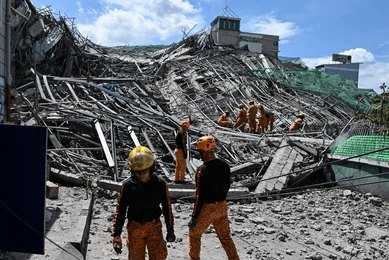
Machado listed states where people fled crumbling homes: Caracas, Vargas, Aragua, Carabobo, Yaracuy, and Lara. She described “critical” pain and warned that “every hour counts.” Those words match what many see on the streets: families outside, structures cracked, and services down. These claims do not carry full counts of deaths or collapses. But they map a wide disaster zone that strains any relief system, even one that is well led and well supplied [1].
Airport Shutdown And Lifeline Disruptions Slow Relief
Machado said the nation’s main airport, Simón Bolívar International, shut down due to quake damage. That closure blocks a major path for foreign aid, medical teams, and supplies. When a runway or terminal is unsafe, logistics stall, and hours turn deadly. In disasters, speed saves lives. A broken air bridge means field hospitals, search dogs, and generators face delays that no community can afford in the first seventy-two hours after impact [3].
Communication breakdowns compound the crisis. Opposition leaders say lines and systems failed when people needed them most. Venezuela’s recent history supports that concern. Analysts have long tied outages and weak infrastructure to years of neglect and mismanagement. The Council on Foreign Relations details how chronic decay and autocracy drained capacity and trust. Those structural issues turn a natural disaster into a national emergency that lasts long after the shaking stops [16].
What Caracas Claims And Where Doubts Remain
Government leaders announced a state of emergency and said they mobilized rescue operations. Reports described coordination with businesses for heavy equipment and offers of help from other nations. Officials also urged medical staff to report to work and suspended schools. These steps match a standard playbook. But they do not answer key questions about readiness, stockpiles, and why core systems buckled so quickly under stress [10].
Data remains thin. Early tallies varied across outlets, and numbers changed as searches advanced. Some reports cited dozens of deaths and many injuries, while others feared higher totals as more rubble was cleared. Without transparent engineering audits or open response logs, citizens cannot judge whether failures stemmed from force of nature alone or from years of neglect. That gap feeds doubt in a country where truth is often hard to verify in real time [12].
Why This Matters For Americans And The Region
Border security, energy markets, and migration all tie the United States to Venezuela. When the regime fails, people flee. Chaos feeds cartels, traffickers, and instability. A durable recovery starts with facts, not spin. Independent engineers should assess collapsed sites. Open response logs should show where resources went and when. Nobel Peace Prize recognition for Machado in 2025 underscores why outside voices push for transparency and free institutions that can handle crises without hiding the ball [7].
The Trump administration says America stands ready to help, but help must reach those in need fast and cleanly. Aid should move through channels that avoid regime manipulation and protect donors and victims alike. That means strict tracking, on-the-ground audits, and public reporting. It also means pressure for open communications so families can find loved ones and rescue teams can coordinate. Accountability is not politics. It is how lives get saved and how nations rebuild with honor [8].
Sources:
[1] YouTube – ‘Catastrophic situation’: María Corina Machado on aftermath of two …
[3] Web – Venezuela reeling after powerful twin earthquakes kill at least 32 …
[7] Web – Venezuela earthquake kills at least 164 and downs buildings … – BBC
[8] Web – Maria Corina Machado – Facts – 2025 – NobelPrize.org
[10] Web – Nobel Peace Prize winner, Maria Corina Machado, says … – Instagram
[12] YouTube – Government Declares State of Emergency After 7.5 and …
[16] Web – NEWS UPDATE: Venezuelan president declares state of emergency …