
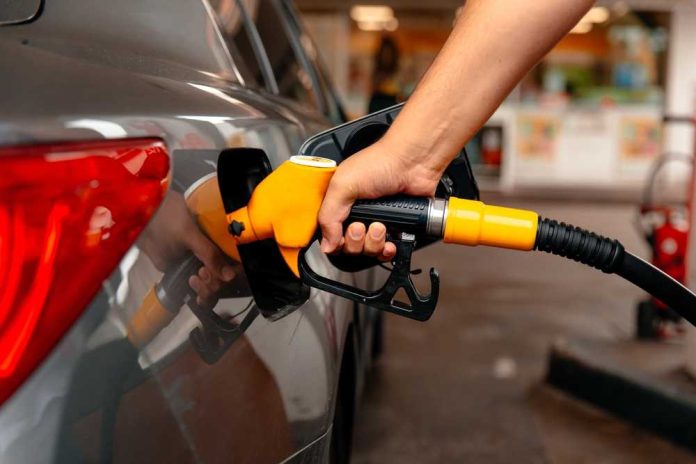
Six states are set to raise gas taxes on July 1, and the timing has turned a routine budget issue into a symbol of how far public trust has fallen.
Quick Take
- California, Washington, Illinois, Maryland, Virginia, and Mississippi are scheduled for higher state gas taxes on July 1.[1]
- The increases are tied to different state laws, including inflation formulas and transportation funding rules.[1][6]
- Critics say the timing clashes with America 250 and hits drivers at the pump, where every cent is noticed fast.
- The public record in the research package does not show that the states officially framed the hikes as an America 250 celebration.[1][6]
Why the Story Took Off
The headline spread because it turns a technical tax change into a simple and angry message. Drivers in six states are scheduled to pay more at the pump beginning July 1, and that is easy to tie to a patriotic milestone. The framing lands in a country where many people already think government acts first for itself and only later explains why.[1]
That reaction is not hard to understand. Fuel taxes are visible, immediate, and unpopular when prices are already high. The research shows that California, Washington, Illinois, Maryland, Virginia, and Mississippi all have planned increases, but it also shows that the mechanisms differ from state to state. Some are annual inflation adjustments. Others come from legislation passed for transportation funding.[1][6]
What the Research Shows About the Tax Hikes
The strongest fact in the record is that the increases are real, but they are not all the same. The Illinois and Maryland changes are tied to automatic formulas, while Washington’s higher rate is linked to earlier legislation and future inflation indexing. California’s increase also comes from a formula. The package does not show one coordinated six-state vote to mark America 250 with a new gas tax.[1][6]
That matters because it changes the meaning of the story. If lawmakers had openly paired the tax hikes with the semiquincentennial, the criticism would be much stronger. But the research package instead points to a mix of budget needs, formula rules, and transportation funding plans. The public may still dislike the timing, but the evidence supports a more limited claim: the taxes are rising now, and the anniversary framing is mostly an outside narrative.[1][5][6]
Why Drivers Are Likely to Push Back
Even when the policy reason is practical, the cost lands on ordinary people first. Fuel taxes affect commuters, small businesses, truckers, and farmers right away because they buy fuel every week. The cited reporting also says Washington drivers were already frustrated by higher prices, which helps explain why this story spread so quickly. People may not follow tax law, but they notice what shows up at the pump.[3][5]
The broader problem is trust. When state leaders raise taxes through formulas or automatic triggers, many voters see a system that moves without much public control. Supporters call it stable budgeting. Critics call it hidden tax growth. Both views have some basis in the record. The transportation agencies say the money is for roads and infrastructure, while opponents see another example of government finding new ways to charge people more while offering little relief.[1][6][7]
That split explains why this story travels well beyond tax policy. It touches a deeper concern shared by many voters on both sides: officials often seem more comfortable defending systems than defending taxpayers. The research does not prove a coordinated America 250 campaign. It does show a set of scheduled gas-tax increases that are easy to sell as another sign that everyday Americans are paying more while government keeps asking for more room in the family budget.[1][3][6]
Sources:
[1] Web – Meet the Six States Celebrating America 250 by Raising Your Gas Tax
[3] Web – Just in Time for the Holiday, 8 States Raise Gas Taxes
[5] Web – State Gas Taxes: What They Are And How Much You Pay – NerdWallet
[6] YouTube – Washington state’s gas tax jumps 6 cents
[7] Web – Recent Legislative Actions Likely to Change Gas Taxes