

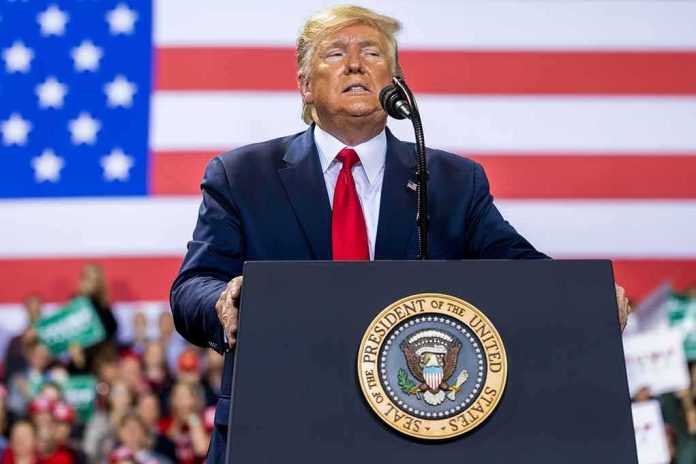
Trump’s endorsements are still shaping Republican primaries even as a string of losses raises hard questions about how far his sway really goes.
Story Snapshot
- Trump’s endorsement remains a prized asset in most Republican primaries.
- Several August losses show his backing is powerful but not automatic.
- Media tallies differ, fueling clashing stories about strength versus slippage.
- Voters and some Republicans are showing selective resistance in key races.
Endorsements As A Force In Republican Primaries
Reuters reported that President Trump entered the 2026 cycle moving early and often, endorsing at least 16 Senate hopefuls and at least 47 House candidates, which is unusual so far from Election Day. Campaigns still treat his nod like gold because it can unlock donations, attention, and volunteer energy. That incentive shapes how candidates speak and vote. Many lean into Trump’s issues to avoid being tagged as disloyal, since crossing him can spark blowback among primary voters.
The Washington Post and other outlets described how Trump personally dove into contested races and backed them with travel and outside spending, including significant support routed through allied committees. That kind of intervention can change the math in low-turnout primaries, where a small, motivated base can decide outcomes. This helps explain why so many contenders still chase his backing. It is not just symbolism. It is a package that can move votes when margins are thin.
🔥TRUMP ENDORSEMENT LIFTS DARLINE GRAHAM TO HISTORIC RUNOFF WIN IN SC🔥*
The Graham name STILL runs South Carolina 😤
*Darline Graham* just toppled Rep. *Ralph Norman* in the GOP runoff to replace her late brother, Sen. *Lindsey Graham* ⚡
*WHY SHE WON:* 👇
⚡ Trump… https://t.co/XNZbqQ6RaS— Swizz (@Swizz0909) August 26, 2026
A String Of Losses And What They Do And Do Not Mean
Coverage also shows the limits. Multiple Trump-endorsed hopefuls lost primaries in August, including high-profile races that drew national attention. NBC and others framed these as setbacks but stressed that Trump-backed candidates were still winning most contests overall. The picture is mixed: his support lifts many, yet it cannot rescue a weak campaign, erase a bad debate, or beat a strong local favorite. Candidate quality and district fit still matter a great deal.
Different outlets counted losses with different cutoffs and race types, which produced totals like 10, 12, or 13 defeats and fueled dueling narratives about momentum. That noise matters because perception drives power. If voters and donors hear “slump,” they may hedge. If they hear “dominant,” they rush to align. The same numbers can feed both stories, depending on which races and dates are included. That keeps the fight over “grip” alive week to week.
Signs Of Selective Resistance Inside The Party
Some Republicans in Congress have shown they will break with Trump on process and policy. Politico reported that five Republican senators helped advance a measure to limit presidential war powers, a notable warning shot this year. This does not mean a broad revolt. It does show that, when costs feel manageable, some lawmakers will assert independence. That tension mirrors primaries where local issues, not national loyalty tests, decide votes.
CNN’s reporting underscored that point on the voter side. Trump-endorsed candidates have fallen in several states, and polling showed rising discontent among Republicans and Republican-leaning independents on some issues. These losses do not erase his edge in many primaries. They do show that the base is not one bloc and that trust in a local figure, a record, or a hometown brand can beat a presidential nudge. In other words, personal politics cuts both ways.
Why This Matters For Voters Tired Of The Game
The stakes reach beyond one leader. Early endorsements, heavy outside spending, and insider pressure can shrink real choice for regular voters. When one figure steers money and attention, many candidates change course to please that person, not the people they serve. That pattern upsets conservatives and liberals who feel the system rewards loyalty over results. Voters want safer streets, lower prices, and fair energy costs. They see a party machine first and solutions second.
🔥TRUMP ENDORSEMENT LIFTS DARLINE GRAHAM TO HISTORIC RUNOFF WIN IN SC🔥*
The Graham name STILL runs South Carolina 😤
*Darline Graham* just toppled Rep. *Ralph Norman* in the GOP runoff to replace her late brother, Sen. *Lindsey Graham* ⚡
*WHY SHE WON:* 👇
⚡ Trump… https://t.co/XNZbqQ6RaS— Swizz (@Swizz0909) August 26, 2026
Looking ahead, watch three markers. First, how many late endorsements Trump makes in close races, where risk is higher. Second, whether party committees and big donors mirror his picks or hedge. Third, how many non-endorsed Republicans still copy his platform to avoid a backlash. If those numbers stay high, his pull remains strong. If they fade, local voices may be winning back space. Either way, voters should demand plans, not pledges, before handing out power.
Sources:
nytimes.com, dailykos.com, politico.com, cnn.com