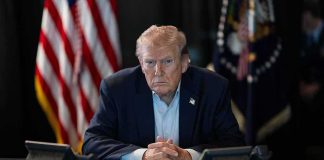
President Trump just told federal health regulators to move faster on psychedelic treatments for veterans—an unusually direct challenge to the slow, risk-averse bureaucracy many Americans believe has failed people in crisis.
Quick Take
- President Donald Trump signed an executive order on April 18, 2026, directing the FDA to expedite review of certain psychedelic drugs designated as “breakthrough therapy.”
- Joe Rogan attended the Oval Office signing and was credited by Trump as a key catalyst after urging immediate action on veteran suicide and mental health.
- RFK Jr. and other attendees argued the order aims to reduce legal and administrative barriers that slow research and access.
- The main uncertainty is what the order’s full text requires in practice, since the public discussion centered on urgency and outcomes more than specifics.
What Trump’s order directs the FDA to do
President Trump signed an executive order in the Oval Office on April 18, 2026, telling the Food and Drug Administration to expedite review of psychedelics that already carry “breakthrough therapy” status for mental health treatment. The remarks at the signing framed the move as a push for speed and accountability inside the federal health apparatus, with a particular emphasis on helping veterans facing PTSD, depression, addiction, and suicide risk.
Speakers highlighted ibogaine as a controversial example: a drug discussed as potentially helpful for addiction and trauma, but restricted enough that some veterans have sought treatment outside the United States. The event’s public messaging focused less on cultural politics and more on process—whether Washington can responsibly move faster when lives are at stake, rather than defaulting to delays and paperwork.
Joe Rogan’s unusual role in a White House health announcement
Joe Rogan’s presence was central to the story because the president directly credited him for pushing the issue into immediate action. Trump said Rogan had called to stress the urgency of helping veterans, and the tone of the exchange suggested the administration wanted a clear, human narrative: people suffering now, and a government expected to respond now. Rogan said the order would save lives.
That dynamic also reflects a broader 2020s trend: influential media figures can sometimes force attention onto issues that stall in standard channels. Supporters see that as democratic pressure from outside the “expert class,” while critics often worry it bypasses established guardrails. In this case, the public record available from the event shows strong agreement among the attendees shown, with no on-camera dissent or detailed counterargument presented.
Veterans, ibogaine, and the tension between access and evidence
Veterans at the signing described personal stories of relief after psychedelic-related treatments, presenting the order as a moral response to ongoing suffering. The event also referenced veteran suicide as a driving concern, with Trump suggesting the numbers were “down a little bit” but still unacceptable. Those comments were qualitative, not a statistical briefing, and no full dataset was presented during the remarks.
The policy challenge is clear even from the limited material available: speeding the process may help expand options, but the federal government still has to prove safety and effectiveness through credible trials. Breakthrough-therapy pathways are designed to accelerate promising treatments, yet they do not eliminate the need for evidence. The signing emphasized the “get it done” urgency, while offering fewer details about how the agencies will balance speed with rigorous evaluation.
Why this matters beyond psychedelics: bureaucracy, trust, and “who government serves”
The signing landed in a political climate where many Americans—conservatives and liberals alike—believe federal institutions protect themselves first and the public second. The administration’s framing leaned into that frustration by treating FDA delays as a solvable obstacle rather than an untouchable process. For conservatives wary of entrenched agencies, this is an example of elected leadership attempting to force responsiveness from a permanent bureaucracy.
At the same time, the event underscored a real limitation: a single high-profile moment does not automatically translate into workable rules, funding, clinical infrastructure, or consistent outcomes across the country. The public discussion did not include the full text of the executive order, nor did it clarify which specific drugs qualify, what deadlines apply, or how access might change for patients. Those details will determine whether the promise becomes practice.
For now, the most concrete takeaway is what the White House signaled: veterans’ mental health is being treated as an urgent national priority, and the FDA is being told to move faster where existing regulatory pathways already allow acceleration. Whether that delivers real results will depend on the next steps inside HHS and the FDA—steps that are harder to film, easier to delay, and ultimately impossible to fake if outcomes don’t improve.