

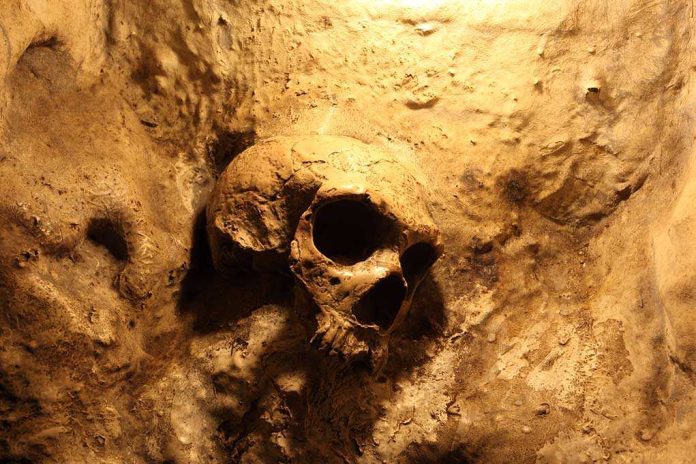
The tragic death of John Edward Jones in Utah’s Nutty Putty Cave remains a chilling reminder of human vulnerability against nature’s unforgiving confines.
Story Snapshot
- John Edward Jones died trapped in a cave, sparking renewed safety discussions.
- Efforts to rescue him over 24 hours were futile due to extreme constraints.
- The cave has since been sealed, leaving his body permanently entombed.
- Brandon Kowallis, who documented the incident, highlights rescue impossibilities.
The Unforgiving Nature of Nutty Putty Cave
John Edward Jones, a 26-year-old medical student, met a tragic fate in Nutty Putty Cave, Utah, on November 25, 2009. While exploring with his brother and friends, he took a wrong turn, becoming trapped head-first in a narrow passageway measuring a mere 10 by 18 inches. This unimaginable scenario led to an impossible 24-hour rescue effort that ultimately ended in his death.
The incident’s harrowing details gained widespread attention, emphasizing the extreme physical constraints that rendered rescue efforts futile. The passage’s dimensions and the inverted position caused severe physiological stress, including blood rushing to his head and fluid accumulating in his lungs, ultimately leading to cardiac arrest.
Rescue Efforts and Limitations
Despite the tireless work of rescue personnel and the use of specialized equipment, the physical constraints of the cave made extraction impossible. Brandon Kowallis, a cave explorer present during the rescue, documented the efforts in detail. He noted the geometric impossibility of repositioning Jones due to the passage’s tight confines, which prevented any effective rescue maneuver.
The tragic incident underscores the limitations even well-equipped teams face in extreme conditions. The cave’s entrance has since been sealed, serving as a somber memorial to Jones and a stark reminder of the risks inherent in adventure exploration.
Impact and Legacy
The Nutty Putty Cave tragedy has had lasting impacts on the caving community and beyond. It raised awareness of the dangers of cave exploration, leading to reinforced safety protocols and more stringent rescue training. The incident also serves as a cautionary tale for extreme sports enthusiasts, reminding them of the importance of proper preparation and the inherent risks involved in such activities.
Brandon Kowallis’s firsthand account continues to educate the public about the limits of human intervention in the face of nature’s overwhelming power. His documentation serves not only as a tribute to John Edward Jones but also as a valuable educational resource for those involved in rescue operations and extreme sports.