

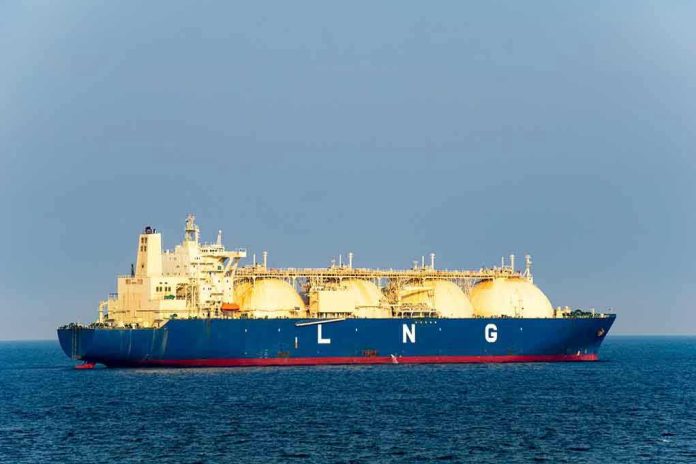
At least 16 sanctioned oil tankers have attempted to evade a U.S. naval blockade, challenging America’s resolve to enforce sanctions on Venezuelan crude exports.
Story Highlights
- 16 sanctioned tankers fled Venezuelan ports post-Maduro capture, defying U.S. blockade.
- Departures underscore reliance on a shadow fleet known for sanctions evasion.
- The U.S. has already seized multiple tankers, maintaining a strict enforcement stance.
- Operation Southern Spear aims to cut off Venezuela’s vital oil revenue streams.
U.S. Naval Blockade Challenges Venezuelan Oil Exports
Following the capture of Nicolás Maduro by U.S. forces on January 3, 2026, a bold strategic move unfolded as at least 16 sanctioned oil tankers departed Venezuelan ports. These tankers, part of a shadow fleet, attempted to slip past the U.S. naval blockade under Operation Southern Spear. This operation, initiated on December 17, 2025, aims to curtail Venezuelan oil exports by enforcing sanctions through a naval quarantine.
The tankers, capitalizing on tactics like identity spoofing and disabling AIS tracking, underscore the lengths to which sanctioned entities will go to evade enforcement. This fleet, previously involved in transporting Iranian and Russian oil, now finds itself at the center of a geopolitical and economic showdown.
By January 5, 2026, the coordinated departure of these tankers reflected a calculated attempt to escape potential U.S. seizure. The U.S., having already intercepted several vessels such as the Skipper and Bella 1, continues to assert its naval capabilities in enforcing sanctions, signaling a robust defense of its foreign policy interests.
Operation Southern Spear and Its Strategic Implications
The U.S. naval blockade strategically targets Venezuela’s oil revenue, a primary source of income for the previously Maduro-led regime. By enforcing comprehensive sanctions, the U.S. aims to dismantle the economic infrastructure supporting the Venezuelan government and its affiliates. This move is part of a broader strategy to destabilize sanctioned regimes and assert U.S. influence over global energy markets.
The blockade has already resulted in significant disruptions to Venezuelan oil exports, with many tankers remaining anchored in Venezuelan waters, fearing interception. Export volumes have plummeted, leading to financial strain and potential economic repercussions for Venezuela, which faces operational challenges as storage capacities near their limits.
The Broader Geopolitical Context
Venezuela’s alignment with countries like Russia, Iran, and China complicates the geopolitical landscape. The shadow fleet, pivotal in moving sanctioned oil, exemplifies the intricate networks defying international sanctions. These networks’ reliance on deceptive maritime practices highlights the challenges of enforcing global trade regulations.
As the U.S. maintains its blockade, the potential for geopolitical friction rises, particularly with countries whose flagged vessels are involved in these trades. This ongoing situation may influence future diplomatic relations and the enforcement of international maritime law.
Sources:
Sanctioned tankers leave Venezuela as US tightens oil blockade
United States oil blockade during Operation Southern Spear
US moves to seize Venezuela-linked oil tanker
US seizes two more ships as Trump tightens Venezuela quarantine