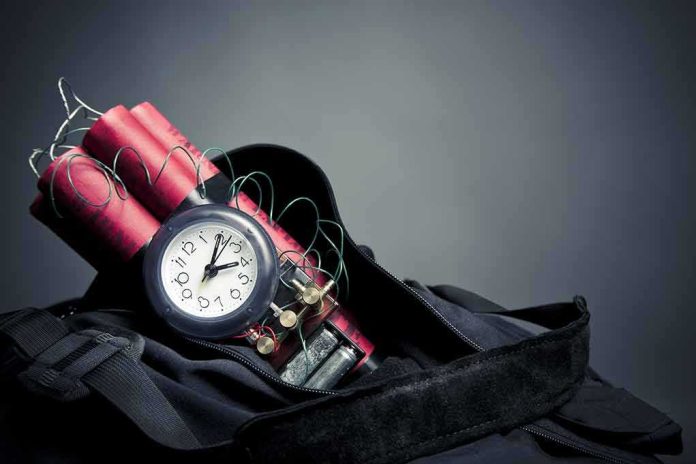
Federal prosecutors say a 35-year-old Albany woman pledged loyalty to ISIS and moved to bomb New York’s State Capitol, before agents arrested her as she sought what she thought was an explosive device.
Story Snapshot
- Justice Department charged Jessica Bowie with attempting to support ISIS.
- Agents arrested her after she sought what she believed was a bomb.
- Complaint quotes goals to kill senators and destroy the Capitol.
- Bowie remains presumed innocent while the case proceeds.
What prosecutors say happened in Albany
The Department of Justice said Jessica Bowie, 35, of Albany, was charged with attempting to provide material support to the Islamic State group, a designated foreign terrorist group. Prosecutors alleged she planned an attack on the New York State Capitol in Albany and intended to cause mass harm. The Justice Department said Bowie voiced support for the group and took steps to act on the plot. She made an initial court appearance after her arrest, which began the formal legal process.
The United States Attorney’s Office for the Northern District of New York said agents apprehended Bowie as she gained possession of what she believed was an explosive device. That detail signals a controlled operation. It also places the arrest at the point prosecutors say the plan moved from talk to action. Officials said the sting aimed to stop any real-world harm while preserving evidence for court. Bowie now faces a federal charge that can carry up to 20 years.
Key allegations from the criminal complaint
The criminal complaint, as reported by the British Broadcasting Corporation, states that Bowie pledged allegiance to the Islamic State group and discussed plans to attack the State Capitol. The report says she spoke about destroying much of the building and killing state senators. Those words, if accurate, show intent and target selection. The complaint’s language will be tested in court through evidence such as recordings, messages, and witness testimony before any verdict is reached.
Local coverage summarized statements agents say Bowie made after her arrest that point to awareness of the charge and penalty range. That reporting quotes her as saying there was “no helping me” and that she expected a long prison term, according to the complaint. While those lines, if admitted, may affect a jury, they remain allegations until proven. Defense counsel can contest context, accuracy, or admissibility during pretrial hearings.
Why this case resonates beyond one arrest
This case touches broad concerns many Americans share about safety, trust, and power. People on the right worry about porous security, online radicalization, and government that reacts late. People on the left worry about violence against public institutions and the risk that fear can erode civil rights. Both sides see a system that often seems reactive and opaque, where officials hold key facts while citizens get fragments and headlines during a crisis.
Researchers have documented that many post-September 11 terrorism cases rely on informants or undercover work, which can fuel debate about entrapment and predisposition. Those studies argue that early government framing tends to shape public opinion before trials test the evidence. That does not erase real threats. It does remind us to look for verifiable facts, such as recordings, timelines, and who supplied means and momentum, when judging the strength of a case in court.
What to watch next in the legal process
Court filings will likely reveal more about how investigators first identified Bowie, how long they monitored her, and what evidence supports the intent and capability claims. The judge will weigh any defense motions about the sting’s scope and the handling of evidence. If the case goes to trial, jurors will decide whether the government proved material support beyond a reasonable doubt under federal law. Until then, Bowie is presumed innocent, as the Justice Department itself states.
BREAKING
Woman charged in an alleged ISIS-inspired plot targeting the New York State Capitol, federal officials say pic.twitter.com/XFJUYZwXfK
— Tmynews (@tmynewspapers) August 21, 2026
For citizens, two things can be true at once. First, targeting elected officials and a statehouse is a grave threat that demands swift action. Second, a system worthy of trust must show its work. Clear evidence, fair process, and accountable oversight help citizens judge whether agencies stopped a real attack or mainly steered a troubled person into a doomed plot. That clarity is how a free country stays both safe and true to its values.
Sources:
time.com, abc11.com, justice.gov, cbs6albany.com