

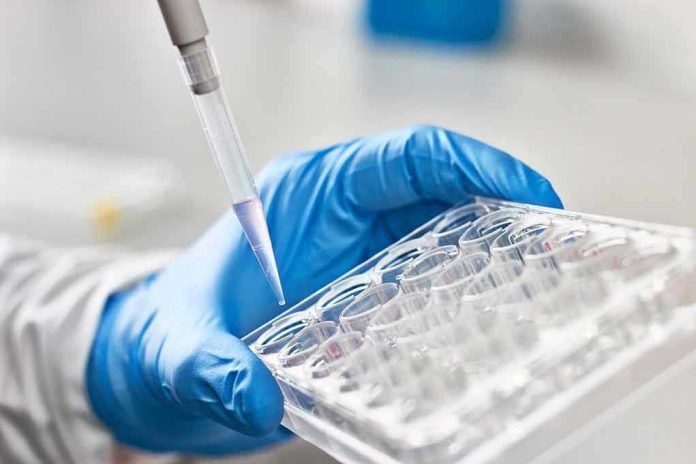
A groundbreaking chemical breakthrough promises to revolutionize recycling, yet its impact on the massive plastics industry remains uncertain.
Story Snapshot
- New catalyst methods could dramatically improve plastic recycling.
- These methods promise a 94% recovery rate for certain plastics.
- Efforts align with conservative values by reducing environmental waste without costly government mandates.
- Future scalability and economic impact raise questions.
Innovative Chemistry in Plastics Recycling
Northwestern University researchers have developed a method using a molybdenum catalyst and air moisture to break down PET plastics, such as bottles, achieving a 94% recovery of terephthalic acid (TPA) within four hours. Unlike traditional recycling methods that require high energy and release harmful emissions, this new approach is environmentally friendly, aligning with conservative values of innovation and efficiency.
Potential Economic Impacts
The economic implications of this development are significant. The breakthrough could see the recycling market boom by over $100 billion, as the cost of recycled TPA becomes competitive. However, the transition to this new method could disrupt the current $600 billion plastics industry, potentially leading to resistance from petrochemical giants who benefit from the production of virgin plastics.
Understanding these shifts is crucial for stakeholders and policymakers who aim to foster economic growth while maintaining environmental integrity.
Scalability and Future Challenges
While the laboratory results are promising, concerns remain about the scalability and potential environmental impacts of these new methods. The process needs to be tested on a larger scale to ensure it can handle mixed and colored plastics effectively without creating new environmental problems. The industry must also verify the long-term viability and economic feasibility of these technologies.
These developments could pave the way for a more sustainable future, balancing economic and environmental needs without excessive regulation.
Sources:
Anthropocene Magazine: A Way to Recycle Notorious Plastic
TechExplorist: Simple Method Break Down Plastic Using Air Moisture
BBC Earth: Turning Carbon Emissions into Plastic
Rutgers University: Scientists Develop Plastics Can Break Down