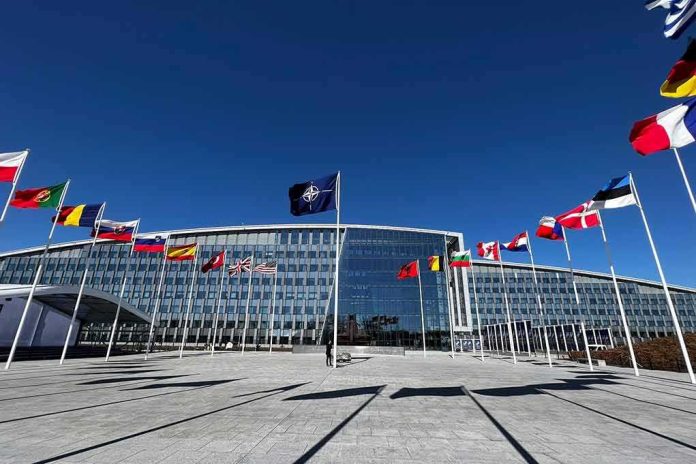
A Canadian intern at NATO’s military headquarters in Belgium has been arrested on spying charges, and prosecutors say the case is still at an early stage.
Story Snapshot
- Belgian prosecutors say the suspect is a Canadian woman of Chinese origin.
- Authorities say she worked as an intern at NATO’s Supreme Headquarters Allied Powers Europe in Mons.
- Prosecutors allege spying for a third country and membership in a criminal organization.
- Officials have released no public details on the country, the group, or the evidence.
What Belgian Authorities Say
Belgian prosecutors said the woman was arrested on Friday after security staff at Supreme Headquarters Allied Powers Europe raised concerns. The Federal Public Prosecutor’s Office said she is suspected of spying on behalf of a third country and of being part of a criminal organization. Reporting also says investigators searched her home and workplace before she was placed under arrest.
The public record is limited. Authorities have not identified the country she allegedly worked for, the criminal group named in the case, or the exact conduct under investigation. That makes this a serious national-security case, but not one where the public can yet judge the evidence. At this stage, the charges are allegations, not findings by a court.
Why This Case Draws Attention
The case lands at a sensitive time for NATO, which depends on tight internal screening and trusted access to military sites. A spy case inside a headquarters that plans and supports alliance operations naturally raises alarms about insider risk. It also feeds broader public concern that major institutions often react only after damage may already have been done, while details stay hidden for security reasons.
Reports from multiple outlets say the suspect first came to the attention of SHAPE security services, which then alerted Belgian intelligence. Belgian prosecutors later handed the matter to federal judicial police and an investigating judge, showing that the case moved quickly through the Belgian system. NATO has not said its operations were disrupted, and one report said SHAPE remained unaffected.
What Remains Unknown
Several basic questions remain unanswered. The available reporting does not say how long the woman had been under scrutiny, what access she had inside SHAPE, or whether the alleged spying involved documents, meetings, digital files, or another method. No court has publicly tested the claims yet, and prosecutors have said they will not comment further while the investigation continues.
🚨 NATO INTERN ARRESTED IN BELGIUM ON SPY CHARGES.
Belgian police have arrested a Canadian woman of Chinese origin who was working as an intern at NATO’s strategic headquarters in Mons. Authorities say she is suspected of spying for a third country and of being part of a… pic.twitter.com/Sp0diiEHn5
— The Content Factory (@tcf_updates) July 25, 2026
For readers, the larger lesson is plain: espionage cases often begin with a dramatic arrest and very few facts. That pattern can leave the public with a strong security headline and little proof to examine. In this case, Belgian authorities have made the central allegation clear, but the evidence trail remains behind closed doors, where such investigations usually stay until prosecutors are ready to reveal more.
Sources:
realcleardefense.com, wtvbam.com, brusselstimes.com, devdiscourse.com, cbc.ca