
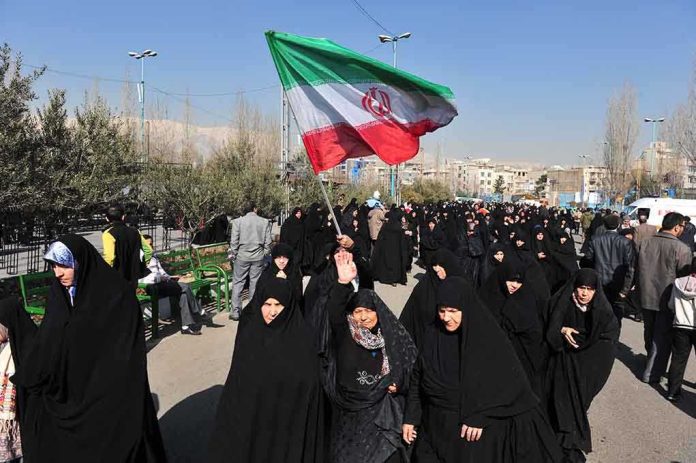
Iranian protesters chant “Neither Gaza nor Lebanon, my life for Iran,” boldly rejecting the regime’s foreign proxy wars as security forces fire live rounds into crowds demanding Khamenei’s ouster.
Story Snapshot
- Protests erupt from Tehran Grand Bazaar strikes into nationwide uprising across 110 cities, with 32 confirmed deaths and 1,000 arrests by January 6, 2026.
- Demonstrators prioritize Iran over regime’s external conflicts, chanting against Gaza and Lebanon entanglements amid economic collapse.
- Women lead sit-ins, bazaar merchants strike, signaling elite fractures and regime vulnerability after Khamenei’s hardening speech.
- Clashes escalate with Molotovs and rifle fire from protesters, as IRGC strains under domestic crackdown and foreign commitments.
Protests Ignite from Economic Despair
Strikes began December 28, 2025, at Tehran’s Grand Bazaar over soaring inflation and shortages, quickly spreading to Isfahan, Shiraz, and Mashhad. Merchants shut gold and currency markets, paralyzing trade in 21 provinces. Security forces deployed tear gas and live fire in Hamadan and Tehran, killing initial victims. Protesters evolved demands from relief to regime change, chanting “Death to the dictator.” Regime ordered nationwide shutdowns, citing weather, but rallies persisted in Kermanshah.
Nationwide Uprising Rejects Foreign Wars
By January 2-3, protests hit over 10 cities with funerals turning into anti-regime rallies; cumulative deaths reached 16. Slogans like “Neither Gaza nor Lebanon, my life for Iran” highlighted frustration with proxy funding amid domestic misery. Demonstrators rejected perceived foreign meddling, focusing nationalist fury on Khamenei and IRGC. Social media accelerated spread despite controls, outpacing regime containment. This mirrors historical patterns from 1979, 2009, and 2022 uprisings against repression.
Regime’s Brutal Crackdown Escalates
Post-Khamenei’s January 4 speech, forces shifted to coercion: 179 protests in 24 provinces by January 5 saw hospital raids in Ilam, arresting wounded including minors. Clashes intensified with protesters hurling Molotovs and firing rifles. By day 10 on January 6, sit-ins at Grand Bazaar became “war zones” dispersed by tear gas; women prominently led overthrow chants like “This year is the year of sacrifice, Seyed Ali will be overthrown.” Total: 32 deaths confirmed, 1,000 arrests.
Impacts Signal Regime Weakness
Economic paralysis halted fruit and vegetable distribution; strikes eroded traditional bazaar support, a regime pillar. IRGC resources stretched thin juggling proxies in Iraq and domestic violence. Analysts note suppression failure: less-violent tactics abandoned, risking broader elite splits. Protesters’ multilayered grievances—economic mismanagement mirroring 2019 fuel riots—challenge control. U.S. State Department voiced concern over intimidation, but crowds emphasize self-reliance against both regime and externals. Long-term, bazaar and women’s roles could destabilize theocracy, validating conservative warnings on radical regimes’ internal fragility.
Sources:
Iran shaken by series of protests over past 50 years – ABC News
2025–2026 Iranian protests – Wikipedia
Iran Update, January 5, 2026 – Critical Threats
Iran News in Brief – January 7, 2026 – NCRI
Iran News in Brief – January 6, 2026 – NCRI
2026 Iranian Protests – Britannica
In Iran, Protests: Information Spreads Faster Than Organization – Stimson Center