

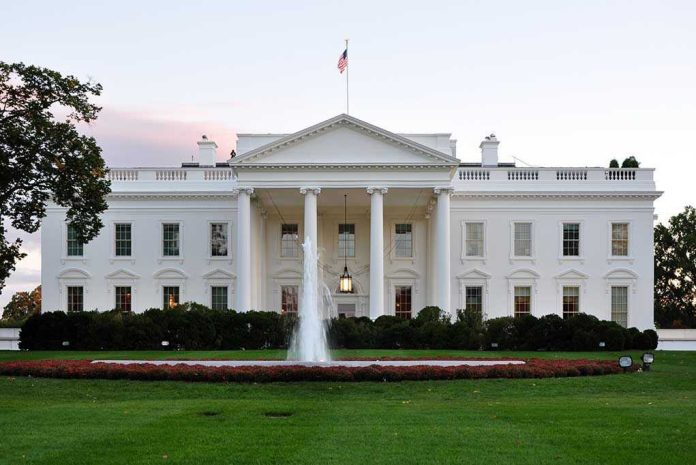
Colombia extradited a major drug kingpin to the United States just hours before President Gustavo Petro’s high-stakes White House meeting with President Trump, marking a dramatic shift after months of hostile relations that saw American sanctions, visa revocations, and even military threats against the South American nation.
Story Snapshot
- Andres Felipe Marin Silva, leader of the ‘La Inmaculada’ cartel, was extradited in a heavily guarded operation on February 3, 2026, hours before Petro’s scheduled meeting with Trump
- The extradition signals a potential goodwill gesture following a year of escalating tensions, including U.S. sanctions on Petro and his family, tariffs, and threats of military intervention
- Colombia produces a record 3,000 tons of cocaine annually, doubling since Petro took office in 2022, fueling Trump’s accusations and pressure campaign
- The timing suggests Petro is attempting to ease relations before his term ends in August 2026, though the White House meeting could still produce confrontation
High-Security Operation Delivers Cartel Leader
Colombian National Police deployed over 70 officers, surveillance drones, and a police helicopter to transfer Marin Silva from a Bogotá police station to anti-narcotics headquarters near El Dorado Airport early February 3. The drug lord, known as “Pipe Tulua,” faces three federal drug trafficking and conspiracy charges in Texas. This extradition marks a reversal for Petro, whose “Total Peace” policy previously stalled similar cases by granting criminals “peace manager” status to negotiate. Those exploratory talks with La Inmaculada collapsed, clearing the legal path after Colombia’s Supreme Court issued a favorable opinion and Petro signed the final decree.
From Sanctions to Détente in Twelve Months
Relations between Washington and Bogotá deteriorated rapidly after Trump’s January 2025 inauguration. Petro refused U.S. deportation flights, prompting Trump to impose tariffs and mock the Colombian leader publicly. When Petro rallied against Trump at the United Nations in September 2025, the Trump administration revoked his visa, sanctioned him personally along with his wife and interior minister, suspended Colombian visa processing, and designated Colombia as non-cooperative on drug enforcement for the first time in three decades. Trump even labeled Petro a “drug leader” without evidence and hinted at military strikes following the U.S. capture of Venezuelan President Nicolás Maduro on drug charges last month.
Cocaine Production Doubles Under Petro
Colombia became the world’s largest cocaine producer under Petro’s presidency, with output reaching a record 3,000 tons in 2024 according to the U.N. Office on Drugs and Crime. That figure represents a doubling of production since Petro, a former left-wing guerrilla, took office in 2022. The surge undermines decades of U.S. investment in Colombian counternarcotics efforts dating back to the 1990s, when Washington provided billions in aid to combat cartels and guerrilla movements. Trump’s frustration with this failure drove his harsh rhetoric and sanctions, creating the worst bilateral crisis in recent memory despite Colombia’s longstanding status as a key regional partner.
Strategic Timing Raises Questions About Motives
The extradition’s precise timing just hours before the White House meeting appears calculated to demonstrate cooperation. Analysts note Petro faces economic pressure from U.S. tariffs that hurt Colombian exporters and suspended aid programs that previously supported rural development and security initiatives. With his presidential term ending in August 2026, Petro has limited time to repair the relationship and secure relief from sanctions affecting ordinary Colombians. The nearly hour-long phone call between Trump and Petro that preceded the White House invitation suggests both leaders sought a diplomatic off-ramp, though their history of public feuding leaves outcomes uncertain.
Concerns Mount Over Meeting Results
Conservative security experts recognize the extradition as a positive step toward accountability, but question whether Petro’s cooperation represents genuine commitment or temporary theater. Sergio Guzmán of Colombia Risk Analysis observed that while Petro’s resistance to U.S. pressure may seem “inspiring” to some, it ultimately harms Colombian citizens through economic consequences. Adam Isacson of the Washington Office on Latin America characterized both leaders as “populist leaders who tweet 50 times a day,” suggesting unpredictability. Journalist Juan Lozano expressed being “very worried for our country” ahead of the meeting, reflecting broader Colombian anxiety about confrontation similar to Trump’s recent clash with Ukraine’s Zelenskyy.
Sources:
An Uneasy Detente: Trump and Colombia’s Petro to Meet at White House – NPR Illinois
Colombia’s ‘La Inmaculada’ Drug Lord Extradited to the US – ColombiaOne