As Iranians risk their lives in the streets, Donald Trump is warning Tehran that if the regime massacres protesters, America is “locked and loaded” and “stands ready to help” those fighting for freedom.
Story Snapshot
- Nationwide Iranian protests over economic collapse and tyranny have spread to at least 185 cities, confronting the regime’s brutal security apparatus.
- The regime has answered with live fire, mass arrests, and an internet blackout to hide killings and silence dissent.
- Trump has told Tehran that if it “shoots and violently kills peaceful protesters,” the United States is ready to “hit Iran very hard.”
- This clash highlights a deeper struggle between authoritarian theocracy abroad and constitutional, pro-freedom values that conservatives defend at home.
Iran’s Nationwide Uprising Against a Failing Regime
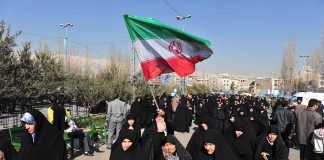
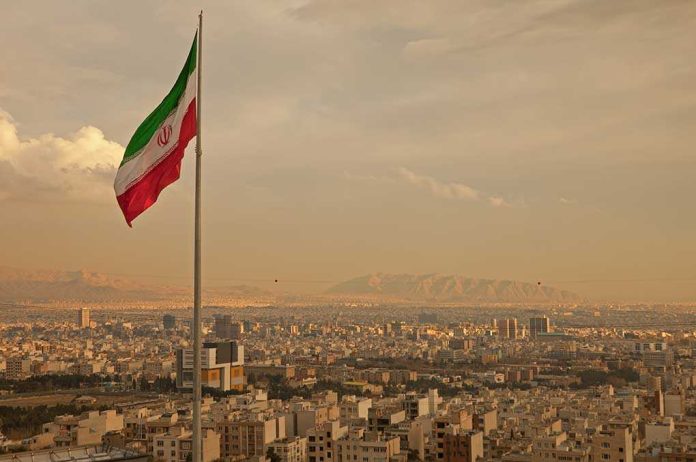
Across Iran, a population exhausted by economic collapse and decades of repression has turned frustration into open revolt. The latest wave of protests erupted in Tehran on December 28, 2025, after the rial lost roughly 80 percent of its value over the previous year and basic goods became unaffordable for ordinary families. Demonstrations quickly spread to more than 185 cities across all 31 provinces, drawing in students, workers, shopkeepers, and lower‑income citizens who once formed the regime’s base.
Footage and reports describe crowds openly denouncing Supreme Leader Ali Khamenei and the Islamic Republic itself, not just specific policies. Protesters chant “Death to the dictator” and demand an end to clerical rule, signaling how far public anger has evolved from earlier, more limited reform calls. That breadth and intensity make these demonstrations the largest challenge to the regime since the 2022 “Woman, Life, Freedom” uprising, when Iranians rallied against compulsory hijab and broader systemic abuses.
A Regime Answering Freedom With Bullets and Blackouts
The Iranian state has responded with the same tools of coercion that should alarm anyone who cares about constitutional liberty and limits on government power. Security forces, including the IRGC and Basij units, have used live ammunition and pellet guns at close range, leaving at least dozens dead and hundreds wounded, including children. Hospitals are no safe haven; reports indicate authorities have entered medical centers to arrest injured protesters and intimidate medical staff.
In parallel, the regime has moved to choke off the flow of information the way every authoritarian system does when it fears accountability. Starting December 29, authorities severely throttled internet speeds, disrupted messaging platforms, and targeted key regions with rolling blackouts. By January 8, they imposed what rights groups describe as a near‑total internet shutdown, cutting off most Iranians from the outside world. That blackout is not just a technical measure; it is a deliberate attempt to hide killings, break coordination among protesters, and silence witnesses.
Trump’s Warning Shot: “Locked and Loaded” if Protesters Are Massacred
Into this volatile situation stepped Donald Trump, now back in the White House and intent on signaling that America will not simply watch another massacre in silence. In early January, he posted that if Iran “shoots and violently kills peaceful protesters,” the United States “will come to their rescue” and is “locked and loaded and ready to go.” Days later he added that “Iran is looking at FREEDOM, perhaps like never before. The USA stands ready to help!!!” making clear he sees the protests as a genuine freedom movement.
Trump’s comments serve two purposes that resonate with conservative priorities. First, they send a deterrent message to Tehran that there will be consequences for a large‑scale bloodbath, contrasting sharply with years of muddled, accommodationist Iran policy from prior globalist‑minded administrations. Second, they align the United States rhetorically with ordinary Iranians rather than with an unelected clerical elite, reinforcing a basic principle: American power should stand with people demanding self‑determination, not regimes that crush it.
Authoritarian Playbook Abroad, Familiar Warnings for Americans at Home
For many conservative Americans who watched their own federal bureaucracy grow more intrusive under previous left‑leaning administrations, the Iranian crackdown is a stark reminder of where unchecked power leads when constitutional brakes do not exist. In Iran, there is no Second Amendment, no independent judiciary with real teeth, no meaningful separation of powers to restrain security forces. When the regime feels threatened, it simply criminalizes dissent, labels protesters “enemies of God,” and uses that charge to justify possible death sentences.
That reality underscores why American conservatives are so wary of speech controls, surveillance expansion, and attacks on due process at home. When a state can shut off the internet nationwide, weaponize courts, and deploy militarized units against its own citizens, it shows what happens when government becomes answerable only to itself. The Iranian example is extreme, but the pattern is recognizable: redefine dissent as extremism, centralize information control, and erode individual rights in the name of security.
What This Moment Means for U.S. Policy and Conservative Principles
For U.S. conservatives, the unrest in Iran is not just a distant foreign story; it is a test of whether American power is used to appease hostile regimes or to back people seeking the same basic freedoms protected by our Constitution. Trump’s tougher line sends a signal that Washington will not reflexively accept authoritarian narratives that blame protests on foreign plots while ignoring real grievances like corruption, economic mismanagement, and religious tyranny. It also reinforces a longstanding conservative belief in peace through strength, not weakness.
At the same time, the situation highlights limits that responsible policymakers must acknowledge. Outside statements alone cannot determine Iran’s future, and heavy‑handed intervention could give the regime propaganda ammunition. But there is a clear dividing line that matters for readers who worry about globalism and moral relativism: a government that shoots citizens for demanding basic rights is on the wrong side of history, and a United States that shrugs or equivocates would be betraying its own founding ideals.
Sources:
Iran protests: Biggest in years against Ayatollah – what to know
Iran News in Brief – January 10, 2026
2026 Iranian Protests – Encyclopaedia Britannica