

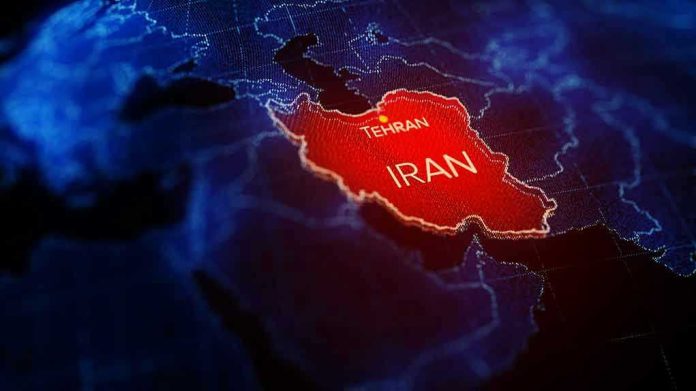
A tentative 60‑day U.S.–Iran ceasefire framework could either secure American leverage on nukes and energy—or quietly weaken it behind closed doors.
Story Snapshot
- The United States and Iran are reportedly close to a one‑page memorandum of understanding extending the ceasefire and defining next‑step nuclear and shipping talks.[1][3][4]
- The draft would pause fighting, reopen the Strait of Hormuz to commercial traffic, and launch negotiations over Iran’s uranium enrichment and sanctions relief.[1][3][4]
- Key terms—like how long Iran must restrict enrichment and who controls Hormuz security—remain disputed and are not yet in any public, binding text.[1][3][4]
- Trump officials insist any deal will bar Iran from ever getting a nuclear weapon, but ceasefire violations and Israeli opposition raise serious durability questions.[1][2]
Trump, Iran, And A 60‑Day Clock On War, Nukes, And Congress
Senior United States officials now acknowledge that negotiators with Iran are working off an emerging draft, describing “strong alignment” on a preliminary framework while admitting that key wording disputes remain.[3] Reports say the current track aims to extend the existing ceasefire by 60 days, reopen the Strait of Hormuz for commercial shipping, and start formal talks on Iran’s nuclear program under Pakistan‑mediated channels.[1][3][4] This would build on an earlier two‑week ceasefire reached in April, which paused a costly regional war.[3]
The ceasefire interacts directly with President Trump’s obligations under the War Powers Resolution, which limits how long a president can wage war without congressional authorization.[2][3][4] The Iran war began in late February, and Trump’s March 2 notification to Congress triggered a 60‑day clock to end hostilities or obtain authorization, putting legal pressure on the administration as fighting dragged on.[2][3] Defense Secretary Pete Hegseth testified that a ceasefire “pauses or stops” that clock, a reading several lawmakers dispute.[2][3][4]
What The Draft Deal Reportedly Gives—And Demands—From Tehran
According to multiple outlets, the emerging memorandum is intentionally short—about one page—and designed to end active hostilities while setting terms for a more detailed follow‑on agreement.[1] Axios reports that the United States wants Iran to halt nuclear enrichment for more than a decade, accept enhanced snap inspections, and forgo any pursuit of nuclear weapons in exchange for phased sanctions relief and the release of frozen assets.[1] Some sources say Washington is pressing for a 20‑year moratorium, while Tehran has floated just five years, highlighting the gap.[1]
One of Washington’s core demands is reportedly that Iran transfer its highly enriched uranium stockpile out of the country, something Tehran has resisted in past negotiations.[1][3] A senior Trump official also told outlets that the United States expects Iran to relinquish enriched material, with Trump insisting it “would be destroyed,” underscoring a hard line against any pathway to a bomb.[1] Reports suggest moving this material to a third country—or even the United States—is under discussion, though no final destination has been agreed.[1] These nuclear terms go to the heart of conservative concerns about repeating the weaknesses of the 2015 nuclear deal.
Strait Of Hormuz: Energy Lifeline, Leverage Point, And Ceasefire Test
The Strait of Hormuz remains both the economic pressure point and the immediate security flashpoint in these talks.[1][3][4] The United States has maintained a naval blockade since the war began, severely restricting shipping and raising global energy prices as tankers were diverted or halted.[1][4] The draft framework reportedly envisions reopening the strait to commercial ship traffic within 30 days, aiming to return flows to something close to pre‑war levels while still excluding military vessels.[1][4] That design seeks to lower energy costs without handing Iran full military freedom of movement.
🚨: US and Iran Reach Tentative Deal to Extend Ceasefire for 60 Days
US and Iranian negotiators have agreed on a framework to extend their fragile ceasefire by 60 days and begin talks on Iran’s nuclear programme, according to US sources.
The deal has not yet been approved by… https://t.co/XE3dzsOuK6
— The Cable® (@TheCableHaux) May 28, 2026
Reports differ sharply over who would actually police the strait once traffic resumes, which matters for long‑term American leverage and regional security.[1][3][4] Some United States accounts frame reopening Hormuz as conditional on American‑defined security terms tied to Iran’s behavior and nuclear steps.[1][4] Iranian‑leaning reporting instead talks about Iranian and Omani management of maritime access, portraying the deal as a limited de‑escalation rather than surrender.[1] Without a published text, conservatives are left to parse competing leaks and worry that control of a critical chokepoint could slip toward Tehran if terms are misread or misrepresented.
A Fragile Pause: Ceasefire Violations, Israeli Concerns, And Political Risks
Despite the ceasefire, both sides have continued limited military actions that raise doubts about how solid any 60‑day extension would be.[1] Iranian officials claim their air defenses have fired on United States drones and a fighter jet, calling American responses “ceasefire violations” that will not go unanswered.[1] United States officials, for their part, describe strikes as self‑defense within the ceasefire’s bounds, signaling a willingness to hit Iranian forces when they perceive imminent threats.[1] This dual narrative makes the framework look fragile and potentially cosmetic.
Israeli Prime Minister Benjamin Netanyahu reportedly opposes the emerging framework, favoring more aggressive options and warning that Tehran could use any pause as strategic breathing room.[1] That posture underscores a broader conservative fear: that Iran will pocket sanctions relief, keep enough nuclear know‑how and infrastructure intact, and then wait out any enrichment moratorium.[1] Meanwhile, the absence of a formal treaty text, a United Nations Security Council resolution, or a signed bilateral communique means much of the public story is driven by unnamed officials and selective leaks, inviting skepticism about whether the deal will truly prevent Iran from ever obtaining a nuclear weapon.[1][3][4]
Sources:
[1] Web – BREAKING: US, Iran reach tentative 60-day ceasefire deal, to negotiate …
[2] Web – 2026 Iran war ceasefire – Wikipedia
[3] YouTube – Iran war: Hegseth argues ceasefire pauses 60-day deadline
[4] Web – Mediators believe Iran and US nearing 60 day extension on …