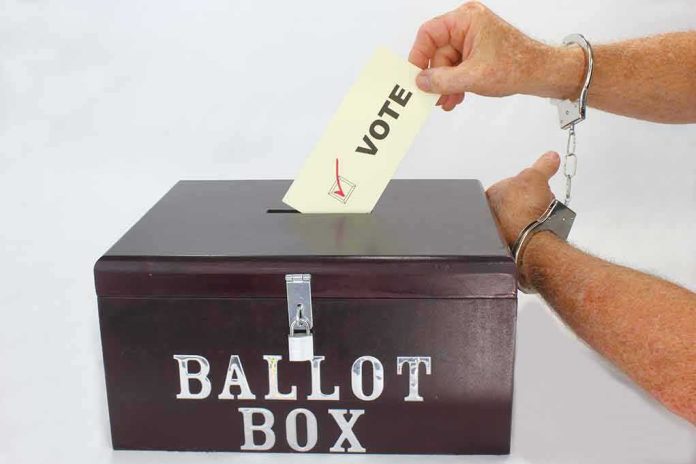
Florida charged 20 people with illegal voting on September 24, sending a clear warning that election rules will be enforced.
Story Highlights
- Florida officials announced 20 voter-fraud indictments tied to illegal registration and voting.
- Cases span multiple counties, including Lee, Collier, Okeechobee, and DeSoto, per state reporting.
- State agencies and prosecutors coordinated to identify noncitizen voting and ineligible felon voting.
- Past Florida cases saw mixed outcomes, highlighting the need to prove intent under state law.
Florida Announces 20 Election-Fraud Cases Across Multiple Counties
Florida Attorney General James Uthmeier, joined by Governor Ron DeSantis, announced 20 arrests and prosecutions tied to illegal voting in Florida elections, including the 2024 general election. The Office of Statewide Prosecution worked with the Florida Department of Law Enforcement and the Florida Department of State to bring charges. The announcement cited noncitizens who allegedly claimed citizenship and voted, and felons who allegedly voted while still on probation. Officials said the effort targeted crimes across several counties. “If you’re going to cheat, we’re going to get you,” Uthmeier said. “I view these election crimes as some of the most dangerous in our country, because when you vote illegally it cancels out the votes of others.”
State reporting outlines that the Office of Election Crimes and Security compiles and refers cases, with mention of county activity including Collier among others. That office’s public materials show how referrals move from tips to investigation and then to prosecutors. The system relies on data checks, documents, and sworn statements, which can include claims of false citizenship or false registration. The counties named in the rollout included Lee, Collier, Okeechobee, and DeSoto, according to state-linked materials and coverage.
What The Charges Say About The Alleged Conduct
Officials described two groups of alleged violations. First, noncitizens who allegedly lied about citizenship, registered, and voted. Second, convicted felons who allegedly registered and voted while still ineligible. Those accusations point to specific laws that bar noncitizen voting and require felons to meet eligibility rules before voting. Federal cases this month in other states underscore that noncitizen voting and false registration can trigger criminal charges, fines, and potential prison time as well.
The Florida operation fits a wider national push to enforce election law. The United States Department of Justice recently announced charges in several states for illegal voting and related crimes. Those cases show prosecutors using existing federal statutes when they find hard evidence. While numbers remain small compared with total voters, the consequences for each case are serious. Officials in Florida argue that enforcing every case helps deter future fraud and protects every legal ballot from being canceled by an illegal one.
Why This Matters For Election Integrity And Voter Confidence
Election integrity rests on clear rules and equal enforcement. When noncitizens vote or ineligible felons cast ballots, it weakens trust that every lawful vote counts. Florida’s announcement signals that the state will use data checks and joint investigations to pursue charges when evidence supports them. That approach aligns with a basic conservative view: secure elections require both access for eligible voters and firm guardrails that stop illegal votes before they enter the count.
Conservatives also care about consistent due process. Past Florida cases linked to earlier sweeps brought uneven legal results. One Miami judge dismissed a case tied to that earlier wave, finding limits on the prosecutor’s authority at the time. That outcome shows why investigators now stress clear evidence and proper venue, and why lawmakers refined authorities. Prosecutors still must prove the elements of each crime in court, including any requirement to show the person knew they were ineligible.
How Florida Says The System Now Works
Florida’s Office of Election Crimes and Security lists a hotline and contact channels and explains its process for receiving tips, screening data, and forwarding cases. That structure sets an intake path so local supervisors, state officials, and law enforcement can coordinate. The published materials tie the office’s work to county-level findings, such as activity in Collier County, and note that referrals can lead to sworn complaints and charges by the Office of Statewide Prosecution when warranted.
Attorney General James Uthmeier and Governor Ron DeSantis announced Thursday that 20 people were arrested following a statewide operation targeting voter fraud.https://t.co/qfKjCrxRCr pic.twitter.com/E89yoiQ3g8
— WFLA NEWS (@WFLA) September 24, 2026
For voters, the message is simple. If you are eligible, vote with confidence. If you are not, do not try. For officials, the lesson is to keep records tight, share data fast, and flag problems before ballots are cast. For lawmakers and courts, the task is to keep the law clear so honest voters are protected and bad actors face real costs. Florida’s 20 cases mark another step toward that balance, with more testing to come in court.
Sources:
wgcu.org, justice.gov, news4jax.com, miamiherald.com, files.floridados.gov