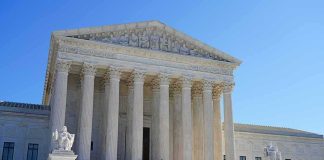


The Department of Justice asked the Supreme Court to rein in lower judges who are freeing immigration detainees during deportation cases.
Story Snapshot
- The Department of Justice petition asks the Supreme Court to decide if trial judges can order release during removal cases.
- The government frames the issue as a limit set by immigration law, not a mere policy disagreement.
- A lower-court judge freed Badar Khan Suri; an appeals court later refused to re-detain him.
- The government cites a split among appeals courts and disruption to enforcement.
What The Government Is Asking The Supreme Court To Decide
The Department of Justice filed a petition asking the Supreme Court to decide whether federal trial courts can order releases for people held during pending deportation cases. The petition targets a lower-court order that freed Badar Khan Suri, a visiting scholar who was in immigration detention during removal proceedings. The government argues immigration law sets limits on when judges can order release while cases proceed, and says courtroom overrides disrupt enforcement plans.
Officials also point to a split among appeals courts on how far federal judges may go in these cases. The petition describes different rulings across circuits over when detainees can bring claims and what remedies courts can grant. The Justice Department wants the justices to set a clear rule that respects the text Congress wrote for removal cases, so front-line officers can detain when the law requires it and courts do not second-guess day-to-day custody choices.
The Case That Sparked The Appeal: Khan Suri’s Release Order
U.S. District Judge Patricia Tolliver Giles ordered Suri released on bond after weeks in Immigration and Customs Enforcement custody. Coverage says the judge found the government did not show he was a flight risk or a danger and that his constitutional claims could be heard in court while removal moved forward. In July 2026, the Richmond-based appeals court refused the administration’s bid to re-detain him, saying federal law did not bar the lower judge’s release order in this posture.
The appeals panel’s two-to-one ruling backed trial-court power to review claims that detention violates the Constitution, even when deportation proceedings are underway. Civil-liberties groups praised the result and framed it as a win for court oversight. The Department of Justice’s petition disagrees with that approach and seeks a Supreme Court answer on whether and when a release remedy is allowed while the government is carrying out removal laws that Congress passed.
Why This Fight Matters For Border Security And The Rule Of Law
Congress designed detention rules to make sure people appear for hearings and for removal if ordered. The administration argues that letting trial judges order release during active cases weakens those rules and encourages more drawn-out litigation. Clear limits protect the separation of powers: Congress writes the detention framework, the executive enforces it, and courts review within the bounds Congress set. A Supreme Court ruling could bring uniform rules so officers can do their jobs without conflicting court orders.
Conservatives see more at stake than one scholar’s case. When courts turn detention into rolling bail fights, the system tilts toward catch-and-release and delays. That adds pressure at the border and inside communities. The government’s petition focuses on statutory authority, not speech debates, because the core question is who decides custody during removal. The case now offers the justices a chance to settle how far trial courts may go in ordering release before the merits are resolved.
What Comes Next At The Supreme Court
The justices will first decide whether to hear the case. If they grant review, they will set briefing on the legal question and could also act on any stay request that seeks to pause broad release orders. A decision for the Department of Justice would curb trial courts from ordering release in ongoing removal cases. A decision against the government would cement wider judicial power to free detainees on constitutional grounds while cases continue.
Either outcome will shape daily enforcement. Front-line officers, immigration judges, and federal courts will all take cues from the Court’s rule. For readers who want secure borders, predictable rules, and respect for the law, this is the ballgame. The question is simple: do elected branches set detention policy during removal, or do trial judges? The Supreme Court’s answer will decide how firmly the law backs our borders and how swiftly cases can reach a lawful finish.
Sources:
theglobeandmail.com, washingtontimes.com, georgetownvoice.com, aljazeera.com, aclu.org, assets.aclu.org, nbcnews.com