
Stored fireworks exploded beside a packed church in central Mexico, killing at least 10 people and injuring more than 60 during a village festival.
Story Highlights
- At least 10 dead and 64 injured in a fireworks blast during a patron saint festival
- Explosion struck next to the Nuestra Señora de la Luz church in Temascalcingo
- Officials confirmed stored pyrotechnics detonated during the celebration
- Mexico has a long record of deadly festival fireworks accidents
What Happened In Temascalcingo
Local officials said fireworks stored next to the Nuestra Señora de la Luz church in Santa María Canchesdá, Temascalcingo, detonated on Saturday night during a patron saint celebration. The blast killed at least 10 people and injured 64 others as crowds gathered for the show, according to state authorities and wire reports. Video from the scene and early statements described a sudden, powerful explosion that damaged nearby structures and sent debris into the packed festival area.
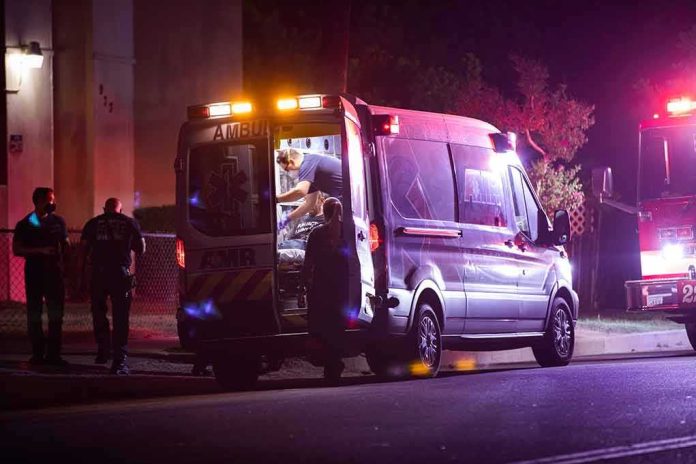
Authorities reported that emergency crews moved the injured to area hospitals and began an investigation into how the pyrotechnics were stored and ignited. State officials confirmed the blast involved stored material, rather than a single firework gone wrong, which helps explain the scale of damage and casualties. The exact ignition source was not immediately known. The Mexico State Attorney General’s Office opened a case and said it would examine permits, storage practices, and possible negligence claims cited in local media summaries.
Why Fireworks At Festivals Turn Deadly
Mexico’s patron saint festivals often feature large rockets, firecrackers, and hand-built displays. These events bring communities together, but they also put high-energy explosives near homes, churches, and crowded plazas. Past tragedies show a pattern: fireworks stored too close to people, inadequate safety buffers, and uneven enforcement of explosives rules have led to mass casualties in multiple states over the years. That risk grows when informal storage meets busy nighttime celebrations with limited oversight.
National rules require permits to make, store, sell, move, or fire pyrotechnics. The Ministry of National Defense oversees those activities under federal law, and local governments add safety codes for events and venues. Even so, outbreaks of illegal or unsafe storage keep happening, especially during festival seasons. Communities value tradition, and vendors depend on sales. But when enforcement lags and safety plans fall short, one spark can set off a chain reaction in minutes.
The Human Toll And The Road Ahead
Families in Temascalcingo are now planning funerals while dozens recover from burns, blast injuries, and trauma. Rescue teams, doctors, and church leaders are providing support, as investigators piece together the timeline and storage setup that preceded the blast. Officials face pressure to balance grief with accountability. Clear facts on permits, supply chains, and who decided where to store the fireworks will shape whether the case leads to charges or new local rules.
In the Mexican state of Mexico, 10 people were killed and 64 were injured in an explosion involving fireworks – N+
Among the injured were two priests. The incident occurred near a church in the Santa Maria Canchesda settlement, the day before a celebration in honor of the Virgin… pic.twitter.com/VtzsIGLuaX
— 𝕊𝕡𝕣𝕚𝕟𝕥𝕖𝕣 𝕻𝕣𝕖𝕤𝕤 (@SprinterPress) September 7, 2026
For readers in the United States, the lesson is familiar: when rules on hazardous materials go weak or unevenly enforced, regular people pay the price. Communities want meaningful traditions and safe streets. They also want leaders who will set clear standards, verify compliance, and act before tragedy strikes. This disaster will test whether authorities in the State of Mexico can tighten storage rules, train volunteers, and enforce permits without crushing local culture—and do it fast enough to prevent the next blast.
Sources:
youtube.com, pbs.org, aljazeera.com, mexiconewsdaily.com