

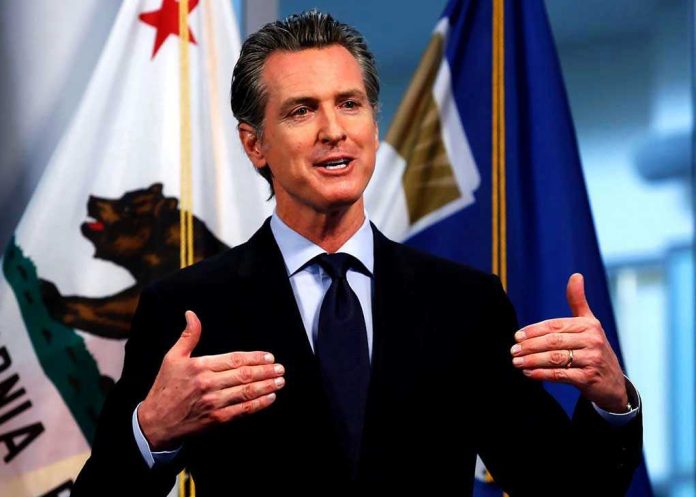
California’s bold stand against Louisiana’s extradition request for a doctor marks a pivotal moment in the ongoing abortion rights saga.
Story Highlights
- California Governor Gavin Newsom denies Louisiana’s extradition request for a doctor accused of mailing abortion drugs.
- Newsom cites California’s shield laws and his discretion under federal and state law.
- The case underscores the escalating interstate conflict over reproductive rights post-Roe v. Wade.
- Louisiana officials decry Newsom’s decision as shielding unethical and illegal conduct.
The Extradition Dispute
California Governor Gavin Newsom has refused Louisiana’s extradition request for Dr. Rémy Coeytaux, accused of prescribing abortion pills to a Louisiana woman via telemedicine. The request followed an indictment by Louisiana Attorney General Liz Murrill, with Governor Jeff Landry signing the extradition order. Newsom’s decision aligns with California’s legislative shield, designed to protect reproductive providers from out-of-state legal actions. This move reflects a fierce defense of California’s reproductive rights framework against perceived external interference.
The indictment accuses Dr. Coeytaux of mailing abortion medications mifepristone and misoprostol to a woman in Louisiana in 2023. The woman claims coercion by her boyfriend, adding complexity to the case. Governor Newsom’s denial, referencing Executive Order N-12-22, emphasizes California’s commitment to safeguarding reproductive care providers from other states’ legal pursuits. This case is not an isolated incident but part of a broader pattern of interstate conflict over abortion rights post-Dobbs v. Jackson.
California’s Shield Laws
Following the Supreme Court’s decision in Dobbs v. Jackson, which overturned Roe v. Wade, states like California have enacted laws to protect abortion providers from legal actions initiated by states with restrictive abortion laws. Newsom’s Executive Order N-12-22 and subsequent legislative measures reflect California’s proactive stance in preserving reproductive rights amid the national debate. The state’s shield laws aim to prevent out-of-state investigations and extraditions, ensuring that California remains a safe haven for reproductive health services.
The case of Dr. Coeytaux is emblematic of the new legal landscape where blue states are fortifying protections for abortion providers. Conversely, red states like Louisiana are intensifying efforts to enforce their restrictive laws beyond their borders. This clash highlights the lack of federal uniformity in abortion rights post-Roe, leaving states to navigate a complex legal environment.
Reactions from Key Stakeholders
Governor Newsom’s decision has sparked a wave of reactions from key stakeholders. Louisiana Attorney General Liz Murrill condemned the decision, labeling it as shielding “drug dealing” and unethical practices. She argues that California’s refusal to extradite undermines lawful efforts to regulate abortion within Louisiana. Louisiana Governor Jeff Landry echoed these sentiments, advocating for strict enforcement of the state’s abortion ban.
On the other hand, California lawmakers and reproductive rights advocates view Newsom’s stance as a necessary defense of reproductive autonomy. Assembly Majority Leader Cecilia Aguiar-Curry, author of California’s anonymous prescribing law, contends that isolated cases of coercion should not be used to penalize telemedicine providers or restrict access to reproductive care. The tension between these opposing views underscores the polarized nature of the abortion debate in America today.
Implications and Future Outlook
The denial of extradition in this case sets a precedent for future interstate legal battles over abortion. In the short term, it reinforces the resolve of shield states to protect their providers, potentially deterring similar legal pursuits from restrictive states like Louisiana. However, the long-term implications could prompt further legal challenges, possibly escalating to the Supreme Court.
The case also raises questions about the role of telemedicine in providing reproductive care. As the most common method of abortion in the first trimester, access to abortion pills through telehealth services remains a contentious issue. Shield states like California are at the forefront of defending this access, while conservative states continue to explore legal avenues to restrict it.