
An Army major who survived the Iranian drone strike that killed six U.S. soldiers in Kuwait says in a complaint to Congress that senior commanders brushed off his warnings that the post had no real defense against drones.
Story Snapshot
- Maj. Stephen Ramsbottom filed a whistleblower complaint with the House and Senate Armed Services Committees on Friday, November 13.
- He says Army leaders dismissed concerns about thin fortifications and missing drone defenses at Port Shuaiba, a U.S. command post in Kuwait, and that he was told, “We don’t have to worry about protection.”
- An Iranian drone hit the post on March 1, the first day of the war, killing six Army Reserve soldiers in the deadliest attack on U.S. troops in the conflict.
- The complaint says the site had no doctor, no fixed aid station and one ambulance.
- The Pentagon declined to comment on the claims, and the two generals named did not respond.
A Survivor Takes His Warnings to Congress
On Friday, November 13, Maj. Stephen Ramsbottom sent a whistleblower complaint to the House and Senate Armed Services Committees, the panels that oversee the military. He was the deputy chief of operations for the 103rd Sustainment Command, an Army Reserve supply and logistics unit, and he was among the dozens wounded at Port Shuaiba. His complaint asks Congress to investigate why the post had no “dedicated protection against one-way attack drones,” the cheap, explosive-packed drones Iran launches at targets.
Ramsbottom says he raised the drone threat with his unit commander, Brig. Gen. Clint Barnes, and warned Maj. Gen. John Hinson, the two-star general in charge of logistics for U.S. Central Command, the military headquarters for the Middle East. He says Hinson dismissed the concern, and that he was told, “We don’t have to worry about protection.” Soldiers asked for a counter-drone system, he says, but one never arrived. He also blames himself in part. “I feel this is a tactical failure by the Army, our leadership, and myself — all the way down to my level,” he said in a televised interview.
The complaint says the post “had no physician, no fixed aid station, and only one ambulance.” According to Ramsbottom, the barriers around the building were built to stop car bombs, and nothing there was meant to stop an attack from the air. A source familiar with the site gave reporters the same account earlier.
Six Soldiers Killed on the War’s First Day
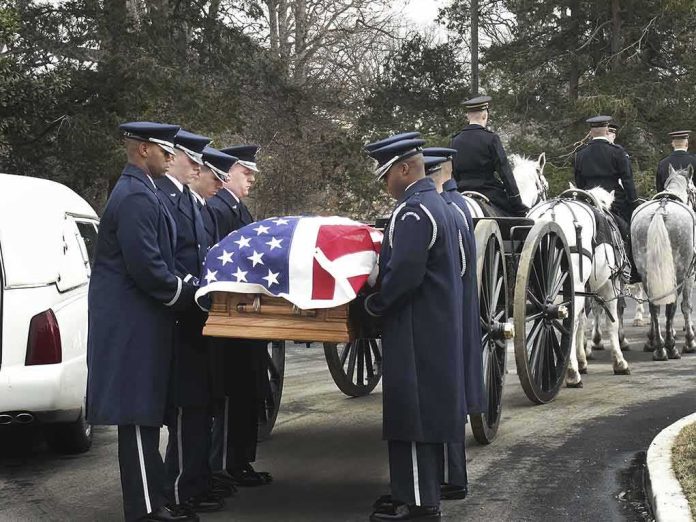
The U.S. and Israel launched their attack on Iran, called Operation Epic Fury, on February 28. The next morning, Sunday, March 1, soldiers at Port Shuaiba got the all-clear at 9 a.m. and went back to work, according to survivors. About 30 minutes later, an Iranian drone struck the command post, about 65 miles from Iran. Six soldiers were killed, among them Master Sgt. Nicole Amor, Chief Warrant Officer Robert Marzan and Sgt. 1st Class Noah Tietjens. Several soldiers said U.S. intelligence had listed the port as an Iranian target before the war.
Survivors say Nicole Amor was still breathing when she was loaded into an SUV and driven to a local hospital. Her husband, Joey Amor, says soldiers were searching online for hospitals, and he believes she “had a shot” with a proper plan. He said she told him the week before she died that she was worried about her unit’s safety. He blames the unit’s command. “They killed my wife,” he said.
What the Pentagon Has Said
The day after the strike, Defense Secretary Pete Hegseth told reporters the troops were well protected. He said the U.S. has “incredible air defenders,” but that one drone, a “squirter” in military slang, got through and hit a fortified tactical operations center. Pentagon spokesman Sean Parnell said the post was “fortified with 6-foot walls.” U.S. Army Central, the Army command for the Middle East, said the alarm system was working at the time of the attack.
Asked about the new complaint, a Pentagon spokesperson declined to comment, including on whether the 103rd had enough force protection, the military term for defenses that keep troops safe. Barnes and Hinson did not respond to requests for comment. The Army’s own investigation reportedly wrapped up in June, and its findings have not been made public. One widow said the Army officials who briefed her acknowledged no mistakes.
Congress Pushes for Answers
On Sunday, November 15, Sen. Richard Blumenthal, the top Democrat on the Senate’s main investigations subcommittee, made public a letter asking Hegseth for a classified briefing and “all force protection assessments” for Port Shuaiba. “It is time for a reckoning,” he said on social media. Other Democrats had already called for public hearings, and the party plans broader probes of the war once it takes control of Congress in January.
The politics will be loud, but the core claim is simple. A soldier says he warned his chain of command that the post could not stop a drone, and six soldiers died when one hit. Ramsbottom’s lawyers have asked for an independent investigation. For the families, the goal is a full account of what leaders knew before March 1 and what they did about it.
Sources:
cbsnews.com, cnn.com, time.com