

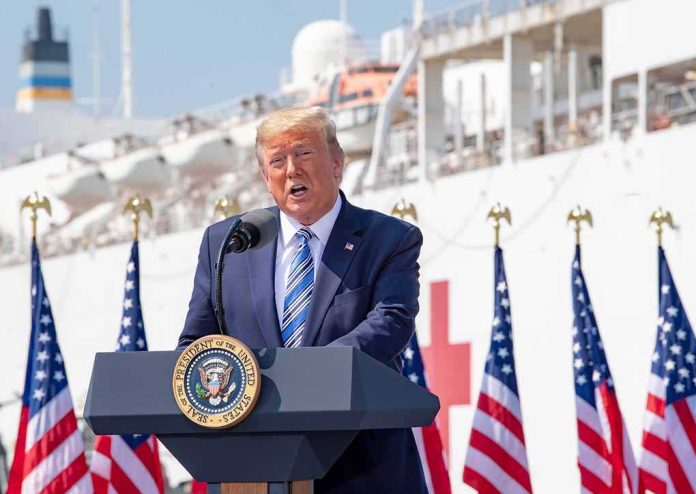
President Trump said on Friday, October 2, that his administration will send one-time payments of $90 to more than 20 million seniors to help them pay their Medicare Part B premiums. Part B is the part of Medicare that covers doctor visits and outpatient care, and seniors pay a monthly premium for it. He made the announcement in a post on Truth Social, the social media site he owns.
Story Highlights
- More than 20 million Medicare Part B enrollees are set to get a one-time $90 payment.
- Most will get it by direct deposit in early October. The rest will get a paper check in the mail.
- Trump said the money comes from the Medicare Improvement Fund, which Congress set up in 2008.
- Seniors whose premiums are paid by Medicaid, and those who pay a higher income-based premium, are not included.
Where The Money Comes From
Trump said the payments will be paid for out of the Medicare Improvement Fund. Congress created that fund in 2008 to pay for improvements to original Medicare. In his post, Trump called it a pointless “Slush Fund” and said it had been used by Democrats in Congress for their special-interest friends instead of for seniors. According to reports, no earlier administration had used the fund this way. At $90 for each of more than 20 million people, the payments add up to roughly $2 billion.
"The Trump Administration is ending the temporary Medicare Part D Premium Stabilization Demonstration subsidy program on January 1, 2027, cutting the final year of the demonstration early." The affected population is "roughly 25 million enrollees in standalone prescription drug… https://t.co/ZIpiBcDD1B
— Laurence (Larry) Boorstein (@LarryBoorstein) October 3, 2026
“I am pleased to announce that my Administration will, immediately, begin sending ‘Checks’ of nearly $100 to over 20 MILLION wonderful Seniors to help pay for their Medicare Part B premiums,” Trump wrote. A White House fact sheet put the exact amount at $90 per person.
Who Gets Paid And How
The White House said most people enrolled in Part B qualify. That includes people on original Medicare and people in private Medicare Advantage plans who still pay the Part B premium. Two groups are left out. The first is seniors whose Part B premiums are already paid by Medicaid, the government health program for people with low incomes. The second is higher-income seniors who pay an extra charge on top of the standard premium, called an Income-Related Monthly Adjustment Amount.
Seniors do not have to apply. The White House fact sheet said most eligible seniors will get a $90 direct deposit in early October. Those without direct deposit will get a check, also sent in early October, at the mailing address they have on file with Medicare. Anyone who wants to check on a payment can call 1-800-MEDICARE (1-800-633-4227).
How Far $90 Goes
The standard Part B premium in 2026 is $202.90 a month, and the yearly deductible is $283. A deductible is the amount a person pays out of pocket before coverage starts. So the payment covers a little less than half of one month’s premium. For a household on a fixed income that has watched the price of food, gas and utilities climb for years, $90 is modest. It is also money that arrives in the bank account with no forms to fill out.
Trump said these payments are separate from two other items. One is a set of $500 refund checks going to roughly 950,000 people who were overcharged on ObamaCare health plans. The other is his proposed $5,000 “Trump Dividend,” which he has tied to Republicans winning the midterm elections in November.
A Separate Change On Drug Plans
The Centers for Medicare and Medicaid Services, the agency that runs Medicare, has separately said it will end a temporary program at the close of 2026 that held down premiums for Part D, the part of Medicare that covers prescription drugs. The agency set the 2027 base premium for Part D at $41.33 a month and said drug plans will go back to normal market conditions.
The Bottom Line For Seniors
Conservatives have long argued that help for seniors should be direct, limited and paid for with money already set aside, not with new borrowing. This payment fits that test. It is a one-time payment, it draws on a fund Congress created years ago, and it goes straight to the people who paid into Medicare through decades of work. Eligible seniors should look for a $90 deposit, or a check in the mailbox, in early October.
Sources:
thegatewaypundit.com, cms.gov, news.bloomberglaw.com, rawstory.com