

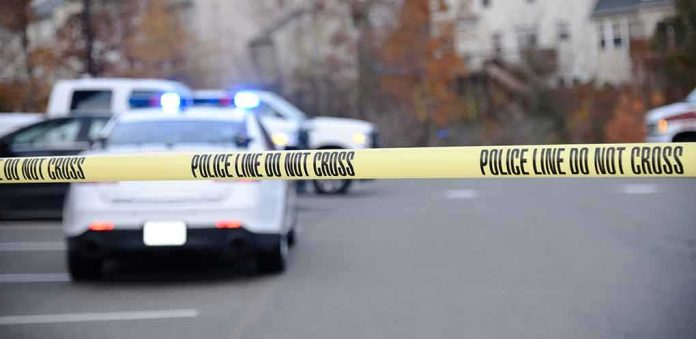
Shortly after 7:20 a.m. Sunday, September 27, a fight inside an after-hours strip club on a quiet Detroit block turned into a shootout that killed three men and hurt four other people. Police Chief Todd Bettison put the cause plainly: “A fight occurred, an altercation occurred, and as a result individuals decided to settle it with gun violence.”
Story Snapshot
- A fight at an after-hours spot on Detroit’s west side ended in gunfire, killing three men and wounding four people.
- Officers were called around 7:21 a.m. and arrived within four minutes.
- Two men and two women went to hospitals in private cars; police said none of their injuries were life-threatening.
- Police had been called to the address seven times this year.
- No arrests have been announced; the chief says detectives have leads.
Police Findings at the Scene
Officers answered a report of shots fired near Prest Street and Eaton Avenue on the city’s west side. They found three men with fatal gunshot wounds. Bettison said the men were about 30 and older. Four other people, two men and two women in their 20s and 30s, were taken in private cars to area hospitals. Police said their injuries were not life-threatening. The chief said he does not see an ongoing danger to the public, and police asked witnesses to come forward.
Bettison described the site as an after-hours location with dancing, much like a strip club, on a largely residential street. Police have not released the names of the men who died while their families are notified. No arrests have been announced. The chief said detectives have leads, and he made a promise: “We will work this around the clock relentlessly to bring the perpetrator to justice.”
Location History and Community Impact
Police said the address drew seven calls for service since January, and another investigation at the location was already underway. That shows the site was on law enforcement’s radar before the shooting. Residents in many cities say late-night, informal clubs draw crowds, arguments, and sometimes violence, while action to shut them down lags behind. Mayor Mary Sheffield called the shooting “absolutely heartbreaking” and pledged the city would “do everything we can” to stop illegal after-hours spots in residential neighborhoods.
Officials described the setting as a residential block, which adds to the fear and damage. Families woke to sirens and crime scene tape on a Sunday morning, not bar hours after midnight. When violent crime spills into neighborhoods, people feel that the system is not doing the basics—keeping illegal venues in check, enforcing codes, and stopping known hot spots from boiling over. These are not partisan worries; they are basic public safety concerns.
Timeline, Injuries, and What Comes Next
The call came in around 7:21 a.m., and officers arrived within four minutes. They secured the scene and opened a homicide investigation. The mayor said the city’s Office of Neighborhood and Community Safety will offer support to residents and families touched by the shooting. Police asked anyone with information or video to call Crime Stoppers of Michigan at 1-800-773-2587 to help identify those who fired.
Police say this was a fight that turned deadly at an after-hours site, and that fits a wider pattern at informal nightlife spots. Such places often have little security, crowd control, or oversight. Disputes can grow fast when people are packed into tight spaces. City agencies usually act after problems surface, not before. That cycle frustrates residents across the political spectrum who want steady, visible enforcement and fewer preventable tragedies.
Sources:
aljazeera.com, freep.com, washingtonexaminer.com, tribtoday.com, apnews.com, newsweek.com