
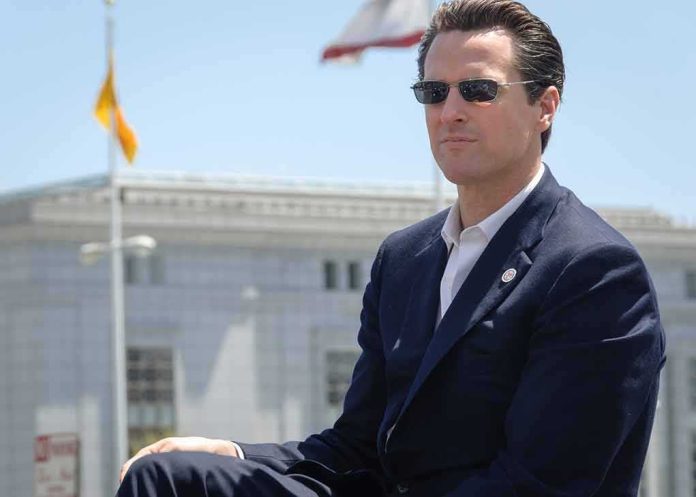
Gavin Newsom signed a package of “election protection” laws on Friday aimed squarely at federal agents, including a new felony for seizing ballots before results are certified. Within hours, the top federal prosecutor in Los Angeles answered: no state law can stop a federal investigation, and the ones already under way are not stopping.
As of Friday, September 19, U.S. Attorney Bill Essayli says his office has already filed election-fraud cases in California and will keep investigating, arresting and prosecuting under federal law.
Story Highlights
- Newsom signed the bills Friday, calling them a defense against a president who “won’t stop until he can exert dictatorial control over your free vote.”
- U.S. Attorney Bill Essayli said state laws cannot block federal election-fraud investigations and prosecutions.
- The U.S. Attorney’s Office in Los Angeles confirmed “multiple” election-fraud investigations months earlier and put a prosecutor inside an L.A. County vote-counting facility.
- The Justice Department has already announced charges tied to fraudulent petition signatures in California.
The Federal Prosecutor’s Answer
On Friday, U.S. Attorney Bill Essayli told Californians that no state law signed by Governor Newsom can stop federal investigations into voter fraud. He said federal prosecutors have already started filing cases and will keep investigating, arresting and prosecuting violations of federal election law. His message followed Newsom’s signing of new laws billed as election protections, which set up a clash over where state power ends and federal authority begins.
𝐍𝐄𝐖𝐒𝐎𝐌 𝐒𝐈𝐆𝐍𝐒 𝐁𝐀𝐋𝐋𝐎𝐓-𝐒𝐄𝐈𝐙𝐔𝐑𝐄 𝐅𝐄𝐋𝐎𝐍𝐘 𝐋𝐀𝐖 𝐓𝐎 𝐒𝐓𝐎𝐏 '𝐓𝐑𝐔𝐌𝐏 𝐃𝐈𝐂𝐓𝐀𝐓𝐎𝐑𝐒𝐇𝐈𝐏' — 𝐈𝐓 𝐃𝐎𝐄𝐒𝐍'𝐓 𝐓𝐎𝐔𝐂𝐇 𝐓𝐇𝐄 𝐅𝐄𝐃𝐒 𝐀𝐓 𝐀𝐋𝐋
Gavin Newsom just signed another election bill with maximum drama attached — and it does… pic.twitter.com/krcUarUXei
— M.A. Rothman (@MichaelARothman) September 19, 2026
Essayli’s position rests on a simple point: federal law enforcement does not need the state’s permission to pursue federal crimes. He said his office will move on facts and evidence, not political pressure. The statement capped months of friction between California officials and federal authorities as agents pursued leads and reviewed ballot processes in the nation’s largest state.
Months Of Federal Activity: Probes And On-Site Monitoring
On June 6, the U.S. Attorney’s Office in Los Angeles publicly confirmed it had opened multiple investigations into possible election fraud tied to California’s elections. The next day, reporting noted that an Assistant U.S. Attorney had been physically present at a Los Angeles County ballot facility to observe the count. That presence showed real, operational follow-through beyond press statements.
Coverage also described coordination between federal prosecutors and the FBI in Los Angeles. California officials objected to public comments about active probes. The federal side emphasized its duty to enforce federal law and protect election integrity, even during sensitive counting periods, while staying within policy and legal limits.
Concrete Cases: Charges Over Fraudulent Petition Signatures
The investigations have produced charges. On September 11, the Justice Department announced cases in several states, including allegations that defendants used the stolen identities of registered voters to create fake signatures on ballot petitions. Essayli was quoted in the release. Separate reporting the day before described an arrest in a federal case alleging a scheme on Los Angeles’s Skid Row in which people were paid to sign petitions using stolen voter identities.
State-Federal Standoff
Newsom’s office earlier criticized public discussion of ongoing investigations while votes were still being counted, arguing prosecutors should stay quiet during active processes. Federal authorities signaled that lawful oversight, including observation and evidence gathering, would continue. Essayli’s latest message draws the line plainly: state statutes cannot preempt federal criminal enforcement when federal election laws are at stake.
The cases announced so far are individual schemes, not a statewide finding, and the federal role is to chase real schemes where the evidence supports charges. The bottom line: President Trump’s Justice Department is active in California, cases are moving, and prosecutors say a new state law will not slow them down.
Sources:
pjmedia.com, ap.org, latimes.com, justice.gov, politico.com