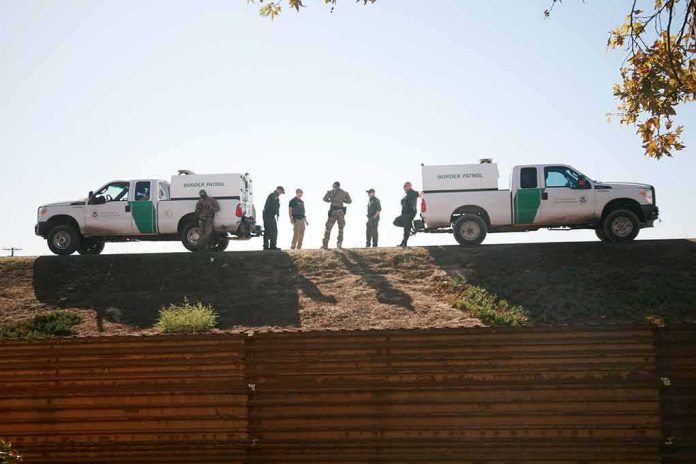
A cable news crew sent to Texas to report on border enforcement ended up needing eight Border Patrol agents to pull it out of the desert — and then three of the four rescue trucks got stuck too.
Story Snapshot
- MS NOW reporter Antonia Hylton says her crew’s Jeep Wagoneer bottomed out in the desert near Big Bend, Texas, while filming the debut of “The Assignment.”
- By her own on-air account, eight Border Patrol agents in four trucks came out that night to free the crew.
- Three of those four rescue trucks then got stuck as well, turning a tow job into a bigger operation.
- The crew was in the area to report on land and border issues facing Texas landowners.
- Desert rescues are routine work for these agents — more than 3,500 in Texas in one recent fiscal year.
The Jeep Bottomed Out At Sunset
Antonia Hylton told viewers her crew was working near the Alvarado Ranch in the Big Bend region when the trouble started. “As the sun went down, our Jeep Wagoneer bottomed out in the desert,” she said on air. The crew was filming the premiere of MS NOW’s new program, a segment focused on land and border issues facing Texas landowners.
To her credit, Hylton did not bury what happened next. She said plainly that getting out took real manpower, and that it came from the agency her network spends a good deal of airtime scrutinizing. Telling that story on camera yourself takes a certain amount of nerve, and she told it.
Eight Agents, Four Trucks, Then More Trouble
“Eight Border Patrol agents in four different trucks came out that night to rescue our crew,” Hylton said. That by itself would be a straightforward and mildly embarrassing story. The Big Bend desert had other plans.
By her account, “three of their four vehicles got trapped in the process.” So what began as a recovery became a recovery of the recovery: agents working in the dark to free a stranded news crew and most of their own fleet from the same unforgiving ground.
Routine Work, Not A Rare Event
Pulling people out of remote desert terrain is a standing part of the job. Federal data shows agents carried out more than 3,500 rescue operations in Texas in a single recent fiscal year. Other sectors report the same pattern, with counts running into the hundreds or thousands depending on the year and the stretch of border.
That context is the part worth keeping. Agents did not treat a news crew differently than they would treat anyone else stranded out there after dark. They loaded up, drove into rough country, and finished the job even after most of their own trucks were buried. It is unglamorous work that generates no coverage on the nights when no camera happens to be stuck in it.
What The Story Actually Shows
The irony writes itself, and plenty of people online have written it. But the more useful reading is simpler. A crew that came to examine border enforcement got an unplanned demonstration of what a large share of that enforcement actually consists of: driving into dangerous terrain to retrieve people who got themselves into trouble, with no particular interest in who they voted for.
It is a small story. It is also the clearest illustration of the job anyone filmed that week, and the network got it by accident.
Sources:
thegatewaypundit.com, news.azpm.org