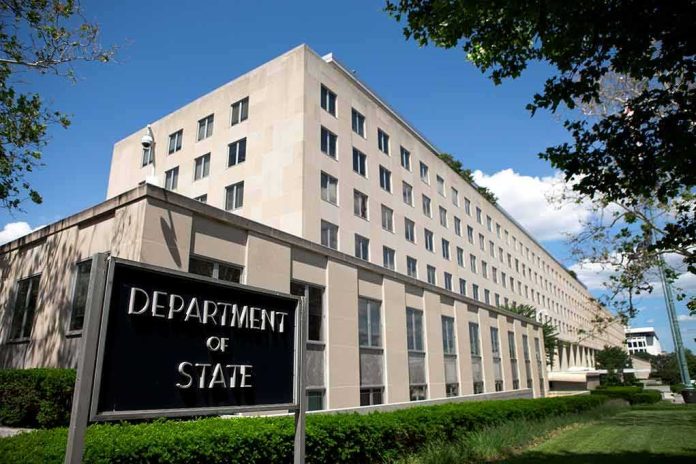
The U.S. State Department’s highest-level warning now tells Americans to avoid Libya entirely because the government cannot keep them safe there.
Story Snapshot
- The Libya advisory is Level 4: Do Not Travel, the strongest U.S. warning.
- Risks include crime, terrorism, kidnapping, civil unrest, armed conflict, and landmines.
- The United States has no embassy in Libya, limiting help if things go wrong.
- Officials have reaffirmed the do-not-travel call and say dangers remain severe.
What Washington Changed and Why It Matters
The U.S. State Department reissued a Level 4: Do Not Travel advisory for Libya. Officials warn Americans not to go for any reason. The advisory cites crime, terrorism, kidnapping, civil unrest, armed conflict, and unexploded landmines as key dangers. This is the government’s firmest warning. It signals that agencies cannot reduce the risk for travelers. For everyday people, that means if you go, you are mostly on your own if a crisis hits.
Level 4 status places Libya with a small group of the world’s most dangerous destinations. The State Department assigns these labels when officials judge the threat to be severe and widespread. That judgment blends public facts with other reporting and operational limits on U.S. help. These advisories tend to stay in place until conditions change in a clear and lasting way. That has not happened in Libya, according to current guidance.
🚨#NewsAlert: Advisory Issued From US Department of State Travel Advisories – DO NOT TRAVEL TO LIBYA
Libya currently carries a strict Level 4 "DO NOT TRAVEL" advisory from the US Department of State Travel Advisories due to ongoing aremed conflict, widespread kidnapping,… pic.twitter.com/TwDn5MOjLg
— A New Wave Right (@ANewWaveRight) September 5, 2026
Specific Threats Facing American Travelers
Officials warn that criminal groups and militants target Westerners, including Americans, for kidnappings and other attacks. Armed clashes between rival factions can flare up with little warning. Terror groups continue to plan strikes. Unexploded landmines and other ordnance add hidden risks, especially on roads and in areas hit by past fighting. Together, these threats are hard to predict and even harder to avoid. That is why the U.S. message is blunt: do not go.
The United States says there is no functioning U.S. Embassy in Libya. The Libya External Office operates from Tunis, in neighboring Tunisia. That gap matters. When trouble hits, American consular teams often arrange medical help, safe shelter, or evacuation. In Libya, that support is limited. Response times are slow. Routes may be blocked. Families back home may also struggle to reach loved ones. The lack of access raises the risk for any traveler.
How This Fits a Broader Pattern
The Libya warning reflects a wider policy approach for war-torn states. When the mix of unrest, terrorism, kidnappings, and limited consular access reaches a certain point, the State Department sets a Level 4 advisory and keeps it there until clear progress sticks. Some critics ask for local, block-by-block detail. The government relies on a composite risk judgment meant to keep the public safe. In plain terms, officials think they cannot manage the danger right now.
"Do not travel to Libya for any reason."
Americans planning a trip to Libya are being urged to reconsider those plans, as the U.S. State Department issues its strongest possible travel warning.
The Level 4 advisory cites widespread kidnapping, terrorism, landmines and other… pic.twitter.com/OlquUTJLJZ
— Fox News (@FoxNews) September 5, 2026
For readers frustrated with Washington, this is another case where the system admits its limits. The government warns loudly but offers little help if Americans ignore the guidance and get stuck. For conservatives, this reinforces concerns about global instability and weak border controls. For liberals, it underscores the human costs of conflict and the lack of safety nets abroad. For both, it highlights a core truth: families must plan for themselves when the state cannot reach them.
Practical Steps If Travel Is Unavoidable
The clearest advice is simple: do not travel to Libya. If someone must go despite the warning, they should make plans that assume no help will come. Share routes with trusted contacts. Arrange secure transport. Confirm medical evacuation coverage. Prepare for communications blackouts. Keep documents backed up and encrypted. Register travel plans with the State Department’s enrollment system. Understand that even good plans may fail in fast-moving conflict zones.
Sources:
thegatewaypundit.com, travel.state.gov, ly.usembassy.gov