

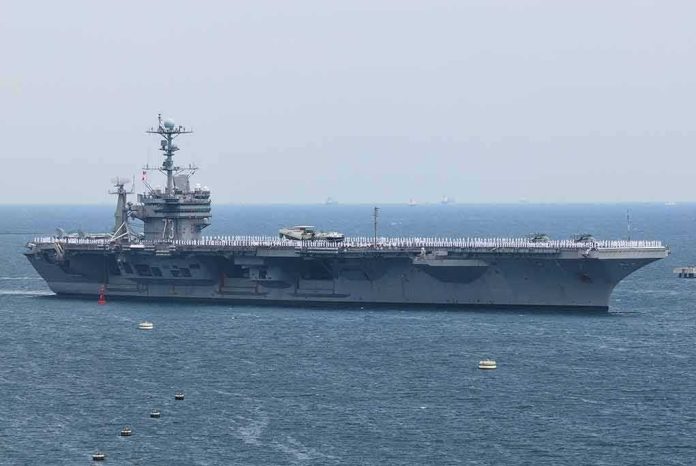
After a 19-year-old sailor went overboard on the USS Abraham Lincoln, the Navy is moving toward discipline even as leaders insist the carrier has no spike in suicide attempts.
Story Snapshot
- Navy leaders say the incident was isolated and mental health care is available aboard the ship.
- Family accounts frame the jump as a suicide attempt and allege poor communication from the command.
- Military law allows charges for jumping from a ship or self-harm to avoid duty if intent is proven.
- Extended deployments have fueled concern among families and lawmakers about stress on crews.
What The Navy Says Happened And Why It Matters
U.S. officials said a sailor went overboard from the USS Abraham Lincoln this month and was quickly recovered. The Navy told reporters the ship has not seen an increase in suicidal thoughts or attempts, and that medical and counseling support is in place on board. Commanders and regional leaders also called mental health a priority and pushed back on claims of a broader crisis across the crew. These official messages set the frame for any discipline that may follow.
Central Command and Navy public statements have worked to limit the scope to a single case and to defend ship conditions. Leaders pointed to ongoing access to care and to morale and reenlistment measures as signs the crew remains ready. Navy statements also said the carrier will return home on a planned timeline, signaling normal rotation goals despite a long deployment. That stance supports the view that order and readiness remain the top guideposts for any response.
What Families And Outside Reports Claim
The sailor’s wife told media she believes her husband attempted suicide and said the Navy failed to inform her for four days after the incident. Military Times reported other families describing overwork, homesickness, and at least one prevented attempt to go overboard during the same cruise. These accounts do not carry the weight of official records, but they reflect real fear and anger among loved ones at home. They also echo wider concerns about long deployments and burnout.
News outlets reported that officials considered the overboard event a mental health episode and that the sailor was assigned to the air wing, recovered by air assets, and moved off the ship for further care. Families say those facts should point to treatment, not punishment. They worry that criminal charges would brand a cry for help as a crime. That clash—between enforcing rules and treating illness—sits at the heart of this case and many like it.
How The Uniform Code Of Military Justice Applies
Military law allows charges when a service member jumps from a vessel or harms himself or herself to avoid duty, but only if intent to skip duty is proven. Article 83 on malingering covers feigned illness or intentional self-injury to avoid work or service. Legal summaries stress that proof of intent is key; being honest about mental strain and seeking help is not a crime. Commanders must weigh safety, intent, and unit readiness before filing charges.
Thursday 27 August 2026.🔺⚙️🛠️🔺🌐
The World Clock — Worldwide https://t.co/JkGHBGMFZQ
Source: presstv*ir
Series of ship accidents, supply failures, and falling troop morale stretch US Navy to its limits
Wednesday, 26 August 2026 7:19 AM [ Last Update: Wednesday, 26 August 2026… pic.twitter.com/2wfkRYMl6p— Pierre F. Lherisson (@P_F_Lherisson_) August 27, 2026
That legal line is hard to draw in real time at sea. Investigators must sort witness accounts, medical notes, and duty rosters. A rush to punish can chill others from seeking help. A rush to excuse can weaken discipline and risk lives on deck. This is where trust breaks down for many Americans. They see a system that protects itself first and speaks plainly only when pressed by the public or by Congress.
Why This Touches A Nerve Beyond The Navy
Long deployments test families, budgets, and faith in leadership. Lawmakers and media have asked if the Lincoln’s months at sea raised stress and shaped risky choices. Navy leaders say they monitor mental health and adjust as needed. The truth may be both: crews still meet the mission, and some sailors are at their limit. When a teenager goes overboard and faces charges, it reads to many as a system that punishes pain while asking for more sacrifice.
What To Watch Next
Watch for formal charges and the specific articles cited. Article 83 on malingering requires proof that self-harm was meant to avoid duty. Watch for any command investigation summary and whether mental health providers shaped the findings. Also watch Congress. Prior cases have drawn hearings when discipline and care seemed out of balance. If leaders release data on counseling use or safety incidents, that could test their claim that this was an isolated event.
Sources:
mediaite.com, theguardian.com, navy.mil, cnn.com, cnbc.com, militarytimes.com, npr.org, bbc.com, armfor.uscourts.gov, mymilitarylawyers.com