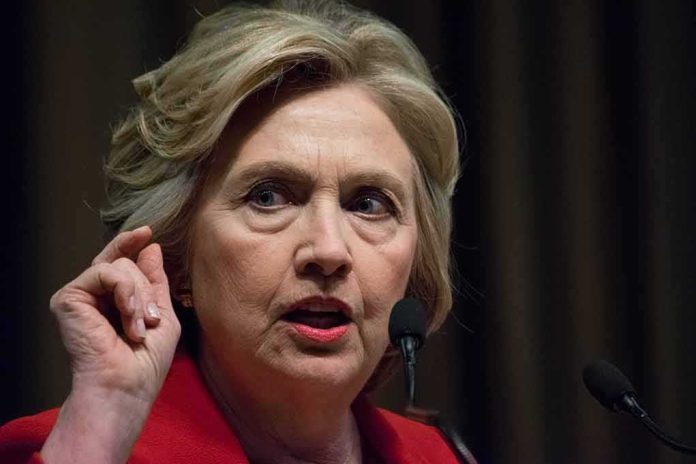
Hillary Clinton said Democrats are running “a kind of experiment” to see which messengers best answer young voters’ concerns, signaling a public bet on youth-focused candidates and ideas.
Story Highlights
- Clinton endorsed an internal Democratic “experiment” to engage young voters.
- Recent polls show Democrats still lead among young voters in 2026.
- Analysts say young voters lean left on several key issues.
- Skeptics warn “socialist” branding may turn off many young adults.
Clinton’s Remark And What It Means For 2026
Hillary Clinton said on August 24 that the Democratic Party is in “a kind of experiment” to find who can respond to young people’s “very real concerns,” and she called that “healthy”. Her comment aired in a Fox News segment and drew sharp pushback from conservative voices that framed the idea as embracing “socialists.” The word “experiment” matters. It confirms party leaders are testing new messengers and messages, not declaring a final turn left. It also shows the fight for youth votes is now a top-tier strategy question.
The backdrop is a United States where many voters think government serves insiders first. Both conservatives and liberals over 40 feel rising costs, shaky wages, and broken systems are blocking the American Dream. In that climate, leaders in both parties are under pressure to prove they can listen and deliver. Clinton’s phrasing suggests Democrats see risk in stale playbooks and want to try options that feel more urgent to people under 35. The test is whether new faces and bolder ideas can build trust without alienating others.
What The Youth Polls Actually Show
The Harvard Youth Poll’s spring 2026 release reported Democrats leading 45% to 26% on the generic ballot among young registered voters. The Yale Youth Poll found majorities of young voters plan to back Democrats across every under-35 band, with notable gains among young women since earlier cycles. These data indicate a real Democratic edge with youth today. They do not prove that candidates branded as “democratic socialist” are the cause of that edge, or that such branding would increase it. The polls mainly measure preference, not cause.
Other research says younger voters lean left on issues such as health care, policing, and trade compared with the wider electorate. That tilt helps explain why Democrats compete well with youth in many races. But preference on issues is different from support for a label. Analysts who have studied the 2016 cycle also recorded that Clinton struggled with young voters in many states, which gives party strategists a reason to test what messages work now, not what worked a decade ago. The open question is which messengers convert interest into votes.
Where The “Socialist” Label Runs Into Trouble
Several data points cut against a simple “move left and win” story. A Northeastern University analysis reported that the Democratic Socialists of America had a 28% favorable and 40% unfavorable rating among adults ages 18 to 29 in mid-2026, with even worse numbers among ages 30 to 44. A New York Times review linked support for Democratic Socialists of America–backed candidates to younger precincts but left open how broad that support becomes in general elections. Even a youth organizer quoted by NOTUS warned the average person does not agree with democratic socialist ideas.
These findings suggest risk in leading with a charged label. They also show why Clinton’s framing as an “experiment” is careful. Party strategists can test issue-first pitches on pocketbook costs, housing, and debt, without centering a word that may define the campaign in ways they cannot control. Critics on the right will still attack. But mixed favorability among young adults means brand choices matter. The lesson is simple: test what moves undecided youth, not just what energizes the base.
Shared Frustrations Driving The Youth Vote
Young Americans say they worry about rent, student debt, health costs, and fair pay. Many also distrust large institutions, from Washington to Wall Street. Those views cross party lines. When families watch prices rise faster than pay, they lose patience with slogans. That is why both parties pitch themselves as outside the elite bubble. Democrats hope youth-leaning issues keep their edge, while Republicans argue their “America First” focus on jobs, energy, and borders offers a clearer plan. Results will depend on who speaks plainly and delivers.
For voters who feel the system serves the well-connected, this fight is not about left versus right labels. It is about whether leaders can lower costs, expand housing, and protect opportunity for people who play by the rules. Clinton’s comment admits something many already see: the party needs to earn trust with real answers, not vibes. The next months will show if Democrats test ideas that help young people start families, build wealth, and feel heard—or just rebrand old plans with new faces.
What To Watch Next
Watch if Democrats field more candidates who center housing supply, wage growth, and debt relief, and if they tie proposals to clear timelines and costs. Track whether the party spotlights organizers who connect with community colleges, trade programs, and first-time renters. Look for polling that tests issue frames without ideology labels. Finally, watch whether Republicans adjust youth outreach on cost of living and tech-era jobs. In a low-trust era, the side that speaks to daily bills may win the tie.
Sources:
twitchy.com, gelliottmorris.com, sites.tufts.edu, abcnews.go.com, circle.tufts.edu, thirdway.org, english.elpais.com, iop.harvard.edu, pbs.org, rasmussenreports.com