Twelve police officers were hurt as officers forced back a counter-protest that moved toward a peaceful rosary rally in Göttingen, Germany, raising fresh questions about how the state protects free assembly when crowds collide.
Story Snapshot
- Police say the pro-life rosary rally stayed peaceful until departure, when a counter-protest surged toward it.
- Officers formed a chain, used force and pepper spray, and reported 12 injured police.
- Local radio says police used coercive measures about 200 times to separate groups.
- Investigators opened cases into possible offenses tied to the clash.
Police Account of the Clash and Injuries
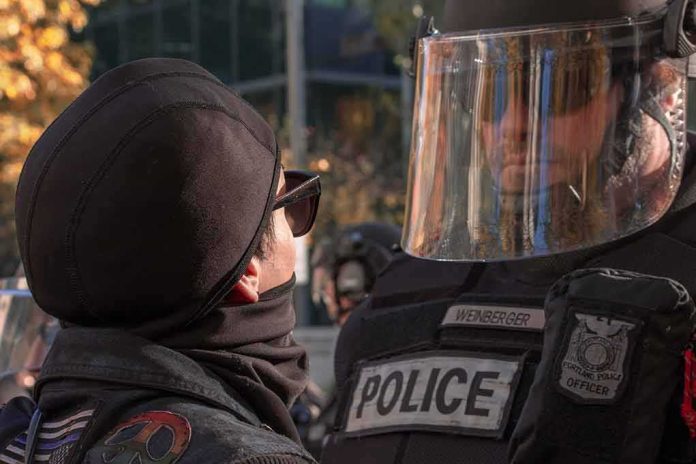
Police in Göttingen said a registered rosary rally against abortion stayed peaceful through its scheduled end. As participants tried to leave, a counter-protest moved toward them. Officers formed a human chain to prevent contact, used physical force, and deployed pepper spray. Twelve officers were injured during the operation. Officials said force from parts of the counter-protest targeted police during the separation effort. These details come from public broadcaster reports that cite police statements.
Local radio added scale to the scene. It reported police claimed they used coercive measures about 200 times to hold a corridor and keep groups apart. The station also said police attributed violence against officers to some counter-protesters and opened investigations into potential crimes. The number of coercive actions signals more than a brief shouting match. It suggests a prolonged and tense departure phase that stressed lines and tactics.
What We Know, What Is Missing
Reports from public broadcasters and local media line up on key facts: a peaceful rally, a counter-protest moving in, a police chain, pepper spray, and 12 injured officers. That gives a consistent basic picture. But the public record shown so far does not include full incident logs, body-camera footage, or medical details that explain how the injuries happened. Without those, we cannot say who made first physical contact or how severe the injuries were. Police say probes are underway, but outcomes are not yet public.
Advocacy outlets that support the rally echo the police account and argue the police response prevented direct assaults on attendees. These claims track with the official narrative but come through a partisan lens. They cannot resolve open questions on their own. The stronger weight rests with named police statements carried by national and local outlets. Even so, the gaps on video, arrest details, and injury breakdowns leave room for dispute if later findings diverge from early reports.
Why This Matters Beyond Göttingen
This clash sits inside a wider pattern seen in many democracies. Peaceful assemblies can turn volatile at choke points like exits, where opposing groups, tight space, and time pressure meet. German law protects peaceful assembly as a basic right, but it also lets police act to stop concrete dangers in public spaces. That mix pushes police to facilitate first and use force last, yet still gives them tools to separate hostile groups when they judge a risk rising.
For Americans watching from afar, the lesson feels familiar. People on the right and left both worry that institutions stumble at the exact moment citizens need basic rights guarded fairly. Conservatives see mobs shutting down speech. Liberals see police tactics that can sweep in peaceful people along with agitators. Both sides fear that the powerful write the rules, then dodge blame when things go wrong. Transparent records and prompt case outcomes help rebuild trust.
What Accountability Would Look Like Now
Authorities can reduce doubt by releasing a clear timeline with maps, crowd counts, and reasons for each major use of force. A de-identified summary of injuries and medical care would clarify what happened to the 12 officers. Case updates on any charges or dismissals would show whether alleged crimes hold up. If body-camera or public cameras captured the corridor, even limited clips could anchor the sequence without risking private data or ongoing cases.
Civic groups can aid that work. Rally organizers and counter-protest leaders can share marshal notes, routes, and any de-escalation steps they took. Independent observers, when present, can provide logs that confirm or challenge claims. The aim is not to score points. It is to show citizens that rights to speak, pray, and protest do not hinge on which side shouts louder, but on law applied even-handedly and reviewed in daylight.
Bottom Line
The record so far supports this core point: police say they stepped in to stop contact between a peaceful rosary rally and a counter-protest, used force including pepper spray, and counted 12 injured officers. The number of coercive actions reported locally underlines the scale of the strain. The unanswered items are the who, where, and how of first contact and injuries. Clear evidence, released soon, would serve everyone’s rights—and calm a debate that too often burns hot and informs little.
Sources:
politischeverfolgung.de, tagesschau.de, youtube.com