

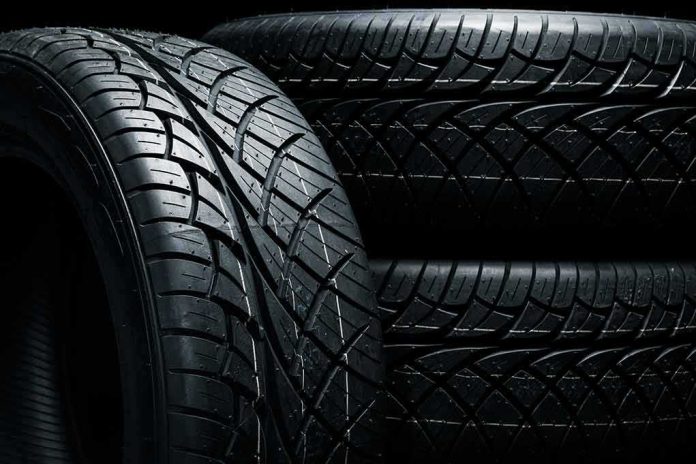
California regulators just voted to ban most of the replacement tires sold in the state today, a move industry groups warn could wipe out roughly 70 percent of the current market and add hundreds of dollars to every purchase.
Story Snapshot
- The California Energy Commission unanimously approved the nation’s first tire efficiency rules on Monday.
- Phase one begins January 1, 2029, with a second, stricter phase starting January 1, 2033.
- The state says the rule will save drivers about $1 billion a year and cut carbon emissions.
- Tire makers and dealer groups say prices could jump hundreds of dollars and shorten tire life.
Unanimous Vote Sets Nation’s First Tire Rule
The California Energy Commission approved the Replacement Tire Efficiency Program in a unanimous vote, making California the first state to set fuel-efficiency rules for replacement tires. The commission’s own docket log confirms the adoption hearing certified a final environmental review before the vote. State officials say the rule targets a hidden source of wasted gas and electricity that most drivers never think about.
Officials say replacement tires often perform worse than the tires that came on a car when it was new, forcing engines and electric motors to work harder. The commission says its rule fixes that gap by requiring replacement tires to match the efficiency of factory tires on average.
How the New Efficiency Standards Work
The rule sets maximum rolling resistance limits, a measure of how much energy a tire wastes as it rolls. Standard tires must hit 9.0 N/kN in phase one, tightening to 7.1 N/kN in phase two. Light-truck, long-life, and ultra-high-performance tires get slightly looser limits, but all categories face stricter numbers when phase two begins in 2033.
Retailers, manufacturers, and brand owners will be barred from selling non-compliant replacement tires in California, though the rule includes carve-outs for certain wholesale and out-of-state sales. Tire makers must also start reporting efficiency data for a state database years before the sales ban takes effect, giving companies time to redesign products.
Backers Promise Billions in Savings
The commission and several outlets covering the vote say the standards will save California drivers roughly $1 billion annually once fully in place, mostly through lower fuel and electricity use at the pump and the charging station. Supporters, including Michelin and Discount Tire, argue the upfront cost is worth the long-term savings and emissions cuts, and they backed the rule through the commission’s public comment process.
Industry Warns of Higher Prices, Shorter Tire Life
A trade group representing specialty automotive businesses ran polling showing 79.5% of respondents worried the rule could raise replacement tire costs by several hundred dollars per set, and the group joined Goodyear and other manufacturers urging lawmakers to halt the plan. Goodyear’s representative told the commission the rule would raise consumer costs and left technical and legal problems unresolved.
Other critics go further, claiming the standards amount to a near-ban on certain products. One report cited industry estimates that the rule could eliminate about 70 percent of today’s replacement tire market by the time the second phase takes effect, hitting performance and off-road tires especially hard. Critics also argue some tires could see their lifespan cut by more than half, forcing more frequent, costlier replacements that offset promised fuel savings.
BREAKING: California becomes the first state in the U.S. to set efficiency standards for replacement car tires.
On Aug. 17, 2026, the California Energy Commission unanimously approved the Replacement Tire Efficiency Program (RTEP). It requires most new replacement tires for…
— Isten_Kardja (@Isten_Kardja) August 19, 2026
A Familiar Divide Over Cost and Control
This fight mirrors a pattern seen across clean-energy rules nationwide: regulators frame the change as a modest technical fix with long-term payoffs, while industry and many drivers see an unelected agency dictating what they can buy, with costs landing immediately and savings arriving years later. That gap between who pays now and who benefits later fuels distrust on both sides of the political spectrum, regardless of the underlying engineering.
For drivers already squeezed by high prices, the debate lands as one more example of government rules reshaping everyday choices without a public vote. Whether the standards deliver the promised billion-dollar savings or simply raise sticker prices, California’s rule will likely shape how other states and federal regulators approach vehicle efficiency policy for years to come.
Sources:
thegatewaypundit.com, energy.ca.gov, kcra.com, efiling.energy.ca.gov, insideepa.com, msn.com, reddit.com